




Yatra Guide
Benital India’s Premier Himalayan Astro-Tourism Ecosystem
The emergence of astro-tourism as a significant vertical within the global experience economy represents a critical shift in how human societies interact with the natural environment.
 By Spiritual Yatra
14 min read
By Spiritual Yatra
14 min read

Atmospheric Physics and the Geographic Selection of Benital (Himalayan astro-tourism)
The fundamental requirement for a dark-sky sanctuary is the minimization of atmospheric interference and anthropogenic skyglow. Benital’s elevation of 2,600 meters places it above a significant portion of the Earth's lower atmospheric haze, which typically traps pollutants, dust, and moisture at lower altitudes. At this height, the partial pressure of atmospheric gases is lower, leading to reduced Rayleigh scattering of light. This physical reality translates into a higher signal-to-noise ratio for astronomical observations, allowing faint celestial objects to be discerned with greater contrast against the blackness of space.
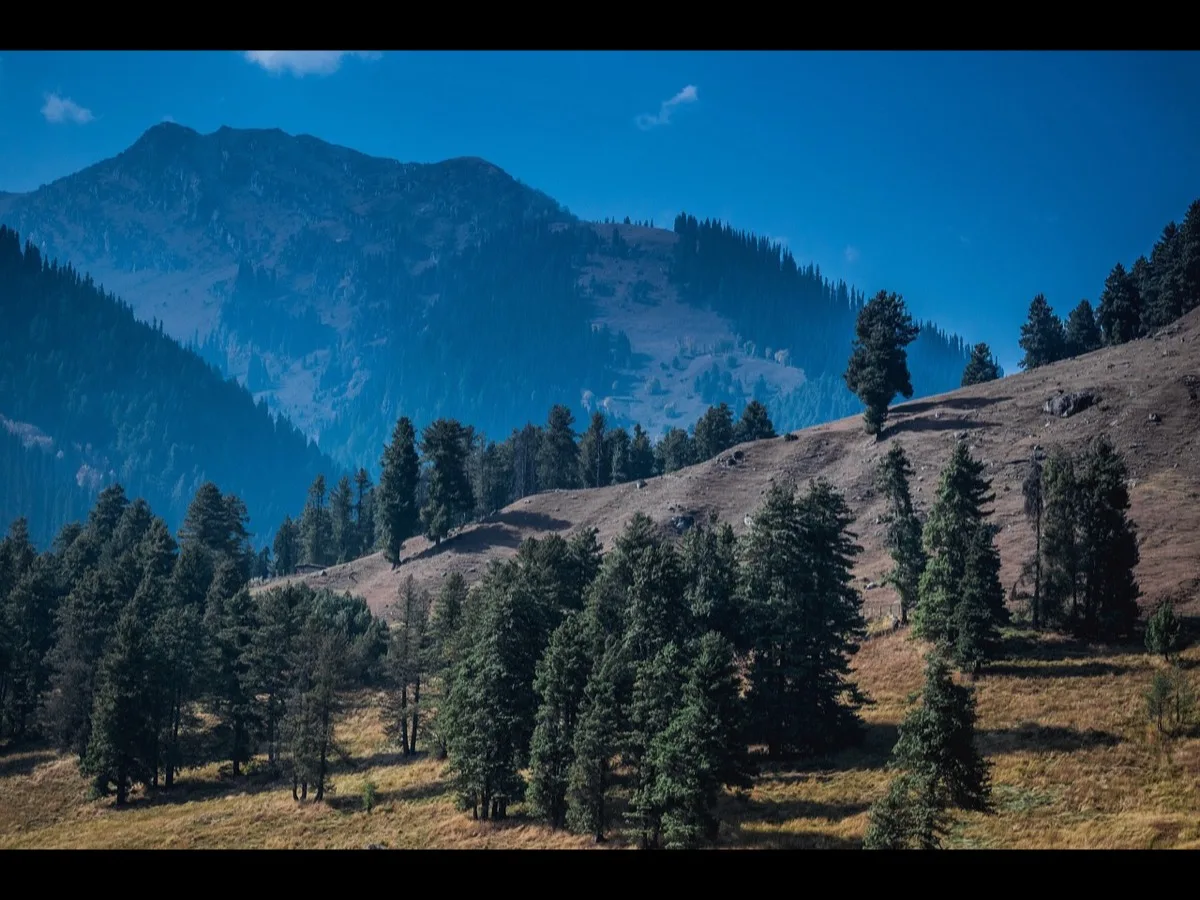
The topography of the Chamoli district further reinforces this atmospheric advantage. Benital is characterized by its "natural amphitheater" formation, where surrounding mountain ridges shield the central valley from the light domes of distant urban centers like Karnaprayag or Srinagar. This topography ensures an unobstructed 360-degree view of the celestial sphere, which is essential for tracking long-duration events like meteor showers or planetary transits. The absence of significant human activity in the immediate vicinity means that the Bortle Scale rating of Benital a measure of the night sky's brightness—approaches the "Excellent Dark-Sky Site" classification, where the Milky Way can cast visible shadows and the Andromeda Galaxy (M31) is clearly visible to the naked eye.
Geographic Parameter
Metric Value
Impact on Observation Quality
Elevation (ASL)
2,600 Meters
High atmospheric transparency and low moisture.
Horizon Obstruction
< 5 Degrees
Unobstructed 360-degree celestial arc.
Proximity to City
> 2 Hours
Minimal light dome interference from urban centers.
Local Temperature
-5°C to 15°C (Winter)
Cold, dry air reduces thermal turbulence (scintillation).
Primary Flora
Pine and Himalayan Oak
Natural carbon sinks maintaining local air purity.
The interaction between the local microclimate and the high-altitude terrain creates a "seeing" environment that is exceptionally stable. Scientific observation sessions in Benital, such as those conducted during the Nakshatra Sabha, benefit from low atmospheric turbulence, which minimizes the "twinkling" effect of stars and allows for sharper imaging through high-definition eyepieces. The post-monsoon period, particularly the month of November, is identified as the optimal window for deep-sky observation, as the atmosphere is scrubbed clean of aerosols by previous rains, and the New Moon phase provides the requisite absolute darkness.
Strategic Infrastructure and Technical Capacity Building
The transformation of Benital into an Astro Village necessitated a strategic investment of approximately 5 crore INR by the Uttarakhand Tourism Department. This capital has been directed toward a combination of scientific facilities and tourist amenities designed to support a high-intensity experiential tourism model. Central to the scientific infrastructure is the installation of permanent, large-aperture telescopes and a dedicated night-vision dome. Unlike portable consumer-grade equipment, these permanent installations are engineered for precision tracking and high-magnification imaging of deep-sky objects like the Orion Nebula or the star clusters of Pleiades.
Beyond standard astronomical tools, the facility is equipped with specialized H-Alpha solar filters and solar goggles. These instruments allow for the safe observation of the Sun during daylight hours, focusing on specific wavelengths of light emitted by hydrogen atoms. This allows visitors to witness solar prominences, sunspots, and flares phenomena that are typically invisible through standard optical filters. By extending the operational hours of the Astro Village into the daytime, the project maximizes its utility and educational impact.
|
Infrastructure Project |
Allocation/Status |
Functional Objective |
|
Observatory Complex |
Permanent Installation |
Professional-grade data collection and imaging. |
|
Night-Vision Dome |
Completed |
Observation in adverse thermal conditions. |
|
Road Restoration |
Simli to Benital |
Enhanced logistics for heavy equipment and tourists. |
|
Lighting Retrofit |
"Astro All Light" |
Shielding upward light spill to maintain dark sky. |
|
Accommodation |
Cottages & Tent Platforms |
Sustainable high-altitude hospitality. |
|
Catering Facilities |
Restaurant & Reception |
Comprehensive support for long-stay visitors. |
The "Astro All Light" system represents a technological breakthrough in the mitigation of light pollution within the village itself. Traditional street lighting often contributes to skyglow through unshielded bulbs that scatter blue-rich light into the upper atmosphere. The system implemented in Benital uses shielded, warm-toned LEDs that direct light only where it is needed on the ground, preserving the night vision of observers and maintaining the integrity of the dark sky. This technological commitment is a prerequisite for potential certification by bodies such as DarkSky International, which would place Benital on the global map of certified dark-sky sanctuaries.
The Nakshatra Sabha and the Niche Tourism Market
The operational heart of the Astro Village initiative is the "Nakshatra Sabha," a flagship event developed through a partnership between the Uttarakhand Tourism Development Board and Starscapes.5 This initiative aims to establish Uttarakhand as the "dark sky capital" of India by creating a sustainable tourism vertical centered on astronomy. The project specifically targets a growing segment of the global tourism market valued at $1.18 billion in 2025 that prioritizes science-based, educational, and immersive travel over passive sightseeing.
The scheduling of events like the Nakshatra Sabha is dictated by celestial mechanics rather than conventional seasonal holidays. For instance, the November 8-10 session in Benital was timed to coincide with the Taurids meteor shower and the New Moon phase. During such windows, the absence of lunar glare allows for the observation of faint phenomena like the "Gegenschein" (a faint brightening of the night sky in the region of the ecliptic) and the intricate spiral arms of the Andromeda Galaxy. The inclusion of "Astro Parties" and campfire discussions on mythology further humanizes the scientific experience, blending data with narrative storytelling.
Market Segment
Share (%)
Relevant Benital Activity
Stargazing
38.4%
Guided night sky tours and planetary viewing.
Eclipse Viewing
18.7%
Special expeditions for rare alignments.
Meteor Showers
12.9%
Observation of Taurids and Perseids.
Astrophotography
11.8%
Expert-led workshops on long-exposure imaging.
STEM Education
9.8%
School programs and telescope-building workshops.
The socio-economic implications of this niche market are profound. By shifting the focus of tourism to nocturnal activities, the government provides a reason for travelers to stay overnight in remote villages, thereby increasing the average revenue per tourist (ARPT). Furthermore, the low-impact nature of astro-tourism which requires minimal physical infrastructure and does not involve the heavy environmental footprint of traditional resorts aligns with the sustainable development goals (SDGs) for the fragile Himalayan ecosystem.
Socio-Economic Revitalization and the "Ghost Village" Strategy
One of the most innovative aspects of the Benital project is its application as a solution to the "ghost village" crisis in the Garhwal region. For decades, remote Himalayan villages have faced mass migration as youth leave in search of employment, leaving behind near-abandoned settlements. The Uttarakhand government has identified these villages as having one remaining, untapped resource: pristine, light-pollution-free skies. The plan to designate several of these settlements as official "Dark Sky Villages" aims to breathe new life into forgotten communities by turning the night sky into a source of livelihood.
In Benital, this strategy involves training the local youth as "astro-guides" and storytellers. By equipping them with the knowledge to navigate the heavens and the technical skills to operate telescopes, the project creates specialized jobs that are geographically anchored to the village. This not only provides an alternative to migration but also fosters a sense of regional pride, as the community becomes the custodian of a national scientific asset. The economic benefits are distributed through the proliferation of homestays, where visitors can immerse themselves in local Garhwali culture and cuisine.
|
Impact Category |
Local Benefit Mechanism |
Long-term Outlook |
|
Employment |
Youth trained as astro-guides and technicians |
Reduced migration to urban centers. |
|
Gender Equality |
Women-led homestays and cultural workshops |
Economic independence for rural women. |
|
Infrastructure |
Road repairs and reliable power for observatory |
Improved connectivity for the whole village. |
|
Cultural Preservation |
Storytelling sessions linking myths to stars |
Preservation of oral traditions and folklore. |
|
Skill Development |
Workshops on astrophotography and hospitality |
Diversification of the local skill base. |
The cultural exchange fostered by this model is a critical byproduct. Domestic and international tourists visiting Benital engage with the village practitioners of ancient Indian sciences and astrology, creating a dialogue between traditional wisdom and modern astrophysics. This interaction elevates the status of the village from a mere "destination" to a "shared cultural space" where science meets heritage. The involvement of the Garhwal Mandal Vikas Nigam ensures that these developments are integrated into the broader regional economy, creating a "ripple effect" that benefits nearby towns and pilgrimage sites.
Educational Pedagogy and the Cosmic Classroom
Benital is designed to serve as a laboratory for experiential learning, particularly for students in the STEM fields. The educational programming offered through Starscapes and the tourism board is specifically aligned with the goals of India’s National Education Policy (NEP), which emphasizes hands-on learning over rote memorization. The "Cosmic Classroom" and "Junior Astronomer" programs provide students with the rare opportunity to handle professional equipment and participate in actual data collection.
These workshops cover a wide spectrum of space science. For example, the "Space Explorer" module includes sky-gazing sessions combined with indoor workshops on the physics of rocketry and the properties of light. Students participate in DIY projects where they build their own simple telescopes, allowing them to understand the principles of optics and magnification firsthand. By moving the classroom to a 2,600-meter peak, the program removes the distractions of city life and forces an intimate engagement with the mechanics of the universe.
Workshop Module
Core Activity
Scientific Concept Explored
Sun and Stars
Day/Night telescopic observation
Stellar evolution and solar cycles.
Junior Astronomer
Multimedia demos and DIY projects
Principles of optics and engineering.
Cosmic Classroom
Year-round data logging
Data science and long-term celestial patterns.
Starry Adventures
4-day residential camp
Ecology, birdwatching, and astronomy.
Teacher Training
Pedagogy development
Integrating space science into school curricula.
The "Astro Camp" held annually in May and June targets the summer vacation crowd, offering intensive sessions on astrophotography and celestial navigation. During these camps, participants learn to identify constellations like Pegasus, Taurus, and Perseus not just as patterns of light, but as coordinate systems for understanding their position on Earth. This practical application of geography and geometry makes Benital a critical asset for the nation’s scientific literacy.
Cultural Synthesis: Ethno-Astronomy and Local Folklore
The designation of Benital as an "Astro Village" acknowledges the deep-rooted cultural and spiritual connections the people of Uttarakhand have with the heavens. Historically, the Chamoli district has been a center for practitioners of "Jyotish" (ancient Indian astrology) and spiritual seekers who used the stars for both timing rituals and navigating the treacherous mountain terrain. The project seeks to synthesize this "ethno-astronomy" with modern astrophysical observation.
In evening sessions around the campfire, traditional folk artists share legends that reflect the Himalayan perspective on the stars. The Milky Way, known in local lore as "Akash Ganga," is often linked to the descent of the Ganges River from the heavens, a story that takes on a literal quality when observed from a high-altitude peak. The folklore of the Nanda Devi peak, visible from Benital, adds a layer of terrestrial sanctity to the celestial viewing, as the goddess is revered as the protector of the peaks and the watcher of the stars.
Cultural Motif
Mythological Connection
Modern Astronomical Link
Akash Ganga
Descent of the Ganges
Observation of the galactic core in Sagittarius.
Nanda Devi
Goddess as protector of the land
Foreground for high-altitude astrophotography.
Mahabharata Birthplace
Exile of the Pandavas
Identifying stars used for ancient timekeeping.
Chamolanath Temple
Idol emerging from the Earth
Cultural heritage walks for day tourists.
Goril Devta
Deity of justice and harmony
Oral storytelling and traditional Jagar music.
This narrative layering is what makes Benital a "luxury" experience in the truest sense it offers a depth of context that cannot be replicated in a standard observatory. Visitors are not just looking at photons that have traveled for millions of years; they are engaging with a landscape where those same photons have shaped the religious and social structures of the local community for millennia.
Regional Logistics and the "Panch Prayag" Corridor
Reaching Benital is a logistical journey that mirrors the ascent into a higher plane of consciousness. For travelers starting from Haridwar or Rishikesh, the route follows the NH-7, a lifeline that winds through the Garhwal Himalayas.23 This corridor is defined by the "Panch Prayag" the five sacred river confluences where the Alaknanda River meets its tributaries. Each confluence represents a milestone in the journey toward the high-altitude sanctuaries of Chamoli.
From the nearest major city, Delhi, the journey covers approximately 430 kilometers and takes between 11 and 13 hours. The long duration is a byproduct of the steep mountain gradients and the need for careful navigation of hairpin bends. However, the government’s recent investment in road repairs from Simli to Benital has significantly improved the final leg of the trip, making it more accessible for private vehicles and tourist buses.
Transportation Node
Distance to Benital
Estimated Travel Time
Recommendation
Jolly Grant Airport (Dehradun)
214 km
7-8 Hours
Best for international arrivals.
Rishikesh Railway Station
200 km
6-7 Hours
Gateway for train travelers from Delhi.
Karnaprayag
30 km
1-1.5 Hours
Hub for hiring local specialized cabs.
Gauchar Heliport
~40 km
1 Hour (Road)
Fastest access for high-value travelers.
Delhi NCR
430 km
11-13 Hours
Ideal for road-trip enthusiasts.
The integration of Benital into the existing pilgrimage circuit (Char Dham Yatra) provides a strategic advantage. Pilgrims visiting Badrinath just 60 kilometers from the nearby town of Auli often seek a "decompression" period in a quieter location. Benital serves this need perfectly, offering a peaceful retreat that complements the spiritual intensity of the major shrines.
Market Drivers and the Wellness Dimension of Darkness
The rapid growth of the astro-tourism market is driven by more than just curiosity; it is a response to the increasing awareness of the health impacts of light pollution. Scientific studies have shown that excessive artificial light at night (ALAN) disrupts the circadian rhythm by suppressing the production of melatonin, the hormone responsible for sleep regulation. Urban residents exposed to light levels above 300 lux after 9 PM report significantly higher rates of sleep disorders, anxiety, and metabolic issues.
Benital positions itself as a "health sanctuary" where visitors can experience absolute natural darkness. This "darkness therapy" allows the human body to reset its internal clock, providing a profound sense of rejuvenation that is increasingly being marketed as a premium wellness offering. The absence of blue light from screens and city streets, replaced by the amber and red hues recommended for night vision at the observatory, facilitates a biological deep-rest that is a rare commodity in the 21st century.
Health Factor
Impact of Urban Light
Benefit of Benital Darkness
Melatonin Levels
Suppressed by blue-rich LEDs
Natural surge in absolute darkness.
Circadian Rhythm
Chronic "social jetlag"
Synchronization with natural day-night cycle.
Psychological Stress
Higher cortisol in lit environments
Lowered anxiety through "star-gazing".
Visual Health
Eye strain from constant glare
Recovery of scotopic (night) vision.
Sleep Quality
Fragmented and shallow sleep
Deep, restorative sleep in high-altitude air.
This wellness angle is further supported by the "Astro All Light" policy, which ensures that even the internal lighting of guesthouses is designed to be biological-rhythm friendly. By marketing Benital not just as a site for "looking at things" but as a place for "feeling better," the Uttarakhand tourism board taps into the multi-trillion-dollar global wellness industry, ensuring the long-term economic viability of the Astro Village model.
Sustainable Development and Environmental Conservation
The success of Benital as a niche destination depends entirely on the preservation of its environmental integrity. The high-altitude meadows and forests of Chamoli are part of a fragile ecosystem that is susceptible to the pressures of mass tourism. To mitigate these risks, the Benital project operates under a "minimal infrastructure, high impact" philosophy. The government has focused on small-scale observatories and homestays rather than large-scale hotel complexes, ensuring that the human footprint remains light.
Environmental conservation is built into the visitor experience. Nakshatra Sabha events enforce a zero-waste policy, and participants are educated on the impact of light pollution on local wildlife, such as the rare Himalayan musk deer and avian species found in the nearby Nanda Devi Biosphere Reserve. The use of designated trails for hiking and the prohibition of bright, unshielded lights ensure that the local fauna are not disturbed by the influx of tourists.
|
Conservation Metric |
Implementation in Benital |
Environmental Objective |
|
Waste Management |
Zero-waste policy and composting |
Protecting high-altitude soil quality. |
|
Water Usage |
Refill stations and low-flow fixtures |
Preserving Himalayan spring water. |
|
Light Pollution |
Shielded LEDs and red-light modes |
Maintaining nocturnal wildlife habitats. |
|
Construction |
Limited to small-footprint cottages |
Preventing slope instability and landslides. |
|
Ecological Awareness |
Guided hikes with naturalists |
Fostering respect for the local biodiversity. |
This commitment to sustainability is not just ethical; it is a brand-building strategy. Modern luxury travelers are increasingly "eco-conscious," choosing destinations that demonstrate a clear commitment to environmental stewardship. By positioning Benital as a model for "low-impact, high-value" tourism, Uttarakhand sets a standard for other mountain regions grappling with the challenges of over-development.
The Future of India’s Celestial Narrative
The establishment of Benital as India’s first Astro Village is a landmark achievement that transcends the traditional boundaries of tourism. It represents a successful convergence of high-altitude logistics, technical scientific investment, and deep-rooted cultural heritage. By providing a 5 crore INR infrastructure framework that prioritizes the night sky as a national resource, the Uttarakhand government has created a template for the revival of remote Himalayan communities.
For the student, Benital is a classroom of infinite scale; for the urban dweller, it is a sanctuary of biological restoration; and for the local villager, it is a source of sustainable livelihood and renewed pride. As the global astro-tourism market continues to expand, driven by a universal human desire to witness the mysteries of the cosmos, Benital is poised to become a critical node in the international network of dark-sky destinations. The project’s success proves that when science communication meets local culture in a pristine natural environment, the result is an experience that is truly "out of this world." The narrative of Benital is a reminder that in the quest for progress, sometimes the most profound step forward is to look up into the ancient, silent darkness and rediscover our place among the stars.
Keep Reading
View All Articles-
Kedarnath Registration 2026: Free QR Pass to Visit
Planning a trip to Kedarnath Dham in 2026? Here’s something very important you must know before you book anything. Kedarnath Yatra registration is now compulsory for every single pilgrim. Without the official QR-based Yatra Pass issued by Uttarakhand Tourism, you will not be allowed to go beyond the checkpoints even if you have hotel bookings, helicopter tickets, or a full bag of snacks and clothes.
-
Complete Guide to the Amarnath Yatra: Amareshvara, the Immortal Lord
The annual Amarnath Yatra is a profound manifestation of India's syncretic and inclusive culture, blending religious fervor, secular ethos, and the extraordinary endurance required to traverse the high-altitude terrain of Jammu and Kashmir.
-
Complete Guide to Muktinath (Muktikshetra): The Ultimate Pilgrimage in Nepal
Muktinath, known traditionally as Muktikshetra (the site for salvation), stands as one of the most spiritually profound, historically rich, and visually breathtaking pilgrimage destinations in the world.