




Boutique Stays & Homestays
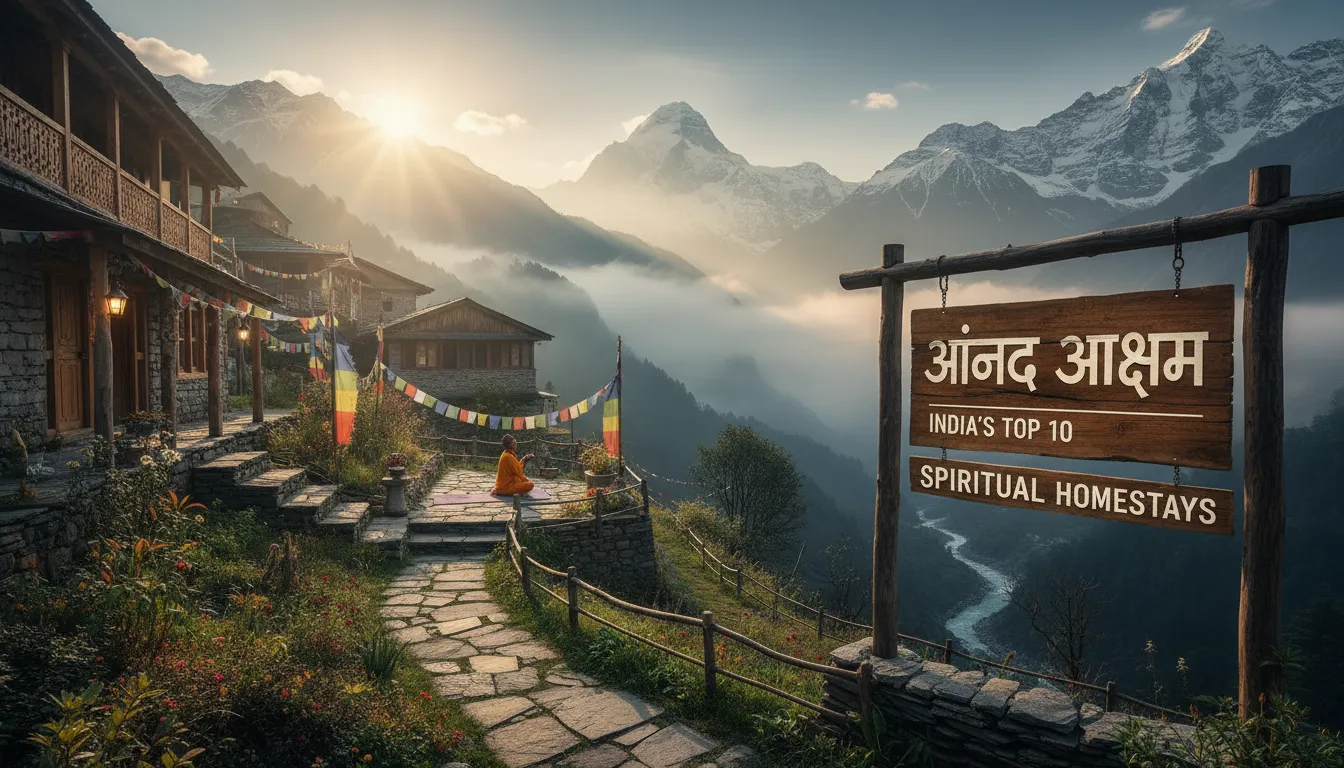
India's Top Ten Spiritual Homestays
The landscape of spiritual travel in the Indian subcontinent is undergoing a structural transition.
 By Spiritual Yatra
14 min read
By Spiritual Yatra
14 min read

Structural Dynamics of Sacred Spaces: An Analytical Evaluation of India's Top Ten Spiritual Homestays
Emerging Paradigms in Indian Spiritual Hospitality
The landscape of spiritual travel in the Indian subcontinent is undergoing a structural transition. Historically dominated by mass religious pilgrimages and conventional, high-density hotel stays, the contemporary market is increasingly defined by seekers pursuing deep quietude, ecological alignment, and authentic regional integration. This movement has facilitated the rise of specialized "eco-spiritual" hospitality models, which blend localized cultural preservation with sustainable architecture. Unlike standardized commercial wellness resorts that offer rigid, highly programmed schedules of mandatory activities, traditional spiritual homestays prioritize spatial and temporal autonomy. This approach relies on "space-creation," where the lodging provides the silent, supportive physical infrastructure required for self-directed meditation, prayer, and psychological restoration.
An emerging conceptual framework within this domain is the Tyagarchana Eco-Spiritual Tourism (TEST) model, championed by organizations such as the Disciples of Christ for Peace (DCP). Initiated as a pilot project in Kerala—the birthplace of historical reformers like Adi Shankaracharya and Sree Narayana Guru—this model transforms the homes of elderly parents and educators (termed Tyagarchana Shanti Bhavans) into eco-spiritual homestays. This framework seeks to integrate ecological responsibility, social service, and human unity into a sustainable, community-backed lodging model. Similar community-driven and environmentally conscious practices are visible across India's sacred geographies, from high-altitude Himalayan retreats to the temple towns of the southern plains.
To provide a systematic overview of these accommodations, the following tables detail the physical, geographic, operational, and financial structures of the country’s leading spiritual homestays.
| Property Name | Location | Proximity to Sacred Landmarks | Core Spiritual & Ecological Focus | Primary Architectural & Experiential Attributes |
| Earthship Homestay | Tapovan, Rishikesh, Uttarakhand |
High-altitude ridge overlooking the Ganges |
Zero-carbon sustainable living & Himalayan sadhana |
Rammed-earth tire construction; crystal cave meditation; 7-chakra treks |
| Golden Loom Homestay | Kanchipuram, Tamil Nadu |
4 km from the historic Kailasanatha Temple |
Complete spatial autonomy & heritage preservation |
Exclusive entire-home booking; private yoga room; Pallava temple trails |
| Sharnga Guest House | Auroville, Tamil Nadu |
1 km from the Matrimandir Sanctuary |
Integral yoga, permaculture, and community living |
Reclaimed horse-shed rooms; natural forest canopy; communal patio dining |
| Granny's Inn | Varanasi, Uttar Pradesh |
10–15 minute walk to Dashashwamedh Ghat |
Intergenerational legacy & local cultural navigation |
Sister-run "Silver Startup"; heritage home; open-air breakfast area |
| Spiritual Homestay | Varanasi, Uttar Pradesh |
Steps from Dasaswamedh Ghat & Kashi Vishwanath |
Private domestic sadhana & river-side observation |
Private two-bedroom apartment; in-unit kitchen; on-site yoga classes |
| Ram Singh Mehra Homestay | Kasar Devi, Almora, Uttarakhand |
1 km from the Kasar Devi Temple |
Geomagnetic meditation & traditional Kumaoni heritage |
Oldest local mud-house homestay; panoramic mountain views |
| MVT Guesthouse | Vrindavan, Uttar Pradesh |
100 meters behind the ISKCON Temple complex |
Gaudiya Vaishnava devotion & monastic alignment |
Garden-style oasis; on-site vegetarian dining; temple program access |
| Rainforest Retreat at Mojo Plantation | Galibeedu, Madikeri, Coorg, Karnataka |
Sequestered valley in the Western Ghats biodiversity hotspot |
Eco-spirituality, biodiversity, & organic agriculture |
Shade-grown coffee estate; Drongo/Atlas cottages; biogas energy |
| Binsar Forest Retreat | Binsar, Uttarakhand |
Sequestered ridge in Binsar Wildlife Sanctuary |
Low-impact wildlife sanctuary integration & silent retreat |
Stone & timber cottages (Trishul, Nandaghunti); Pataal-stone roofs |
| Sri Arunachala Homestay | Tiruvannamalai, Tamil Nadu |
10-minute walk to Arunachaleswarar Temple |
Saivite contemplation & Girivalam walking |
Quadruple family rooms; shared kitchen; mountain-view terrace |
| Property Name | Nightly Base Tariff / Financial Structure | Minimum Stay Requirement | Deposit, Cancellation, & Transaction Terms | Check-In & Check-Out Times | Key Operational Policies & Constraints |
| Earthship Homestay |
All-inclusive booking structure |
Standard retreat booking |
Advance online booking required |
Check-in: Standard afternoon; Check-out: Morning |
Isolated hillside access via a dirt road; fully organic meals |
| Golden Loom Homestay |
Weekdays: ₹5,500; Weekends: ₹6,500 (All-inclusive for whole home) |
Single-party booking |
Digital booking; self-check-in integration |
Standard flexible check-in |
No cooked meals provided; reheating kitchen available; self-contained privacy |
| Sharnga Guest House |
Room rate includes breakfast and dinner; 20% room charge goes to Auroville Foundation |
1 Night |
Cashless transactions; Rs. 500 deposit for mandatory guest Aurocard |
Check-in: 12:00 PM; Check-out: 11:00 AM |
Strict prohibition on drugs, alcohol, and smoking; no in-room dining |
| Granny's Inn |
Starts at approximately ₹1,500 per night |
None |
Standard online/offline booking options |
Check-in: 12:00 PM; Check-out: 11:00 AM |
Shared open-air dining; street noise due to central Godowlia location |
| Spiritual Homestay |
Price based on seasonal demand |
None |
Rs. 1,000 cash damage deposit required on arrival |
Check-in: 12:00 PM; Check-out: 11:00 AM |
No pets allowed; strictly non-smoking; cash-preferred transactions |
| Ram Singh Mehra Homestay |
Budget-friendly pricing starting from ₹500/night |
None |
Standard booking |
Standard morning check-out |
Traditional thermal mud walls; walking distance to Kasar village cafes |
| MVT Guesthouse |
Competitive rate; life patron discounts available |
None |
Verification of valid ID or ISKCON Life Membership card |
Standard temple alignment |
Strict Vaishnava code (no meat, no intoxication, modest dress, silent zones) |
| Rainforest Retreat at Mojo Plantation |
₹2,000 to ₹4,000 (includes breakfast and guided trek) |
None |
Guesthouse closed completely during peak monsoon (July-August) |
Afternoon check-in |
No television; Wi-Fi restricted to streamside pavilion; biogas-cooked meals |
| Binsar Forest Retreat |
₹10,000 to ₹16,000 + GST @ 18% (includes all meals for 2 people) |
Minimum 2 Nights |
50% deposit for confirmation; remaining 50% paid 1 week prior; no cash on arrival |
Standard check-in; notify arrival time in advance |
High-altitude access via sanctuary road; solar electricity conservation |
| Sri Arunachala Homestay |
Starts from ₹1,405 to ₹1,700 per night |
None |
Cash and card payments; strictly non-refundable upon immediate cancellation |
Check-in: 12:00 PM; Check-out: 11:00 AM |
Unmarried couples are restricted; narrow street access; no elevator |
Systematic Evaluation of India's Top Ten Spiritual Homestays
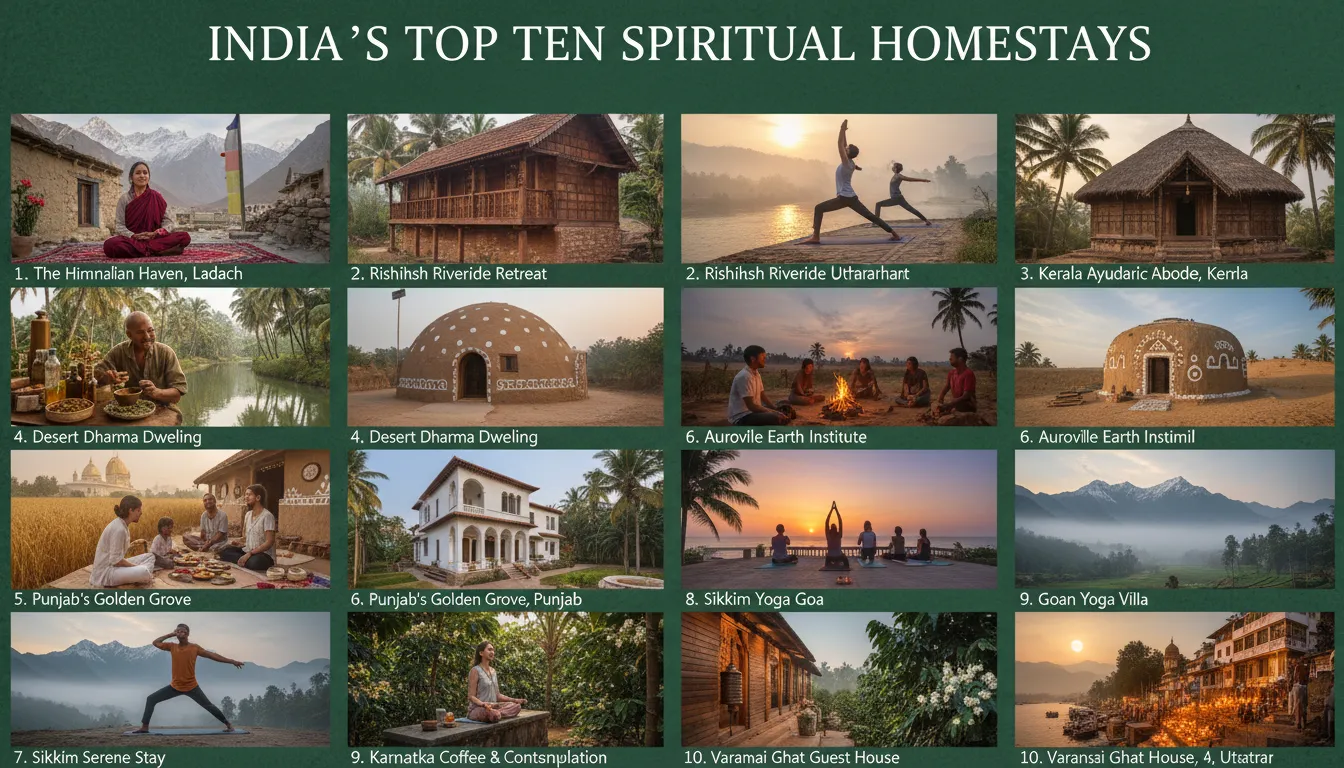
1. Earthship Homestay (Rishikesh, Uttarakhand)
Nestled high in the Himalayan foothills overlooking the sacred Ganges, Earthship Homestay is Uttarakhand's first fully sustainable residential lodge. Founded by Yogi Amitram, the physical structure is constructed using rammed-earth tires, reclaimed timber, and traditional Garhwali stone-and-mud masonry. This design provides natural thermal regulation, keeping the interior cool in summer and warm in winter without mechanical climate control.
The property operates on solar power and rainwater-harvesting systems, offering an immersive model of zero-carbon living. The spiritual curriculum features daily yoga and pranayama sessions, crystal cave meditation, traditional fire pujas, and a guided seven-chakra Himalayan forest trek.
To preserve its serene atmosphere, the property is accessed via a steep, unpaved hill road, keeping it isolated from the traffic and noise of the Tapovan valley below. Guests receive organic, farm-to-table meals prepared on-site by co-host Sunitaji, making it a highly integrated model of sustainable wellness featured on international networks like the Discovery Channel.
2. Golden Loom Homestay (Kanchipuram, Tamil Nadu)
Golden Loom Homestay offers a model of complete domestic autonomy in the ancient temple town of Kanchipuram. The property is rented exclusively to a single booking of up to six guests, making it highly suitable for families on pilgrimage who require space for early morning prayers and private preparation. The physical layout features two air-conditioned bedrooms, a dedicated yoga and meditation room, a private garden, and an open rooftop terrace designed for sunrise viewing.
To prevent disruptions, the home is equipped with high-speed Wi-Fi and a five-hour inverter power backup system. While cooked meals are not provided on-site, the property features a fully equipped kitchen with an RO water purifier, kettle, refrigerator, and reheating facilities. Food delivery options from local traditional South Indian restaurants cover the area.
A stay here includes two complimentary experiences: a 90-minute private guided history and architectural trail through the 8th-century Pallava-built Kailasanatha Temple, and an interactive visit with Kanchipuram's last remaining traditional silk weavers.
3. Sharnga Guest House (Auroville, Tamil Nadu)
Located within the Sharnga community—one of the 150 residential settlements of Auroville—Sharnga Guest House represents a long-term model of community-integrated eco-hospitality. Originally established in 1976 by founders Claude and Bernard on a barren, deforested tract of land, the property has transformed over five decades into a dense forest guest house shaded by ancient trees and populated by wild birds and peacocks. The guest house has been managed by Bernard's daughter, Kripa, since 2005, and features nine uniquely designed rooms, with options for shared or en-suite bathrooms and air conditioning.
Because Auroville operates on a cashless internal economy, guests staying longer than three days receive a personal "Aurocard". This card acts as a registered guest identity card, which is required to arrange visits to the Matrimandir sanctuary and provides access to the Auroville Financial Service.
To support local infrastructure, 20% of the room tariff is contributed directly to the Auroville Foundation. The property features a communal outdoor dining patio where organic breakfasts are served, a refreshing plunge pool, a yoga hall, and a gym. To maintain a peaceful environment, smoking, alcohol, and drugs are strictly prohibited, and in-room dining is discouraged to keep away local wildlife.
4. Granny's Inn (Varanasi, Uttar Pradesh)
Granny's Inn represents a socially progressive "Silver Startup" hospitality model, designed in 2014 to integrate elderly citizens directly into Varanasi’s sustainable tourism economy. Centrally located on Luxa Road in the Godowlia district, this homestay is managed by two sisters, Asha and Aruna. The property features large, clean, artfully decorated bedrooms with modernized en-suite bathrooms, balancing traditional hospitality with modern amenities like high-speed Wi-Fi, dry cleaning, and full power backup.
Due to its central urban location, rooms facing the street experience typical Varanasi traffic sounds, but the property's interior remains a quiet sanctuary. Home-cooked, multi-course vegetarian breakfasts and traditional meals are prepared with local ingredients and served in a shared, open-air ground-floor dining area.
The hosts and their on-site team assist guests with travel arrangements, direct translation needs, and private, non-commercial walking tours of the nearby historic ghats and hand-loom weaving clusters.
5. Spiritual Homestay (Varanasi, Uttar Pradesh)
Operating directly alongside the sacred waterfront, Spiritual Homestay Varanasi offers a private, fully furnished two-bedroom apartment on the second floor of a building near Dashashwamedh Ghat. The property is managed by host Sudhansu and features air-conditioned living spaces, two bathrooms, and a private, fully equipped kitchen with a refrigerator and dining area. This setup allows families and solo travelers to prepare their own meals and maintain their personal dietary routines.
The apartment features a private terrace with views of the old city and is located a six-minute walk from the Kashi Vishwanath Temple, Harishchandra Ghat, and Manikarnika Ghat. The homestay provides access to on-site yoga and meditation classes, daily housekeeping, security, and paid airport transfers.
To protect the property, a refundable damage deposit of Rs. 1,000 is collected in cash on arrival. The property enforces a strict no-smoking, no-pets policy to maintain a clean environment for meditation and rest.
6. Ram Singh Mehra Homestay - First Man of Kasar (Kasar Devi, Almora, Uttarakhand)
Established in 1974, the Ram Singh Mehra Homestay is the oldest registered homestay in the spiritually significant hamlet of Kasar Devi. The property is located one kilometer from the ancient Kasar Devi Temple on the scenic Binsar-Almora highway. It offers a mix of traditional Kumaoni clay-and-mud cottages and modern luxury rooms, all facing the snow-clad peaks of the Great Himalayan Range.
The traditional mud-walled structures provide natural thermal insulation, keeping the rooms comfortable across seasons. The homestay is surrounded by mature pine forests and a large cottage garden, which is popular for morning yoga and silent meditation.
The family-run kitchen serves home-cooked Kumaoni meals made from organic, locally sourced ingredients. It provides a quiet, authentic retreat for long-term travelers, digital nomads, and meditators who want to experience the local culture near Crank's Ridge.
7. Mayapur Vrindavan Trust Guesthouse (Vrindavan, Uttar Pradesh)
Located 100 meters behind the ISKCON Krishna Balarama Temple in the sacred town of Vrindavan, the Mayapur Vrindavan Trust (MVT) Guesthouse offers a peaceful sanctuary for both domestic and international devotees. The property is set within quiet, secure, landscaped gardens and features clean, comfortable rooms alongside a popular on-site vegetarian restaurant. This layout provides a calm space within walking distance of the main temple programs, such as the daily 24-hour kirtan and Srila Prabhupada's Samadhi Mandir.
Guests can also access other local ISKCON accommodations, including the Krishna Kutir (near the ISKCON Goshala), the quiet Seva Sadan in Madhuvan Colony, the meditative Prabhupada Ashram on Sunrakh Road, and the ISKCON Kusum Sarovar guest house located at the sacred foothills of Govardhan Hill.
To maintain the spiritual purity of the space, guests must present a valid ID (or ISKCON Life Membership card) upon arrival. Guests are also expected to follow a strict behavioral code, which includes wearing modest clothing, observing designated quiet zones, and completely abstaining from meat, eggs, alcohol, and smoking.
8. Rainforest Retreat at Mojo Plantation (Coorg, Karnataka)
Established in 1994 by environmental scientists Dr. Sujata Goel and Dr. Anurag Goel, the Rainforest Retreat at Mojo Plantation is a unique model that combines eco-tourism, organic agriculture, and environmental research. The 20-acre certified organic farm is located in the tropical rainforests of the Western Ghats in Karnataka, where cardamom, coffee, vanilla, and black pepper are grown under a natural forest canopy.
The property offers three main accommodation styles: the two-room Drongo Cottage, rustic tents set deep within the forest, and the streamside Atlas Cottages, which are designed for families. There are no televisions in the rooms, and Wi-Fi is limited to a shared streamside pavilion, encouraging guests to disconnect and focus on the natural surroundings.
Organic, home-cooked meals are prepared on-site using fuel from the farm’s biogas plant. All proceeds from the sale of the farm’s organic products—sold under the label Don't Panic, It's Organic—support WAPRED, the Goels' biodiversity research foundation. The retreat is closed to guests during the heavy monsoon season of July and August to protect the local environment.
9. Binsar Forest Retreat (Binsar, Uttarakhand)
Located on a quiet ridge inside the Binsar Wildlife Sanctuary, the Binsar Forest Retreat offers comfortable, eco-friendly living in the mountains. The property sits on land historically known as Edinpur, once occupied by a British officer, Major Edin, and is surrounded by dense oak and rhododendron forests.
The retreat features a variety of unique rooms, including the wooden-floored Trishul rooms with mountain views, the mud-walled Chestnut room built around an uncut natural stone, the stone-walled Nandaghunti rooms, the traditional Kumaoni Rhododendron rooms, and the stone-and-timber Walnut Cottage.
The daily tariff ranges from ₹10,000 to ₹16,000 plus GST, which covers all daily meals and a guided nature hike through the sanctuary. The retreat requires a minimum stay of two nights to help guests disconnect from modern technology and align with the quiet rhythm of the forest. To ensure smooth operations in this remote location, guests must pay a 50% deposit upon booking and the remainder one week before arrival, with no cash payments accepted on-site.
10. Sri Arunachala Homestay (Tiruvannamalai, Tamil Nadu)
Sri Arunachala Homestay is located in Kosamada Theru in Mathalangulam, offering an affordable, family-friendly stay just a ten-minute walk from the ancient Arunachaleswarar Temple. The homestay features four air-conditioned rooms, including double and quadruple options, all equipped with en-suite bathrooms, work desks, and free toiletries.
The property includes a shared rooftop terrace that provides clear views of the sacred Arunachala Hill, a shared kitchen, and a 24-hour front desk. Guests receive a complimentary vegetarian or Asian breakfast each morning featuring local specialties.
The homestay is highly rated for its clean rooms and helpful staff. However, traveler feedback highlights certain local limitations: the property is located in a narrow street that is difficult to access by car, has no elevator, and can experience seasonal issues with mosquitoes. To preserve the family-friendly and quiet atmosphere of the space, unmarried couples are restricted from booking.
Philosophical and Ecological Pillars of Spiritual Hospitality
The Architecture of Natural Integration
A key differentiator of India's leading spiritual homestays is their commitment to sustainable architecture that works in harmony with the local climate and topography. Rather than relying on energy-intensive mechanical heating and cooling, properties like the Earthship Homestay in Rishikesh and the Binsar Forest Retreat utilize traditional building materials—such as rammed earth, mud plaster, local stone, and Pataal roofing—to achieve natural insulation.
At Mojo Plantation's Rainforest Retreat, the physical layout follows the natural contours of the land to minimize soil erosion and preserve the surrounding forest ecosystem. These sustainable practices are central to the guest experience, serving as a physical demonstration of environmental stewardship and mindfulness.
Local Sourcing and Culinary Heritage
The culinary programs at these homestays are designed to preserve regional traditions and support local farming communities. Meals are typically vegetarian and prepared with fresh, organic, and locally sourced ingredients. At Kasar Devi's Temple View Stay, the kitchen specializes in traditional Kumaoni dishes like Bhatt Ki Churkani (a nutrient-rich black bean curry) and Mandua Roti (millet flatbreads served with homemade ghee), introducing guests to the agricultural heritage of the Kumaon hills. Similarly, the TEST model in Kerala and the shared dining patio at Auroville’s Sharnga Guest House utilize home-cooked meals to foster a sense of community and connection among guests.
Navigating the Secular-Devotional Spectrum
These properties cater to a wide range of travelers, balancing traditional religious practices with modern wellness and secular meditation. This spectrum is reflected in their varied operational styles and rules:
[Strict Devotional Code] ---------------------------------- [Secular & Eco-Spiritual]
MVT Guesthouse / ISKCON      Sri Arunachala Homestay        Earthship Homestay        Rainforest Retreat
(Monastic rules, kirtan)     (Vegetarian, no couples)       (Yoga, crystal caves)     (Biodiversity, science)
Devotional stays, such as the MVT Guesthouse in Vrindavan and Sri Arunachala Homestay in Tiruvannamalai, enforce strict behavioral guidelines—including bans on meat and alcohol, modest dress codes, and restrictions on unmarried couples—to maintain the spiritual purity of their sacred locations.
In contrast, properties like the Earthship Homestay and the Rainforest Retreat focus on broader themes of environmental mindfulness, wildlife conservation, and physical yoga practice. This variety allows travelers to choose an accommodation that aligns with their personal spiritual goals and lifestyle preferences.
Conclusions and Practical Insights for Seekers
The continued growth of the spiritual homestay sector in India highlights a meaningful shift in modern travel preferences, with more people choosing simplicity, quietude, and ecological responsibility over standard luxury. By offering self-directed, un-curated spaces, these homestays allow guests to connect with the country's spiritual and natural heritage in a highly personal and authentic setting. For travelers planning a stay, it is helpful to keep a few practical considerations in mind:
- Advance Communication: Because many properties are located in remote areas, travelers should confirm their arrival times and road conditions with their hosts in advance.
- Understanding House Rules: Devotional properties often have specific guidelines regarding dress codes, quiet hours, and dietary restrictions that guests are expected to follow.
- Booking Policies: Remote retreats often require advance deposits and have strict cancellation windows due to their limited room capacity and seasonal operations.
Ultimately, these ten premier spiritual homestays provide well-maintained, comfortable, and conscious sanctuaries for travelers seeking deep reflection, personal renewal, and a closer connection to the natural world.
Keep Reading
View All Articles-
Complete Guide to the Amarnath Yatra: Amareshvara, the Immortal Lord
The annual Amarnath Yatra is a profound manifestation of India's syncretic and inclusive culture, blending religious fervor, secular ethos, and the extraordinary endurance required to traverse the high-altitude terrain of Jammu and Kashmir.
-
Complete Guide to Muktinath (Muktikshetra): The Ultimate Pilgrimage in Nepal
Muktinath, known traditionally as Muktikshetra (the site for salvation), stands as one of the most spiritually profound, historically rich, and visually breathtaking pilgrimage destinations in the world.
-
Bhimbetka's Primeval Paintings: A Journey Through Time
On a train journey in 1958 to Bhopal in Madhya Pradesh, archacologist V.S. Wakankar made an immediate note of what would have seemed to be mere rock formations to the untrained eye but were, in fact, rock shelters and caves in the distant hills.