






Spiritual Guides and Gurus
Shri Maa Anandamayi, Secular Power, and the Fellowship of Saints
The spiritual landscape of twentieth-century India was profoundly shaped by the presence of Nirmala Sundari, later revered globally as Shri Maa Anandamayi.
 By Raj K. Vashyan
15 min read
By Raj K. Vashyan
15 min read

The Advent of the Bliss-Permeated Mother: Background and Early Life
The spiritual landscape of twentieth-century India was profoundly shaped by the presence of Nirmala Sundari, later revered globally as Shri Maa Anandamayi. Born on April 30, 1896, in the village of Kheora in East Bengal, which is located in modern-day Bangladesh, she emerged from a pious but financially modest Vaishnava Brahmin family. Her mother, Mokshdasundari, experienced auspicious prenatal visions of holy sages and divine deities appearing and disappearing, signaling the extraordinary nature of the child she carried. Nirmala’s birth was remarkably serene, unaccompanied by crying, and she later surprised her family by accurately remembering the names of individuals who were present in the room immediately following her birth.
Her childhood was marked by spontaneous trances and ecstatic states. The sound of religious chanting or devotional music would immediately plunge her into deep spiritual absorption, and at local temples, she frequently saw divine figures stepping out of stone idols and then re-entering them. Known affectionately as Runga Didi by the local villagers, she possessed an innate spiritual attraction that drew people of all social classes to her presence.
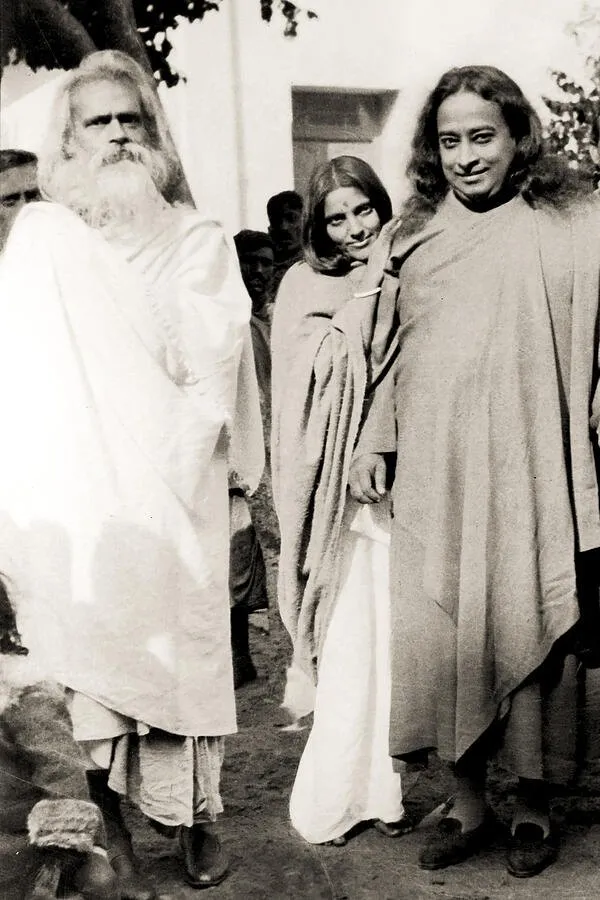
Following the orthodox customs of her time, Nirmala was married at the age of thirteen to Ramani Mohan Chakrabarti, who would later be known as Bholanath. The marriage remained strictly celibate. Any physical contact from her husband triggered involuntary physiological shocks and fainting spells in Nirmala's body. At the age of sixteen, her husband brought a friend home to showcase his exceptionally beautiful young wife. Nirmala, known then for her physical and inner beauty, draped a towel over her head and completely covered her face. When her husband demanded that she show her face to his friend, she removed the towel and declared, "I am Brahman all-pervading". While her husband was furious, his friend was deeply amused.
Initially, Bholanath struggled to comprehend her constant state of prayer and self-absorption, occasionally treating her harshly. Nirmala quietly advised him to wait two years, after which he would no longer be able to strike her. Within that period, as her spiritual status drew devotees, Bholanath realized her divinity, touched her feet, and begged for forgiveness, becoming her first formal disciple. The local villagers were shocked to see a husband become a disciple to his wife, but Bholanath maintained that she was not possessed by demons, but rather entirely possessed by God.
Between the ages of twenty-two and twenty-eight, Nirmala entered a phase known as the Lila of Sadhana, or the play of spiritual practice. During this period, her body automatically executed highly complex hatha yoga postures and intricate hand gestures (mudras). She compared these spontaneous movements to the automated machines of a factory operating in perfect sequence to produce a final product. Her spiritual absorption culminated on the full moon night of August 3, 1922.
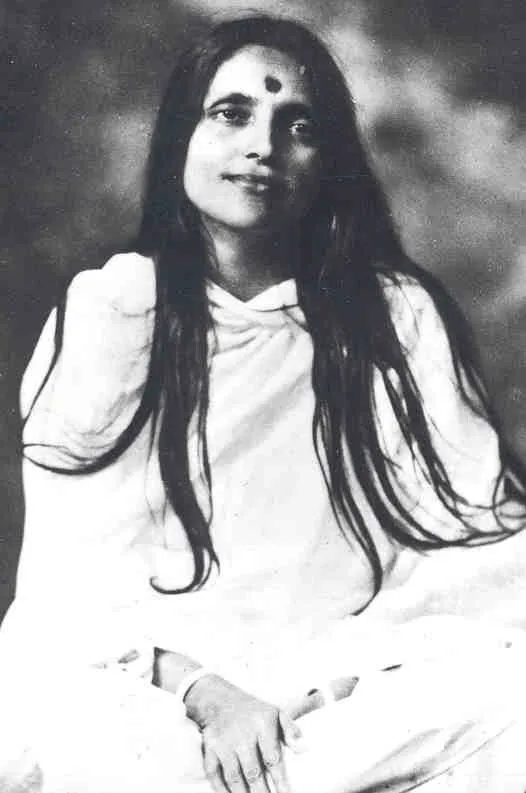
At midnight, the twenty-six-year-old Nirmala performed her own spiritual initiation. Uneducated in scriptures, she spontaneously executed complex rituals matching ancient Hinduism, utilizing offerings, fire ceremonies (yajnas), and mystical diagrams (yantras). She understood this initiation as a state where her highest Self acted as the Guru and her lower self acted as the disciple. Her foremost disciple, Jyotish Chandra Roy, later gave her the title Maa Anandamayi, meaning the "Bliss-Permeated Mother," because of the absolute joy and peace people felt in her presence.
Mysterious Spiritual Powers: Siddhis and Occult Manifestations
To her followers, Maa Anandamayi was a fully awakened incarnation of the Divine Mother. Her life was a continuous display of supernatural powers, known as siddhis, which occurred spontaneously according to her kheyal, or divine will. She had no personal ego and viewed her body as a mere instrument for the play of pure consciousness.
Around 1924 to 1926, Maa Anandamayi underwent a profound physical shift and permanently stopped feeding herself. Her hands would structurally no longer carry food to her mouth, forcing her companions and devotees to hand-feed her for the remaining fifty-eight years of her physical life. Her eating habits were highly unusual; she often fasted for long durations, ate only once a day, or ate on alternate days.
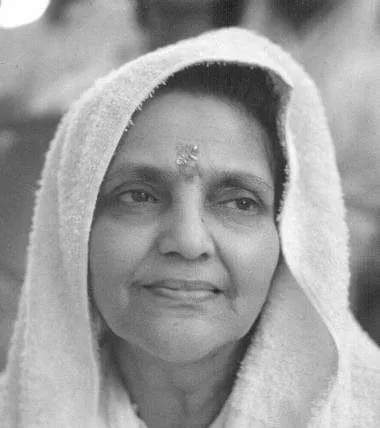
At other times, she would suddenly consume enough food to feed eight or nine people. She later revealed that she only consumed food to maintain outer appearances and prevent her devotees from worrying, as she directly absorbed cosmic energy (prana) to sustain her physical frame.
|
Category of Occult Manifestation |
Specific Spontaneous Phenomenon |
Documented Spiritual Outcome |
|
Metabolic Autonomy |
Total cessation of self-feeding. |
Hand-fed by disciples for 58 years; sustained directly by cosmic prana. |
|
Somatic Samadhi |
Immobilization of mental and physical states. |
Remained in unprovoked samadhi for five consecutive days without external response. |
|
Physical Transformation |
Spontaneous shrinking and expansion of her body. |
Leveraged to read thoughts at a distance and heal sick devotees. |
|
Distance-Healing |
Grasping the "life substance" of a dying person. |
A disciple was saved from death after a major car accident. |
|
Nada Shakti Resonance |
Vocal sound rising from the navel to the head. |
Sound transformed into the mantra "Om," triggering ecstasy in listeners. |
|
Interfaith Realization |
Spontaneous Islamic Namaj and Quranic recitation. |
Performed at a Muslim tomb in Shahbag; Kheora's Muslims claimed her as "our own Ma". |
Maa Anandamayi possessed a titanic spiritual presence that transformed her physical surroundings, creating a joyful, heavenly environment wherever she traveled. She was widely recognized as a sarvagya, or omniscient being, capable of answering complex scriptural questions without premeditation or formal education. She referred to herself in the third person as "this body" or "this little girl" to remain completely detached from any sense of ego.
Her spiritual light reached the Western world through Paramahansa Yogananda, who dedicated a chapter of his famous book Autobiography of a Yogi to her, calling her the "Bengali 'Joy-Permeated Mother'". Her admirers included global figures such as Mahatma Gandhi, Pierre Elliott Trudeau, the Queen Mother of Greece, and the former President of India, Dr. Rajendra Prasad. In Dhaka, she was revered as "Manush Kali" (the living Kali), and in Punjab, she was accorded the same spiritual honor as the holy Granth Sahib.
The Dialogue of Truth: Core Teachings and Philosophical Satsangs
The central theme of Maa Anandamayi’s teachings was that self-realization is the supreme calling of every human being, and all other worldly obligations are secondary. She did not advocate a single spiritual path for everyone, emphasizing that each individual should progress according to their unique, inborn nature. She did not give formal initiations and refused to be called a guru, maintaining that "all paths are my paths".
She taught that sorrow and pain are caused by the perception of duality, and that finding the One in everything is the only way to end human suffering. Her teaching style was highly interactive, blending songs, jokes, long discourses, and silent meditation.
Maa Anandamayi held notable dialogues with other spiritual leaders, including Jiddu Krishnamurti, a famous philosopher who publicly spoke against the necessity of gurus and traditional spiritual practices. During a meeting in the Delhi garden of Kitty Shiva Rao, the Mother gently challenged Krishnamurti's stance. She asked him why he spoke against gurus when, by teaching large crowds and influencing their views, he automatically became their Guru.
Krishnamurti argued that discussing problems with a friend does not make them a guru, and compared spiritual warnings to a barking dog alerting a traveler to a snake in the dark. Maa Anandamayi calmly replied that if a disciple exists, a guru must also exist, pointing out that his very method of analytical reasoning was a path in itself. Krishnamurti quietly held her hand and did not offer a further reply, recognizing her profound wisdom.
When instructing devotees on the practice of worship, Maa Anandamayi emphasized that true worship is not a rigid ritual, but an inner attitude and a personal experience. She instructed that the real worship is the mental puja. Devotees should close their eyes, visualize the living deity before them, and imagine touching, garlanding, and feeding the deity with their own hands. She warned that without this inner, mental visualization, physical worship was merely playing with dolls.
In her dialogues with visiting sannyasis, she explained that human differences are born of past actions (karma), which karma itself will eventually resolve. When asked where the center of thought resides in the human body, she smiled and pointed to the top of the head, explaining that the head contains the root of thought, while the heart is the center for experiencing worldly joy and sorrow.
Core Philosophical Principles of Maa Anandamayi
- The Path to Self-Realization: Human life's ultimate purpose is to realize the Self. All daily duties should be carried out with love, goodwill, and a constant, live connection with the Divine.
- Universal Acceptance: Welcomed and respected all religious traditions, including Shaivaite, Vaishnavite, Tantric, Islamic, Christian, Jewish, Sikh, Buddhist, and Zoroastrian paths.
- Egoless Action: Actions performed without desire for self-gratification are beautiful and pure. Ego-driven actions lead to personal pain and emotional distress.
- Surrender and Equanimity: Devotees should accept all life circumstances as God's way of drawing them closer, remaining content and surrendered to the divine will.
- Repetition of the Divine Name: Repeating the name of God through silent chanting (japa) or congregational singing (kirtan) is the surest solution to life's problems.
Temporal Power and Esoteric Comfort: The Dynasty of Indira Gandhi
Maa Anandamayi's relationship with the prominent Nehru-Gandhi family spanned three generations, starting with Pandit Jawaharlal Nehru, who held the Mother in deep veneration and regularly consulted her in private. Indira Gandhi had her first darshan of the Mother during her teenage years and maintained a deep, lifelong connection with her, seeking her spiritual presence during times of intense political and personal distress.
Indira Gandhi walked barefoot in the Mother's presence, physically fed Ma with her own hands, and placed her newborn grandson in the Mother’s lap to receive her blessing. She frequently canceled political engagements to meet Ma and flew to Varanasi in December 1968 to personally open the Mata Anandamayee Charitable Hospital, highlighting her dedication to the Mother's charitable vision.
|
Date / Historical Period |
Event Details and Location |
Dynastic Participants |
Esoteric and Historical Context |
|
May 3, 1961 |
Ma's Birthday Homage, Allahabad. |
Pt. Jawaharlal Nehru, Indira Gandhi |
Devotional visit; Ma led a public kirtan and hosted the family in her room. |
|
September 8, 1961 |
Feroze Gandhi Death Anniversary, Delhi. |
Indira Gandhi, Ashram Singers |
At Indira's request, Ma sent her ashramites to sing sacred chants at the PM's house. |
|
October 2, 1961 |
Garden Audience, PM's Residence. |
Pt. Jawaharlal Nehru, Indira Gandhi |
Nehru received a sandalwood bead garland from Ma; Indira walked barefoot with Ma. |
|
November 14, 1962 |
Surprise Birthday Blessing, Delhi. |
Pt. Jawaharlal Nehru, Ma Anandamayi |
Ma arrived unannounced early in the morning to be the first to bless Nehru on his birthday. |
|
August 19, 1963 |
Rakhi Blessing Ceremony, Delhi. |
Indira Gandhi, Rajiv Gandhi, Sanjay Gandhi |
Ma presented flower garlands and tied protective Rakhi threads on the young brothers. |
|
May 1964 |
Jawaharlal Nehru's Passing, Delhi. |
Indira Gandhi, Almora Ashramites |
Ma sent her ashram singers from Almora to Delhi to perform continuous comforting kirtans. |
|
January 1966 |
Kumbha Mela Blessing, Allahabad. |
Prime Minister Indira Gandhi |
Visited Ma's camp immediately after becoming PM for the first time to seek her blessings. |
|
January 1972 |
Post-South Indian Tour Meeting, Dehradun. |
Prime Minister Indira Gandhi, Sonia Gandhi |
Met Ma following her grand tour of Madras and Travancore to seek quiet personal counsel. |
|
1975 – 1977 |
The State of Emergency. |
Prime Minister Indira Gandhi |
Sought deep psychological solace from Ma during a period of severe political isolation. |
|
1979 |
Secret Laksha Chandi Ritual. |
Indira Gandhi, Esoteric Advisors |
Begun to protect Sanjay's life; kept hidden to preserve her public secular image. |
This relationship was set against a backdrop of intense political turmoil and personal isolation. During the State of Emergency from 1975 to 1977, when Indira Gandhi ruled by decree, suspended civil liberties, and faced widespread public anger alongside her younger son, Sanjay, she looked to spiritual guides like Maa Anandamayi, Jiddu Krishnamurti, and Vinoba Bhave for comfort.
Her family was also shadowed by a severe spiritual curse. In November 1966, following a massive cow-protection protest in front of the Parliament of India, Indira Gandhi's administration ordered police to open fire on the demonstrating sadhus and cow herders, resulting in the deaths of hundreds. The prominent saint Karpatri Maharaj reportedly wept over the bodies and cursed Indira Gandhi, stating that she and her family would perish by gunfire in the exact same violent manner.
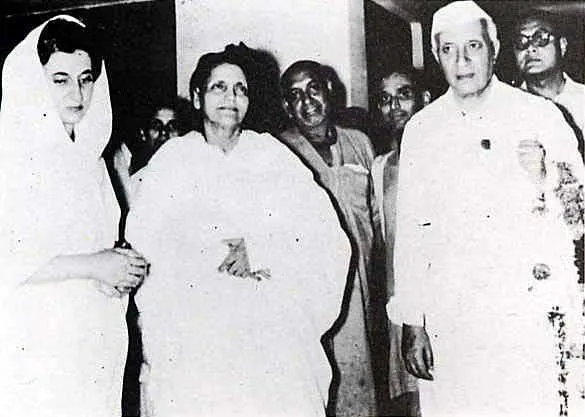
Fearing this curse and the rising threats to the life of her politically active son, Sanjay, Indira was advised by her close aides in 1979 to authorize a highly secretive, massive Laksha Chandi Tantric ritual to protect him. She kept these rituals and her deep connections with spiritual figures strictly confidential, as her advisers warned that such practices would be viewed as "antirational" or "nonsecular" by the public, undermining the rational legacy of her father, Jawaharlal Nehru.
Despite these esoteric efforts, the subsequent tragic deaths of Sanjay Gandhi in a 1980 plane crash and Indira Gandhi’s own assassination in 1984 cemented the popular belief in the inevitable fulfillment of the saintly curse.
The Fellowship of Saints: Interactions with Neem Karoli Baba
The spiritual connection between Maa Anandamayi and Neem Karoli Baba, also known as Maharajji, was characterized by mutual respect, silent spiritual recognition, and playful, childlike interactions. Born as Lakshman Narayan Sharma around 1900 in a Brahmin family, Neem Karoli Baba ran away from home at the age of eleven to wander as a sadhu. He later returned to lead a householder life before leaving permanently in 1958 to wander across northern India.
When the two masters met in spiritual hubs like Vrindavan or Kainchi Dham, they shared a quiet, wordless exchange of presence, recognizing the divine in one another.
Neem Karoli Baba harbored a deep, sweet affection for Maa Anandamayi, often viewing her through the lens of maternal divinity. One morning, he announced to his devotees: "You people can’t feed me or take care of me. I’m going to Ma. She’ll feed me.". He walked to her ashram excitedly chanting, "She’ll feed me. I’m going to see Ma.".
Upon arriving, he burst into her darshan room like a five-year-old child, his blanket flying in all directions, and shouted, *"Ma! Feed me. Feed me, Ma!". Maa Anandamayi laughed with delight, immediately ordering a massive feast to be prepared. Together, the two saints sat and distributed the food to the gathered crowd, showing that the act of feeding others is a sacred path to spiritual awakening.
Another remarkable encounter occurred during Maa Anandamayi’s Tithi Puja in Almora in May 1944. The evening before the festival, a devotee named Pt. Parasuram openly doubted whether Neem Karoli Baba would arrive. At that exact moment, Baba's voice shouted loudly from the road above, announcing his arrival. Ma immediately rebuked the devotee, warning everyone never to criticize the unpredictable behavior of saints.
The next day, Baba failed to appear at noon to eat a special Gujarati meal prepared for him by the wife of Kanti Bhai Munshaw, leaving the family disappointed. They reluctantly ate late in the evening, only for Baba to suddenly arrive at the ashram right after they finished. When another devotee, Pt. Govind Prasad Pande, began criticizing Baba for breaking his promise, Ma sharply interceded.
Baba then turned to Munshaw Bhai and remarked that the Gujarati dish his wife had prepared had been absolutely delicious. Because Munshaw had not mentioned the menu to anyone, Ma explained the mystery to the startled gathering: Baba did not need to be physically present to eat; he had telepathically enjoyed the offering in his subtle body.
Their spiritual unity was also evident in their guidance of shared devotees. A female disciple who felt torn between her devotion to both saints was granted a vivid dream where Neem Karoli Baba gave her a mantra, stating, "This is a mantra from Ma.". When the disciple later met Maa Anandamayi in person, Ma spontaneously confirmed and validated the exact same mantra, proving that their spiritual guidance operated on a single, unified plane of consciousness.
Furthermore, as a young child, the girl who would later become Siddhi Ma was dancing joyfully at a satsang. Moved by her pure innocence, Maa Anandamayi lifted her in her arms and proclaimed, "She is the mother of this world," foreshadowing her future role as a spiritual mother to thousands of devotees.
Comparative Dimensions of the Two Masters
- Spiritual Persona: Maa Anandamayi was viewed as the embodiment of absolute bliss and the goddess Kali or Durga. Neem Karoli Baba was revered as a highly compassionate saint and a perfect devotee of Hanuman.
- Teaching Style: Delivered spontaneous answers, silent meditation sessions, traditional scripture readings, and jokes. Taught through simple daily actions, silent presence, and the distribution of blessed food (prasad).
- Attitude Toward Devotees: Possessed unconditional love and motherly care, but remained completely unattached and objective. Maintained a fiercely protective, grandfatherly affection, stating, "Once I catch hold of you, I don't let go".
- Stance on Miracles: Viewed miracles as natural, automatic happenings driven by the divine kheyal. Performed spontaneous miracles while humorously claiming to be an ordinary human being with no powers.
The Great Departure and Lasting Legacy
In her final years, Maa Anandamayi quietly prepared her close disciples for her departure. During an Ati Rudra Mahayagna in Dehradun in May 1980, she spent intimate moments with her long-time companion, Gurupriya Devi, who was lovingly called Didi. Before Didi passed away in September 1980, Ma bid her a quiet, moving farewell, caressing her entire body and pressing her head (Brahma Talu) three times while whispering, "Didi, let me go now".
Maa Anandamayi’s own physical health declined as she reached the age of eighty-six. Suffering from intestinal parasites, her spiritual radiance remained entirely undiminished, transforming her physical surroundings into peace and bliss. She left her physical body on August 27, 1982, in Dehradun.
On August 29, 1982, a sacred samadhi shrine was constructed in the courtyard of her Kankhal ashram on the banks of the Ganges in Haridwar, where thousands of mourners gathered to pay their respects to the "most perfect flower the Indian soil has produced".
Two years later, on October 31, 1984, the temporal world was shaken when Prime Minister Indira Gandhi was assassinated by her bodyguards. Her state funeral at Shakti Sthal in New Delhi was attended by prominent global leaders, including Zia-ul-Haq of Pakistan, Margaret Thatcher of the United Kingdom, and Yasser Arafat, who wept openly for the leader he considered his sister.
As her eldest son, Rajiv Gandhi, performed her last rites on a pyre of sandalwood logs, the flames marked the end of a historic era. The deep, silent relationship between India’s most powerful Prime Minister and its most revered spiritual Mother remains a profound testament to the human search for eternal truth amidst the temporary struggles of worldly power.
Keep Reading
View All Articles-
Aghoracharya Baba Keenaram
This article provides a comprehensive historical, philosophical, and anthropological analysis of Baba Keenaram hagiography, his seminal literary contributions, the sacred geography of his headquarters at the Krim Kund Sthal in Varanasi
-
स्वामी अवधेशानन्द गिरि : आचार्य महामंडलेश्वर श्री पंच दशनाम जूना अखाड़ा
संन्यासी सत्ता का आधुनिकीकरण: स्वामी अवधेशानन्द गिरि और श्री पंच दशनाम जूना अखाड़ा के विकास का एक विस्तृत विश्लेषण
-
द्वाराहाट: महावतार बाबाजी की साधना स्थली और क्रिया योग की शाश्वत परंपरा
इसकी भौगोलिक संरचना में ऐतिहासिक द्वाराहाट कस्बा, सिद्ध शक्तिपीठ दूनागिरी और अंतिम मोटर मार्ग बिंदु कुकुछीना शामिल हैं, जो महावतार बाबाजी की गुफा के मुख्य प्रवेश द्वार के रूप में कार्य करते हैं ।