







Personal Essays & Thoughts
The Legacy of Ashoka the Great: Rock Edicts, Pillars, and the Mauryan Empire
The story of the Mauryan Empire in the fourth century BC begins with an ambitious young man leading a rag-tag army, guided by a crafty Brahmin, to overthrow a debauched king.
 By Spiritual Yatra
3 min read
By Spiritual Yatra
3 min read

The story of the Mauryan Empire in the fourth century BC begins with an ambitious young man leading a rag-tag army, guided by a crafty Brahmin, to overthrow a debauched king. This young man was Chandragupta Maurya, and the empire he founded would eventually produce one of India's greatest rulers: Ashoka the Great.

The Rise of the Mauryan Empire
Growing up during the time of Alexander the Great’s incursions into Punjab, Chandragupta set his sights on the Nanda kingdom in Magadha (present-day eastern Uttar Pradesh and Bihar).
- A Powerful Alliance: With the help of the Brahmin Kautilya—a sworn enemy of King Dhana Nanda—Chandragupta gathered an army fueled by promises of glory.
- The Conquest: He wrestled Punjab from Greek control, swept eastwards, and captured the capital, Pataliputra, in 326 BC.
- A Vast Legacy: Through treaties, wars, and alliances, Chandragupta left his successors a massive empire stretching from Afghanistan to Gujarat, and through Central India to Bengal.
Ashoka’s Transformation and the Message of Peace
Chandragupta’s famous grandson, Ashoka (269–232 BC), transformed from a man of war into a man of peace.
- The Turning Point: Unable to bear the bloody aftermath of the war against Kalinga (modern Odisha), Ashoka foreswore violence and embraced Buddhism.
- The Philosophy of Dhamma: He resolved to spread Dhamma—broadly defined as enlightened, responsible coexistence—among his subjects.
- The Rock Edicts: Ashoka propagated his message of peace, charity, and humane governance through 14 rock edicts, cave edicts, and numerous freestanding pillars.
- Inscriptions for the People: Written in direct, informal prose using local languages (and sometimes multiple languages in a single area) and inscribed in the Brahmi script, these are the earliest intelligible historical records from ancient India.
The Mastery of the Ashokan Pillars
The highly polished, beautifully carved Ashokan sandstone pillars are examples of fully developed art, the early stages of which remain a mystery.
- Foreign Influence: The remarkable high polish of Mauryan stone wasn't seen again in the subcontinent for centuries, suggesting a strong influence from Achaemenid or West Asian craftsmen following Alexander’s military expeditions.
- Architectural Features: Notable pillars at Sanchi, Sarnath, Rampurva, and Lauriya Nandangarh feature tall, tapering shafts without a base. They are capped by gently arched bells of stylized lotus petals and crowned by seated or standing animals over a narrow carved frieze.
Symbolism and the National Emblem of India
The symbolism of the pillars has been widely debated—ranging from tree worship and early Shaivaite phallic symbols to representing a cosmic axis connecting the heavens, the king, and the earth.
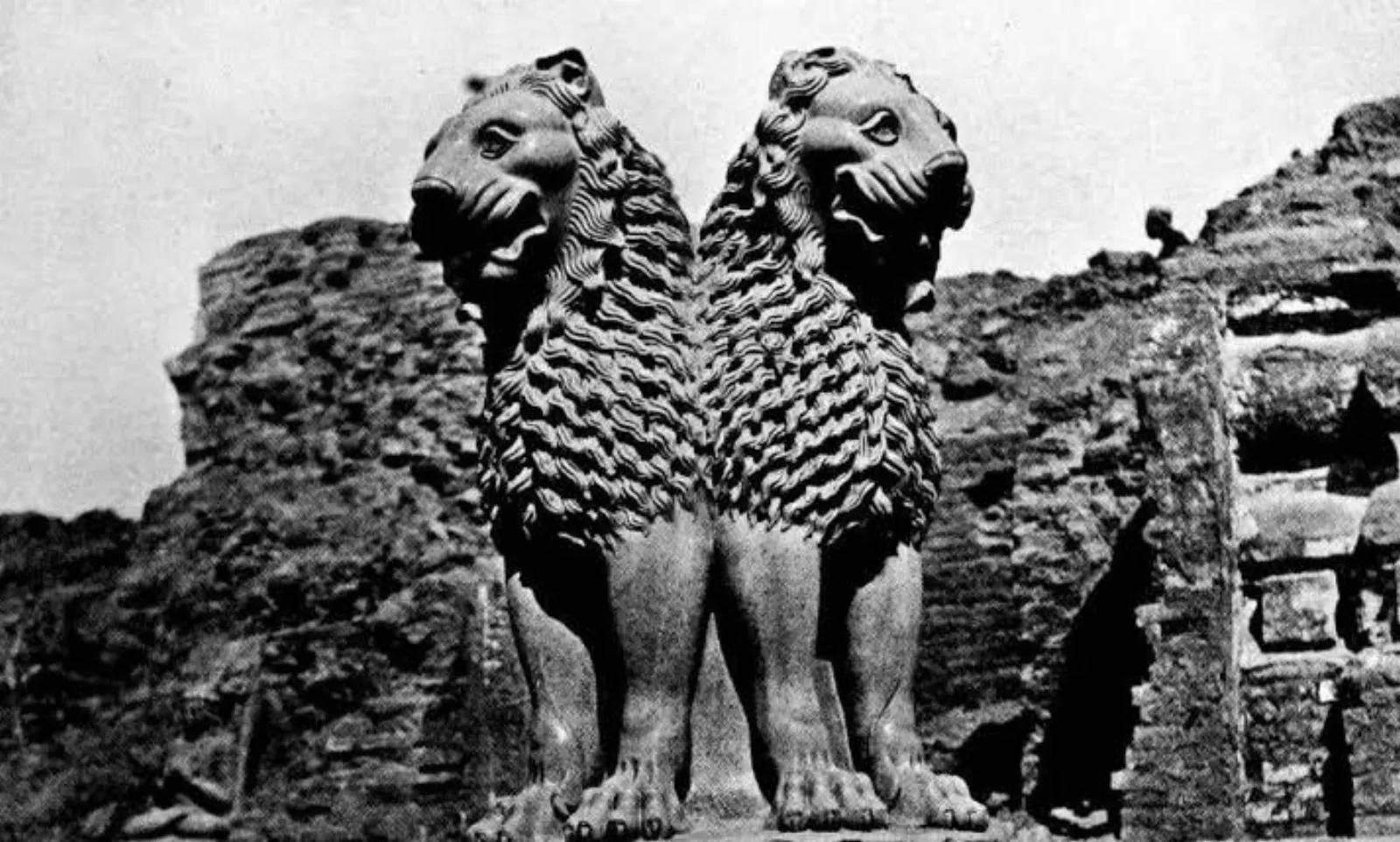
The most famous pillar at Sarnath, a sacred Buddhist site, features a deeply symbolic capital:
- The Four Lions: Four lions sit back-to-back on a drum. The lion was the symbol of the Mauryan dynasty, and these four solemn lions gaze sternly in the cardinal directions, emphasizing the divine authority of the righteous king to rule his vast empire.
- The Four Animals: The frieze below features a bull, a horse, a lion, and an elephant, representing the four cardinal directions in Indic philosophy.
- The Chakras (Wheels): The animals are separated by four chakras. The chakra is an important symbol of cosmic law in Upanishadic thought and also represents the Buddha’s first sermon, known as the "Turning of the Wheel of Law."
Today, this magnificent pillar capital from Sarnath stands proudly as the National Emblem of the modern Republic of India.
Keep Reading
View All Articles-
An Ode to the Bah'ai Faith: The Lotus Temple
The Lotus Temple is a nine-sided expression of worship |christened the Lotus Temple because of its extraordinary shape of an unfurling 27-petalled lotus flower
-
Meri Praarthnaa: A Powerful Shiva and Shakti Devotional Prayer
Meri Praarthnaa is a deeply spiritual devotional composition dedicated to Shiva and Shakti, expressing surrender, inner transformation, and the search for divine truth
-
Jiivndaan: Social Service, Human Values, and Community Well-Being
This article highlights the purpose, social impact, and spiritual importance of helping others, building a caring society, and inspiring positive change through service, awareness, and collective