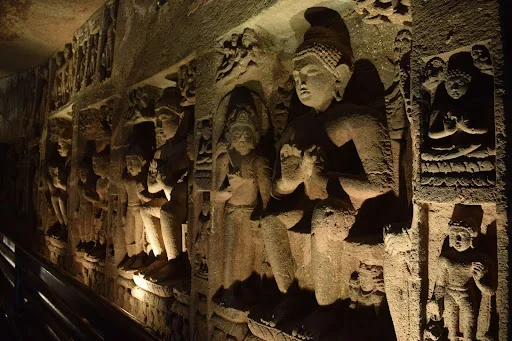




Heritage & Architectural Wonder
Lepakshi : Travel Guide to History
The historic town of Lepakshi, situated in the Sri Sathya Sai district of Andhra Pradesh, stands as one of the most culturally, archaeologically, and spiritually significant heritage sites of southern India.
 By Raj K. Vashyan
21 min read
By Raj K. Vashyan
21 min read

Lepakshi Heritage and Travel Manual: A Guide to History, Architecture, Art, and Regional Logistics
The historic town of Lepakshi, situated in the Sri Sathya Sai district of Andhra Pradesh, stands as one of the most culturally, archaeologically, and spiritually significant heritage sites of southern India. Renowned for its architectural scale, spectacular 16th-century stone carvings, and the most extensive surviving repository of Vijayanagara-era mural paintings, Lepakshi represents the artistic and engineering zenith of the late medieval Vijayanagara Empire. This article provides a highly detailed, multidisciplinary guide to the historical evolution, architectural triumphs, pictorial traditions, and regional crafts associated with Lepakshi, alongside comprehensive logistical directories for the contemporary traveler.
Historical Chronology and Sacred Mythotopography
The cultural identity of Lepakshi is shaped by a profound convergence of classical Sanskrit epics, localized folklore, and late medieval imperial administrative history. To fully comprehend the physical layout and sacred alignment of the town's installations, one must examine both its mythological origins and its 16th-century historical patrons.
Mythological Origins and Etymology
The name of the town is intimately linked to the ancient Indian epic, the Ramayana. According to the sthala purana (regional sacred geography) and the Valmiki Ramayana, Lepakshi is the exact geographic spot where the mythical demi-god bird king, Jatayu, fell after being mortally wounded by the demon king Ravana during the abduction of Sita. As Lord Rama and Lakshmana wandered through the Deccan plateau in search of Sita, they stumbled upon the dying bird. After Jatayu recounted the details of his celestial battle with Ravana and pointed Rama toward the southern kingdom of Lanka, the bird prepared to breathe his last. In a gesture of supreme divine gratitude and compassion, Rama embraced the bird and blessed him to attain moksha (spiritual liberation), whispering the Telugu phrase "Le Pakshi"—which translates directly to "Rise, O Bird". Guided by this divine command, the bird's devotion was immortalized, giving the soil of the village its sacred name.
An alternative etymological theory, grounded in the linguistic and physical heritage of the region, derives the name from the Kannada words "Lepa" (meaning to paint or write) and "Akshi" (meaning eye). This translates to "the painted eye" or "the eye that wrote," a reference to a localized variant of the legend wherein the blinded Jatayu indicated Sita's path with his eye, as well as the abundance of painted eyes in the temple's extensive murals.
The natural terrain itself is spiritually coded. The Veerabhadra Swamy Temple is situated atop a low granite hillock known as Kurmasailam or Kurma Saila, so named because its natural, weathered rock exposure resembles the shell of a giant tortoise. According to the Skanda Purana, the original spiritual foundation was laid by the revered Vedic Sage Agastya, who inhabited a natural cave on this hill and consecrated a small shrine to Lord Papanasheshvara (a form of Shiva), designating it as one of the 108 ancient Shaivite pilgrimage sites (Divya Kshetras) of southern India.
The Vijayanagara Era and Administrative Context
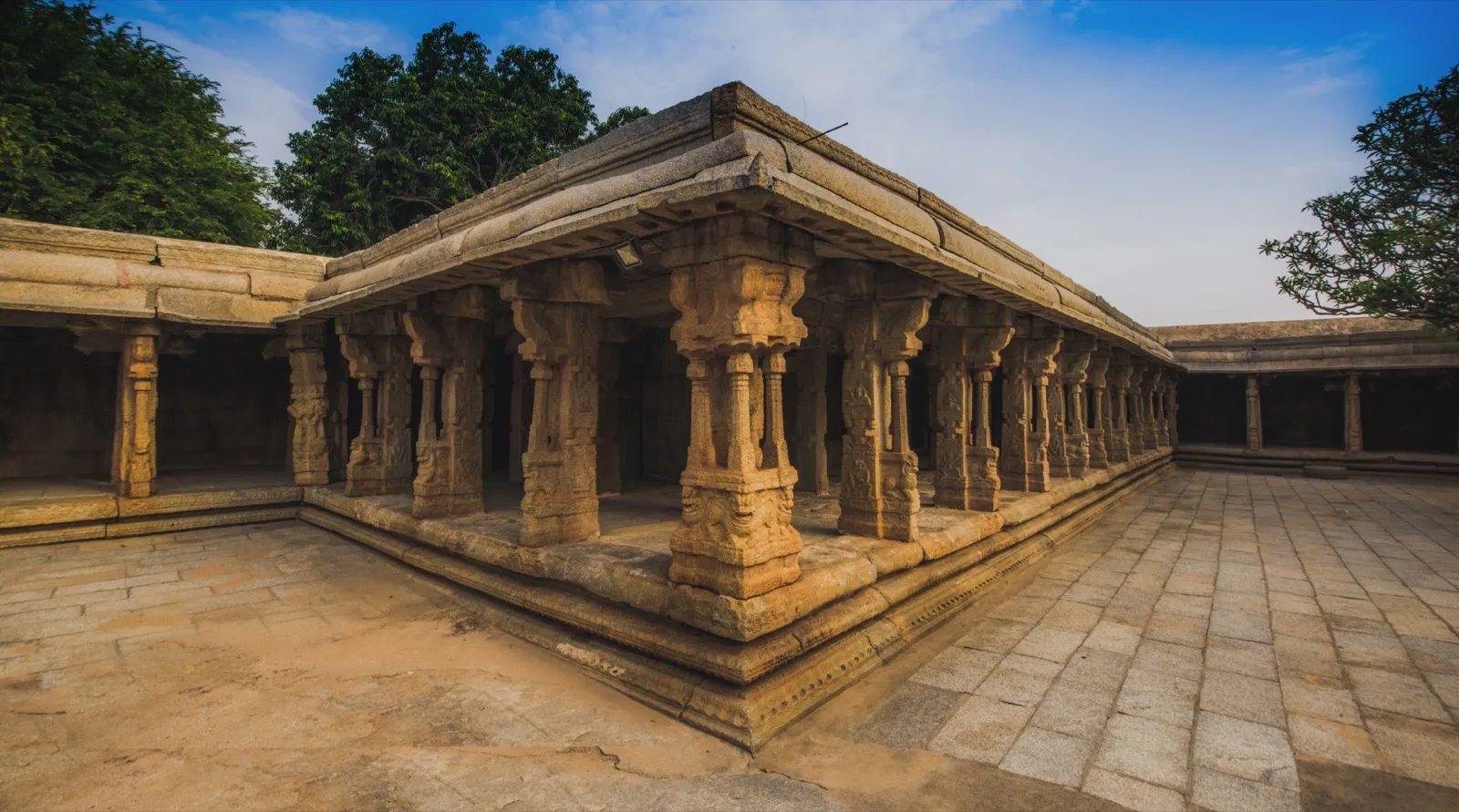
While the site possesses ancient sacred origins, the grand architectural complex visible today was constructed between 1529 and 1542 AD during the reign of the Vijayanagara Emperor Achyuta Deva Raya. The primary patrons and builders were the royal administrative brothers, Viranna and Virupanna Wadiyar, who served as governors of the strategic province of Penukonda.
The historical narrative is marked by a tragic legend regarding the construction of the Kalyana Mandapa (marriage hall). Virupanna, the royal treasurer, allegedly drew funds from the imperial treasury without prior royal authorization to finance the construction of the temple complex. Upon learning of this, King Achyuta Deva Raya ordered that Virupanna be blinded as punishment. Unable to bear the dishonor of the accusation, Virupanna preemptively gouged out his own eyes and threw them against the western wall of the inner temple enclosure. Today, two dark reddish-brown stains remain visible on the granite wall near the incomplete marriage hall, preserved by local tradition as the bloodstains of the blinded treasurer. Consequently, the village also came to be associated with the name "Lepa-akshi," signifying the "village of the blinded eye".
The historical reality of the temple’s completion is linked to the shifting geopolitical dynamics of the late 16th century. Following the catastrophic defeat of the Vijayanagara Empire at the Battle of Talikota in 1565 CE and the subsequent sack of the capital Hampi, the ruling dynasty retreated to Penukonda. This sudden elevation of Penukonda as the secondary capital triggered a significant wave of devotional architecture and infrastructure projects in the surrounding region, positioning Lepakshi as a critical cultural and economic node along regional trade routes.
Sacred Architecture and Engineering Manifestations
The Veerabhadra Swamy Temple is a premier example of late-phase Vijayanagara temple architecture, showcasing a style characterized by robust local granite construction, intricate high-relief carvings, and highly creative engineering solutions. The spatial plan consists of three distinct functional enclosures, transitioning from the public exterior to the highly restricted, sacred inner sanctum.
       +--------------------------------------------+
       |             OUTER ENCLOSURE                |
       |  +--------------------------------------+  |
       |  |          INNER ENCLOSURE             |  |
       |  |  +--------------------------------+  |  |
       |  |  |          MAHAMANDAPA           |  |  |
       |  |  |  +--------------------------+  |  |  |
       |  |  |  |       ARDHAMANDAPA       |  |  |  |
       |  |  |  |  +--------------------+  |  |  |  |
       |  |  |  |  |    GARBHAGRIHA     |  |  |  |  |
       |  |  |  |  | (Veerabhadra Deity)|  |  |  |  |
       |  |  |  |  +--------------------+  |  |  |  |
       |  |  |  +--------------------------+  |  |  |
       |  |  +--------------------------------+  |  |
       |  |         [Kalyana Mandapa]            |  |
       |  |         (Incomplete Hall)            |  |
       |  |         [Monolithic Nagalinga]       |  |
       |  +--------------------------------------+  |
       +--------------------------------------------+
                           |
                           v
                   [Monolithic Nandi]
                  (200m Outside Gates)
The Mukha Mandapa and the Hanging Pillar
The structural entry into the main temple leads into the Mukha Mandapa (also known as the Natya Mandapa or Ranga Mandapa), a grand assembly hall consisting of 70 intricately carved stone pillars. The columns are decorated with life-sized high-relief sculptures depicting divine musicians, celestial dancers, guardian deities, and sages playing musical instruments.
Among these 70 pillars, the corner column known as the Akasha Stambha (Hanging Pillar) is a famous engineering marvel. This massive carved granite column does not rest entirely on the stone floor of the temple. Instead, a wafer-thin gap exists between the base of the pillar and the pavement, allowing thin materials such as paper, cloth, or leaves to be passed completely underneath.
The structural logic of this phenomenon points to a highly sophisticated understanding of load distribution and architectural balance. The ceiling of the Mukha Mandapa is engineered as a monolithic system where the weight is meticulously counterbalanced across the remaining 69 pillars. The hanging pillar acts as a structural stabilizer rather than a direct vertical load-bearer.
During the British colonial period, an engineer attempted to uncover the secret of the pillar's suspension by striking it with a crowbar in an effort to determine if it was supported by an internal iron rod. This mechanical intervention dislodged the pillar slightly, creating a minor structural shift that caused neighboring columns to show stress, confirming that the entire hall is structurally interdependent.
The Colossal Monolithic Nandi
Located approximately 200 meters east of the main temple complex, sitting in an open-air public park, is the colossal monolithic Basavanna (Nandi) statue. Carved out of a single block of local granite, this statue is widely considered one of the largest monolithic Nandi structures in the world.
The sculpture is carved in a couchant (sitting) posture and measures approximately 15 feet in height and 27 feet in length (with some official records noting outer dimensions up to 20 feet high and 30 feet long). Unlike standard temple Nandis, which are typically depicted in a posture of complete, humble submission with their heads lowered before Shiva, the Lepakshi Nandi is sculpted with its head held high at an attentive, vigilant angle. This proud stance represents the confident devotion of youth.
The detailing of the granite bull is exceptionally refined, featuring a triple-strand bell necklace (muvvalahara), heavy decorative earrings, and ornamental garlands draped meticulously across its flanks. The Nandi is positioned along a direct line of sight looking west toward the giant Nagalinga located inside the inner courtyard of the Veerabhadra Swamy Temple, establishing a spatial and narrative tension between the mount and its hidden lord.
| Monolithic Nandi Sculpture | Height (ft) | Length (ft) | Approximate Historical Period | Patronage / Dynasty |
|---|---|---|---|---|
|
Lepakshi Nandi (Andhra Pradesh) |
15–20 | 27–30 | c. 1530 AD | Virupanna & Veeranna (Vijayanagara) |
|
Chamundi Hills Nandi (Karnataka) |
15–16 | 24 | 17th Century AD | Dodda Devaraja Wodeyar (Kingdom of Mysore) |
|
Big Bull Temple (Bengaluru, Karnataka) |
15 | 20 | 1537 AD | Kempe Gowda I (Vijayanagara Vassal) |
|
Brihadeeswara Nandi (Thanjavur, Tamil Nadu) |
12 | 19.5 | 16th Century AD | Nayaka Dynasty |
Inside the second enclosure of the temple complex, carved directly from a massive granite boulder, stands the multi-hooded Nagalinga. Standing at a height of approximately 15 to 20 feet, this sculpture depicts a massive, seven-headed serpent (Sheshanaga) coiled in three rings around a centrally positioned, highly polished black basaltic Shivalinga. The spread hoods of the serpent flare outward to form a protective canopy over the sacred lingam.
Local folklore attributes the carving of the Nagalinga to the temple's master sculptors during a brief, spontaneous interval of leisure. While waiting for their lunch to be prepared by their mother, the sculptors supposedly chiseled the entire monument out of a single boulder in just a few hours. Upon seeing the colossal sculpture, the mother was so astonished that she allegedly cast an envious glance upon it, which local myth claims caused a small structural crack to form on the base of the stone.
Directly adjacent to the Nagalinga are other notable installations:
- The Ganesalinga: A large monolithic sculpture of Ganesha, housed in a two-pillared open mandapa, depicting the elephant-headed deity being worshipped symbolically by a spider and an elephant.
- The Maragatha Lingam: An exceptionally rare and highly venerated emerald icon (Maragatha) of Lord Shiva, preserved within the temple treasury for its profound spiritual and ritualistic significance.
- The Footprint of Sita: A distinct, elongated depression in the granite floor near the Kalyana Mandapa, traditionally revered as the footprint of Goddess Sita left during her abduction. This physical depression is characterized by a constant layer of moisture, with water slowly seeping from beneath the rock from an unidentified source, keeping the foot impression permanently wet.
- Hanuman's Foot Impression: Located near the Goddess Sita Devi Temple, this massive, deeply indented print is attributed by local folklore to the leap of Lord Hanuman, serving as a geographic anchor of the Ramayana's narrative landscape.
- The Durga Temple and Ritual Mirror: Positioned just outside the main sanctum is a shrine dedicated to Goddess Durga in her fierce aspect. Directly in front of this deity stands a colossal, highly polished mirror. This positioning serves a practical ritual function: rather than confronting the fierce, overwhelming direct gaze (drishti) of the goddess, devotees view her reflection in the mirror, softening her intense spiritual energy to make it receptive for standard worship.
The Painted Ceiling: Analysis of Vijayanagara Mural Paintings
The Veerabhadra Swamy Temple is the premier repository of 16th-century Vijayanagara mural paintings, preserving the most extensive and finest surviving examples of medieval pictorial art in southern India. The murals cover the ceilings of the Mahamandapa, the Mukha Mandapa, the Ardha Mandapa, and several subsidiary shrines, providing a visual narrative of epic poetry, theology, and imperial courtly life.
Technical Execution: The Fresco-Secco Method
The paintings at Lepakshi are technically classified as fresco-secco (dry frescoes), rather than true wet frescoes (buon fresco). The execution involved a multi-stage plastering and pigment-binding technique:
- Surface Preparation: The horizontal granite ceiling slabs were first smoothed and roughened to ensure mechanical adhesion.
- Plaster Formulation: A base layer of plaster, approximately 3 millimeters thick, was applied to the stone. This plaster was prepared by mixing riverbed sandy clay with red ochre and lime powder, bound together with organic additives like honey or liquid molasses to prevent cracking and ensure durability.
- Drafting and Outlining: The plaster was allowed to dry completely. Preliminary compositions and narrative scenes were then sketched onto the dry surface using red ochre.
- Pigment Application: The outlines were filled with vibrant, flat colors prepared strictly from organic and mineral sources. Yellow ochre, vermilion red, chalk white (khadi matti), carbon black, and vegetable-derived greens were the primary colors, occasionally accented with a rare blue-green pigment.
- Final Outline and Polish: The completed figures were meticulously outlined with fine black strokes and polished with a trowel to produce a rich, durable surface film.
The 14 Manifestations of Shiva (Ardha Mandapa)
The ceiling of the Ardha Mandapa (the ante-chamber to the sanctum sanctorum) contains a continuous painted panel measuring 73.96 feet in length and 3.95 feet in width. This panel depicts a sequence of ninety-three figures that illustrate fourteen distinct manifestations (Mahesha Murtis) of Lord Shiva as prescribed by medieval iconographic texts. The narrative runs from east to west (left to right) and is unified by accompanying figures of sages (rishis), celestial attendants, and musicians.
| Manifestation Name |
Figure Position in Panel |
Structural and Iconographical Attributes |
|---|---|---|
| Lingodbhavamurti | 1st Figure | Shiva emerging from a flaming, infinite pillar of cosmic fire; depicted with four arms holding a battle-axe (parasu) and flame, flanked by Brahma and Vishnu. |
| Andhakasurasamharamurti | 15th Figure | The fierce manifestation of Shiva destroying the demon Andhaka, showcasing dynamic movement and wrath. |
| Dakshinamurti | 27th Figure | Shiva depicted as the silent, cosmic teacher of yoga and philosophy, seated under a banyan tree. |
| Chandesanugrahamurti | 35th Figure | Shiva conferring grace and his own garland upon his ardent devotee Chandesa. |
| Bhikshatanamurti | 39th Figure | Shiva in the guise of an enchanting, naked mendicant wandering through the Daruka forest. |
| Hariharamurti | 44th Figure | The composite dual form representing the vertical synthesis of Shiva (right side) and Vishnu (left side). |
| ------------------ | 50th Figure | A highly weathered, faded aspect of Shiva whose specific iconographical attributes are partially lost. |
| Ardhanarishwara | 53rd Figure | The manifestation of cosmic non-duality, depicting Shiva and Parvati fused as one body. |
| Kalyanasundaramurti | 58th Figure | The formal divine marriage of Shiva and Parvati, surrounded by celestial deities and sages. |
| Tripurantakamurti | 63rd Figure | Shiva depicted as the destroyer of the three demonic cities (Tripura), riding a cosmic chariot. |
| Gangadharamurti | 69th Figure | Shiva gently breaking the celestial descent of the river Ganges using his matted locks. |
| Natarajahmurti | 77th Figure | Shiva performing the cosmic dance of creation, preservation, and dissolution (Ananda Tandava). |
| Vrishabharudamurti | 86th Figure | Shiva seated serenely with Parvati atop his divine mount, Nandi the bull. |
| Veerabhadra | 89th Figure | Shiva in his terrifying warrior form, born from cosmic anger to destroy the sacrifice of Daksha. |
Academic Iconography and Doctoral Documentation
The rigorous identification and iconographical systematization of the Lepakshi ceiling paintings have been heavily documented in academic literature. Notably, the doctoral thesis of Dr. Adeesh Babu, titled Iconographical Studies: Being of Allegories in the Paintings of Lepakshi Temple, has served as a critical baseline. In Panel B1 of the temple complex, Dr. Babu identified fifteen specific Maheshamurtam forms of Lord Shiva, detailing their theological motifs and symbolic meanings. These include the Kalantaka Murti (destroyer of death), the Jalandhara Vadha Murti (slayer of the demon Jalandhara), the Vyakhyana Dakshinamurti (the absolute expositor), the Vishnuprasada Murti (bestower of grace to Vishnu), and the Kankala Murti (the skeleton-bearer), alongside the more famous Harihara and Ardhanarishwara depictions. This academic cataloging underscores that the murals were not merely decorative elements but a highly coordinated visual encyclopedia of medieval theology.
Syncretic Material Culture and Royal Fashion
Beyond theological abstraction, the Lepakshi murals serve as an invaluable historical record of secular material culture, clothing, and socio-political connections during the late Vijayanagara period. The human figures are rendered in profile with sharp, aquiline noses, pointed chins, and elongated, almond-shaped eyes.
The murals document a highly syncretic material culture:
- Textile Patterns: Female figures are painted in rich sarees featuring complex floral, striped, and chequered patterns, which directly inspired the later development of the Kalamkari painting style of Andhra Pradesh.
- Islamic-Influenced Attire: Male courtiers, including Virupanna and his administrative officers, are depicted wearing long white, buttoned tunics known as Kabayi, paired with tall, conical caps called Kullayi. These garments reflect the deep Persianate and Islamic fashion influences that permeated the elite strata of the Vijayanagara Empire.
This synthesis of indigenous Southern Indian textile work with Persianate courtly fashion aligns perfectly with the travelogues of contemporary foreign chroniclers such as Niccolo de Conti (Italy), Abdur Razzaq (Persia), Domingo Paes, Duarte Barbosa (Portugal), and Fernao Nuniz, who visited the empire's courts and wrote extensively about the cosmopolitan nature of Vijayanagara's administrative elite.
Tholu Bommalata: The Material Culture of Leather Puppetry
A trip to Lepakshi is historically and artistically linked to the nearby village of Nimmalakunta, located approximately 35 kilometers away in the Dharmavaram Mandal of Anantapur district. This village is the primary hub for the ancient craft of Tholu Bommalata (Andhra Pradesh Leather Puppetry), which received a Geographical Indication (GI) tag in 2008.
The Evolution of Tholu Bommalata
Tholu Bommalata (literally "the dance of the leather puppets") is one of India's oldest performing arts, tracing its origin back to the 3rd century BCE. The craft flourished in the 16th century under the direct patronage of the Vijayanagara emperors, who valued the puppet theater as a powerful medium for dissemination of the Ramayana and the Mahabharata.
The practicing artisans originally belonged to the Killekyatha and Bangarakka communities, who migrated from the Marathwada region to Andhra Pradesh and Karnataka. Over generations, as shadow puppet theater faced stiff competition from cinema and modern media, the master artisans of Nimmalakunta transitioned their skills from performing arts to high-end home decor and interior design. Today, approximately 60 families in the village preserve and practice this traditional craft, operating household workshops under the guidance of national award-winning masters such as Dalavai Kullayappa (recipient of the National Award in 2010 and the UNESCO Award of Excellence in 2012) and master craftswomen like Shivamma.
The Craftsmanship and Perforation Process
The making of these translucent leather puppets and decorative artifacts is a rigorous, completely manual process:
- Skin Treatment: Raw goat or sheep hides are treated, salted, and washed repeatedly in warm water before being scraped with iron tools to remove hair, fat, and impurities, transforming the skin into a translucent parchment.
- Drafting and Perforation: Intricate designs of deities, birds (particularly the peacock), and epic scenes are sketched directly onto the leather using bamboo pens. Artisans then use specialized chisels, punches (sodit), and needles to create thousands of minute perforations across the leather sheet. These perforations allow light to pass through, creating dramatic, glowing patterns.
- Coloration: The puppets are painted on both sides using waterproof drawing inks and natural dyes derived from vegetable extracts, ensuring high visibility when backlit.
Today, these highly durable leather items (with a lifespan of 40 to 50 years under standard conditions) are fashioned into:
-
Decorative lamp shades (cylindrical, semi-circular, and hanging)
-
Extensive translucent wall hangings and door partitions
-
Contemporary leather puppet replicas for display
Culinary Tapestry of the Rayalaseema Region
The geographical environment of the semi-arid Anantapur district has shaped a distinctive regional culinary style within Andhra Pradesh, known as Rayalaseema cuisine. Unlike the seafood-heavy coastal regions, Rayalaseema food focuses on hardy, drought-resistant millets, leafy greens, and fiery spice combinations.
- Ragi Sangati (or Ragi Mudda): This is the definitive culinary staple of the rural Rayalaseema region. It is prepared by cooking finger millet (ragi) flour with a small proportion of rice and water until it reaches a thick, dough-like consistency. The mixture is then rolled into dense, hot, nutrient-dense balls using wet hands or a dampened bowl. Extremely rich in iron, calcium, and dietary fiber, Ragi Sangati is traditionally consumed with a small depression made in the center filled with pure cow ghee.
- Gongura Pappu & Gongura Pachadi: The tart, iron-rich leaves of the sorrel plant (Gongura) are the foundation of Rayalaseema’s distinctive tang. Gongura Pappu is a slow-cooked lentil dal flavored with sorrel leaves, while Gongura Pachadi is a thick, fiery chutney prepared by pounding sorrel leaves with garlic, roasted fenugreek, mustard seeds, and dry red chilies in gingelly oil.
- Natukodi Pulusu: A fiery, thin country chicken gravy prepared using free-range, country chicken (natukodi), which is slow-cooked on open wood fires with an abundance of black pimento, cloves, garlic, and red chili powder. The combination of hot, earthy Ragi Sangati with the spicy Natukodi Pulusu is the iconic festive meal of the region.
- Uggani Bajji: The quintessential breakfast of Rayalaseema, consisting of spiced puffed rice (uggani) sautéed with roasted gram powder, green chilies, onions, and turmeric, served alongside hot, deep-fried green chili fritters (bajji).
Comprehensive Travel Logistics and Heritage Circuits
For a seamless and structurally enriching visit, travel plans must be organized according to transport availability, entry guidelines, seasonal patterns, and regional connections.
Comprehensive Logistical Directory
                  +--------------------------+
                  |        BENGALURU         |
                  |     (NH44 Highway)       |
                  +--------------------------+
                               |
                               v (100 km)
                  +--------------------------+
                  |      VIDURASHWATHA       |
                  | (Peepul Tree & Memorial) |
                  +--------------------------+
                               |
                               v (32 km)
                  +--------------------------+
                  |        LEPAKSHI          |
                  | (Veerabhadra Temple &    |
                  |      Nandi Statue)       |
                  +--------------------------+
                               |
                               v (50 km)
                  +--------------------------+
                  |     PENUKONDA FORT       |
                  |   (Secondary Capital)    |
                  +--------------------------+
Travelers planning an excursion to Lepakshi can select from multiple modes of transport, each offering different cost-benefit dynamics:
| Transport Mode | Route & Connectivity Details | Estimated Cost Structure (INR) | Key Travel Guidelines & Advisory |
|---|---|---|---|
| Private Cab (from Bengaluru) |
~120–130 km via NH44 northbound. Journey time: 2.5–3 hours. |
Sedan: ₹12/km, Ertiga: ₹16/km, Innova: ₹19/km (Minimum 300 km billing/day). |
State border transit requires interstate permits and road tax, usually handled by commercial taxi operators. |
| Public Bus (KSRTC/APSRTC) |
Direct routes from Majestic (KBS) or Yeshwanthpur to Hindupur / Lepakshi. |
INR 200–350 per ticket, depending on bus class. |
Departures are highly frequent, leaving every 2 to 3 hours starting at 5:30 AM. |
| Rail Transit (Via Hindupur) |
Express trains connect Hindupur Junction (15 km from Lepakshi) to Bengaluru and Hyderabad. |
Train Ticket: INR 100–400. Hindupur-to-Lepakshi bus: INR 25–30. |
Connecting shuttle buses from Hindupur to Lepakshi operate every 30 minutes from 6:00 AM to 9:00 PM. |
| KSTDC 2-Day Package Tour |
Organized weekend tour covering Lepakshi, Nandi Hills, and the Isha Foundation (Adiyogi). |
Single Occupancy: ₹5140, Double: ₹3490, Triple: ₹3150 per person (inclusive of GST). |
Departs at 6:30 AM every Monday and Wednesday from Yeshwanthpur BMTC Bus Stand. |
- Climate and Timing: Lepakshi experiences a hot, semi-arid climate. The ideal travel window is between October and February, when temperatures range between 18°C and 28°C. March to May should be avoided, as temperatures regularly exceed 40°C, making the granite slabs of the temple too hot for barefoot access.
- Temple Guidelines: Opening hours are strictly from 6:00 AM to 6:00 PM daily. Entry to the temple is free. Decent, traditional, or modest clothing that covers both shoulders and knees is mandatory. All leather items (belts, wallets, bags) must be deposited outside before entering the inner sanctum.
- On-Site Stays & Dining: The immediate village of Lepakshi has limited lodging. The AP Tourism Haritha Resort, located near the monolithic Nandi, is the primary budget-friendly option. It features a basic restaurant serving simple South Indian vegetarian thali. For premium lodging, travelers should secure accommodations in Hindupur or the northern outskirts of Bengaluru.
Regional Heritage and History Circuit
To fully utilize a day trip or weekend itinerary, travelers can construct a regional heritage circuit by combining a visit to Lepakshi with three highly significant nearby historical sites:
1. Penukonda Fort
Located approximately 50 kilometers north of Lepakshi, Penukonda Fort is a historic citadel that served as the secondary capital of the Vijayanagara Empire after the fall of Hampi in 1565 AD. Built atop a massive, steep granite hill, the fort features strategic bastions, stone gateways, and several medieval shrines. The architectural centerpiece of Penukonda is the Gagan Mahal, a summer palace built in 1575 AD that showcases a unique blend of traditional Hindu lintel carvings and Islamic archways, reflecting the cosmopolitan style of the era.
The site also carries its own tragic history: Timmarusu, the illustrious Prime Minister, philosopher, and guide to Emperor Krishnadevaraya, was falsely accused of conspiring to poison the king's minor son. Timmarusu was subsequently blinded and imprisoned inside the fort, a narrative of political tragedy and physical self-mutilation that mirrors the legend of Virupanna at Lepakshi. Entrance to Penukonda Fort is free, and it is open daily from 6:00 AM to 6:00 PM.
2. Vidurashwatha
Positioned approximately 32 kilometers southwest of Lepakshi, near the Karnataka-Andhra Pradesh border, this sacred village holds major historical and mythological significance. According to a legend from the Mahabharata, the wise courtier Vidura planted a sacred Ashwatha (peepul) tree on the banks of the Pinakini River here, which was worshipped for centuries until its fall in 2001.
In modern history, Vidurashwatha is famously known as the "Jallianwala Bagh of the South". On April 25, 1938, as part of the Indian independence movement, a peaceful crowd of villagers gathered here to organize a Satyagraha. Colonial police opened fire indiscriminately, resulting in the deaths of approximately 35 satyagrahis. A solemn national memorial and museum have been constructed at the site, bearing the names of the martyrs to honor their sacrifice.
3. Gati Subramanya Temple
Frequented along the return leg toward Bengaluru, the Gati Subramanya Temple is an ancient pilgrimage center dedicated to Lord Subramanya (Karthikeya). This temple is unique because the primary deity is carved on a single standing icon that depicts both Lord Karthikeya facing east and Lord Narasimha (the lion avatar of Vishnu) facing west. According to Hindu mythology, both icons are believed to have self-emerged (Swayambhu) from the earth. The temple is a major center for snake-deity worship (Naga Pooja), and thousands of stone snake idols (Naga stones) are installed in its outer courtyards by devotees.
Contemporary Cultural Continuity and Tourism Development
In recent years, the government and archaeological authorities have introduced several initiatives to preserve Lepakshi's cultural heritage and boost tourism:
- Jatayu Theme Park: Developed by local tourism authorities, this park is located on a quiet, rocky hillock about 1 to 2 kilometers from the main temple complex. It features a colossal, beautifully detailed sculpture of Jatayu, commemorating the mythological spot where the bird fell. The park offers panoramic views of the surrounding Deccan landscape, open fields, and granite boulders, making it a popular spot for photography and peaceful walks. The park is open from 9:00 AM to 5:00 PM daily, with an entry fee of INR 10.
- Lepakshi Hanging Bridge: Also known as the Akka Mahadevi Bridge, this suspension bridge connects two adjacent rocky hills near the village. It offers panoramic views of the rugged, green countryside and has become a popular spot for trekking and rock climbing.
- Lepakshi Utsavalu and Project Sanskriti: The annual Lepakshi Utsavalu (cultural festival) is organized to celebrate the region's traditional music, dance, and crafts. Under Project Sanskriti, a rural development initiative, local youth are trained and employed as professional heritage guides. This program ensures that tourism revenue directly benefits the local community while providing visitors with accurate, high-quality historical narratives.
- The Annual Brahmotsavam and Unmaththa Dance: During the ten-day-long festival held in February, the town attracts thousands of devotees. The celebrations feature a grand Ratham (chariot car) procession and the traditional Unmaththa Dance, a ritualistic performance that preserves the region's intangible cultural heritage. During this festival, a massive traditional fair is set up near the temple, bringing together traders of sweetmeats, brass pooja items, wooden toys, bamboo articles, and domestic livestock, offering a vibrant glimpse into the traditional village economy of Andhra Pradesh.
Keep Reading
View All Articles-
The Ajanta Cave Murals: India's Finest Early Buddhist Art
Buddhism found its earliest and most beautiful artistic expression at the Ajanta Caves in Maharashtra, India.
-
Padmanabhaswamy Temple: Mystery of Secret Vault B
Uncover the wealth and mysteries of Kerala's Padmanabhaswamy Temple. Learn about the untouched secret Vault B sealed by ancient Naga Bandham
-
The Great Kailash Temple of Ellora
Deep within the rocky embrace of the Charanandri Hills in Maharashtra, India, lies a monument that challenges the boundaries of human imagination and ancient engineering.