

Himalayan & Mountain Shrines
Doleshwar Mahadev Temple Guide (Nepal)
The Trans-Himalayan Sacred Axis: An Exhaustive Analysis of the Doleshwar Mahadev Temple and its Relationship with Kedarnath
 By Prerak "प्रेरक"
13 min read
By Prerak "प्रेरक"
13 min read
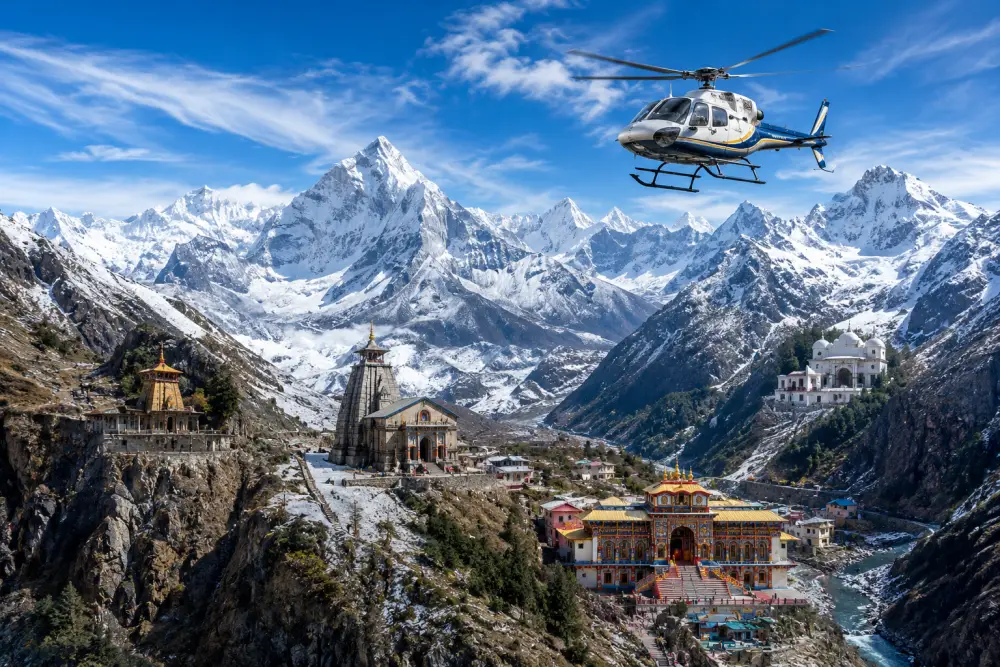
The integration of localized religious traditions into transcontinental sacred networks represents one of the most compelling phenomena in the study of Himalayan heritage. At the center of this dynamic is the Doleshwar Mahadev Temple, situated in the Sipadol village of the Suryabinayak Municipality within the Bhaktapur District of Nepal. Historically referred to by local communities as "Bimaleshwor" or "Sipare Mahadev," this ancient shrine emerged from relative obscurity on August 22, 2009, when it was officially designated as the missing "head" of the sacred Kedarnath Temple located in Uttarakhand, India. This identification bridged a geographical and temporal gap that had persisted for nearly four millennia, linking the body of the divine bull worshipped at Kedarnath with the sacred stone at Doleshwar. By establishing this trans-Himalayan sacred axis, religious authorities and cultural historians have fundamentally altered the landscape of pilgrimage, regional tourism, and heritage conservation in the Kathmandu Valley.
Geographical and Logistical Infrastructure
Doleshwar Mahadev is situated in the peaceful foothills of Sipadol, approximately four kilometers south of the historical checkpoint of Jagati in Bhaktapur and twenty kilometers east of Nepal's capital, Kathmandu. The geographical location of the main temple precinct is positioned at coordinates 27*38’20”N, 85*26’17”E. This placement is within a natural amphitheater of verdant hills where the southern flow of a tranquil river generates a serene backdrop for meditation and personal reflection.
The municipal framework of Suryabinayak, which spans an altitude range from 1372 M up to 2025 M above sea level, provides a rich ecological backdrop to the shrine. The municipality, populated by approximately 78,490 residents as of the 2011 Nepal Census, boasts diverse grasslands and pine-forested ridges that support around 99 recorded bird species, making it an ecological corridor as well as a spiritual one.
The accessibility of the site has been significantly enhanced by road improvements, primarily connecting through the Araniko Highway. Devotees and international travelers navigate this corridor using private vehicles, taxis, or public transit options originating from major hubs in Kathmandu and Bhaktapur.
|
Logistical Mode |
Route Details and Transit Network |
Estimated Travel Time |
Monetary Cost Context |
|
Private Vehicle / Hired Car |
Araniko Highway (Kathmandu-Bhaktapur Road) via Suryabinayak Chowk directly to the temple gate |
19 minutes to 30 minutes (ideal conditions); up to 1.5 hours in heavy traffic |
$2 to $4 (fuel/driving) or $14 to $17 (taxi) |
|
Combined Transit (Sajha Yatayat) |
Bus from N.A.C (Kathmandu) to Lamatar, followed by local taxi to the temple |
1 hour 1 minute to 1 hour 2 minutes total (including transfer) |
Bus: $1; Taxi: $8 to $17; Total: $9 to $12 |
|
Public Bus (Mahanagar Yatayat) |
Local bus from Balkhu (Kathmandu) directly to Bhaktapur Bus Park, followed by local walk or bus |
1 hour 3 minutes to 1 hour 9 minutes |
Under $2 total |
|
Local Hiking Route |
Standard road transit to Jagati, followed by local bus to Doleshwar (4.5 km), and then hiking to viewpoints |
20 minutes bus ride from Jagati; 30 minutes uphill climb to Maligaun |
Minimal local transport cost |
Mythological Foundations and Scriptural Anchors
The theological origin of the relationship between Kedarnath and Doleshwar Mahadev is rooted in the aftermath of the fabled Kurukshetra War, as detailed in the Mahabharata epic. Burdened by the weight of gotra-vadha (the slaying of kinsmen) and guru-vadha (the killing of teachers), the five Pandava brothers renounced their kingdom and journeyed to the high Himalayas to seek absolution from Lord Shiva. Shiva, however, sought to evade them, transforming himself into a bull (Mahisha) and hiding among grazing herds.
Upon discovering the disguise, the Pandavas attempted to restrain the divine bull by pulling its tail. In the resulting struggle, the body of the bull split. The posterior hump-backed torso remained at Kedarnath in Uttarakhand, where it is still worshipped in the form of a triangular stone mound. Concurrently, other body parts manifested at the remaining four sites of the classic Panch Kedar: the arms at Tungnath, the face at Rudranath, the navel and stomach at Madhyamaheshwar, and the hair at Kalpeshwar.
For four millennia, the exact location of the bull’s severed head remained a mystery, prompting generations of devotees to search the vast Himalayan range. The scriptural resolution to this mystery is found in the Shiva Purana Kotirudra Samhita Chapter 19, which explicitly documents the journey of the bull's head. The text states:
यो वै हि पाण्डवान्दृष्ट्वा माहिषं रूपमास्थितः ।
मायामास्थाय तत्रैव पलायनपरोऽभवत् ॥ १३ ॥
धृतश्च पाण्डवैस्तत्र ह्यवाङ्मुखतया स्थितः ।
पुच्छ चैव धृतं तैस्तु प्रार्थितश्च पुनःपुनः ॥ १४ ॥
तद्रूपेण स्थितस्तत्र भक्तवत्सलनामभाक् ।
नयपाले शिरोभागो गतस्तद्रूपतः स्थितः ॥ १५ ॥
This passage explains that upon being pursued by the Pandavas, Lord Shiva took the form of a buffalo/bull and attempted to flee. When caught by his tail, he remained facing downward in Kedarnath, but his head portion (शिरोभागो, shirobhago) split from the body and went directly to "Nayapala" (नयपाले, the ancient historical name of Nepal), remaining fixed there. This explicit reference provides the ultimate textual and scriptural anchor, validating the belief that the head of the Kedarnath bull manifested in the Kathmandu Valley.
Historical Proofs and Institutional Recognition
The transformation of Doleshwar Mahadev from a localized village shrine into an internationally recognized pilgrimage site was the result of extensive historical and cultural research initiated by Hindu activist Bharat Jangam. Jangam’s work uncovered a series of remarkable liturgical, historical, and structural links between the temples of Kedarnath and Doleshwar. This culminated on August 22, 2009, when the head priest of Kedarpeeth, Shree 1008 Jagat Guru Bheemashankarling Shivacharya, officially unveiled a plaque at the Jangam Math in Sipadol, declaring Doleshwar Mahadev as the authentic head portion of Lord Kedarnath.
Several concrete structural, cultural, and epigraphic correlates support this connection:
- Sacerdotal Lineage and Priest Selection: Both the Kedarnath and Doleshwar temples select their priests exclusively from the southern Indian states of Karnataka, Andhra Pradesh, Kerala, and Tamil Nadu. These priests are chosen from the Veerashaiva community, belonging to the ascetic lineage of the Jangam Math.
- Linguistic and Epigraphic Links: A 4,000-year-old stone inscription discovered within the Doleshwar temple precinct was written in Kannada, a southern Indian Dravidian language. This provides physical evidence of ancient cross-subcontinental clerical and patron networks connecting southern India, the central Indian plains, and the Nepalese Himalayas.
- Shared Liturgical Practices and Nomenclature: The priests of both shrines affix the sacred suffix "ling" to their names to denote their close proximity and complete dedication as worshippers of Lord Shiva. Furthermore, the daily rituals, prayers, and the evening aarti at Doleshwar strictly follow the ancient rules and procedural manuals of the Kedarnath Temple.
- Theological Affiliation: The main presiding deity of the officiating priests in both temples is Birbhadra (Virabhadra), a powerful manifestation of Shiva’s wrath arising from the sacrifice of Daksha at Kankhal, rather than more common local tutelary deities.
- Sacred Architectural Layout: Both temples feature a specific cluster of five Shiva shrines, which mirrors the structural layout of the Panch Kedar temples in India.
|
Dimension of Connection |
Kedarnath Temple (Uttarakhand, India) |
Doleshwar Mahadev Temple (Bhaktapur, Nepal) |
|
Theological Representation |
Torso (Hump) of the Divine Bull |
Head of the Divine Bull |
|
Scriptural Reference |
Shiva Purana Kotirudra Samhita Chapter 19 |
Shiva Purana Kotirudra Samhita Chapter 19 |
|
Priestly Recruitment Region |
Southern Indian States (Karnataka, Andhra Pradesh, Tamil Nadu, Kerala) |
Southern Indian States (Karnataka, Andhra Pradesh, Tamil Nadu, Kerala) |
|
Sacerdotal Title Suffix |
"ling" (e.g., Shivacharya) |
"ling" (e.g., Shivacharya) |
|
Administrative Math Lineage |
Jangam/Veerashaiva |
Jangam Math (Sipadol) |
|
Tutelar Deity of Priests |
Birbhadra (Virabhadra) |
Birbhadra (Virabhadra) |
|
Structural Layout |
Five distinct shrines (Panch Kedar connection) |
Five distinct shrines (Panch Shiva shrines) |
|
Clerical Ritual Protocols |
Ancient Rigvedic / Shaivite Agama rules |
Identical protocols synchronized with Kedarnath |
Architectural Layout and Sacred Materiality
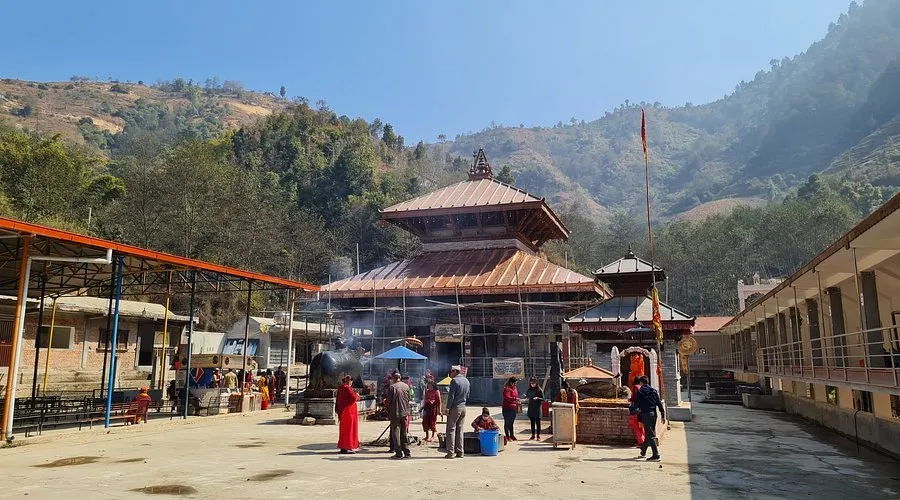
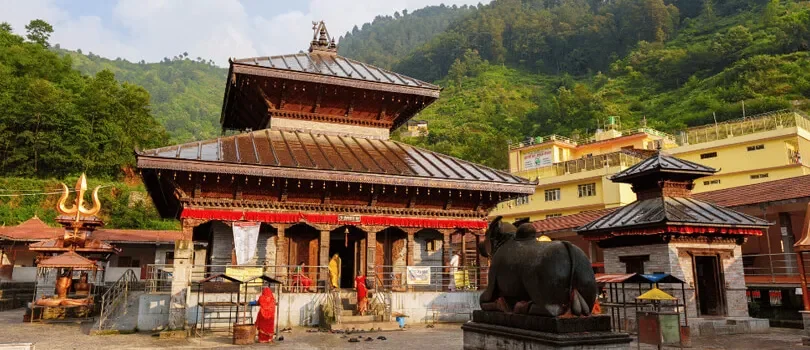
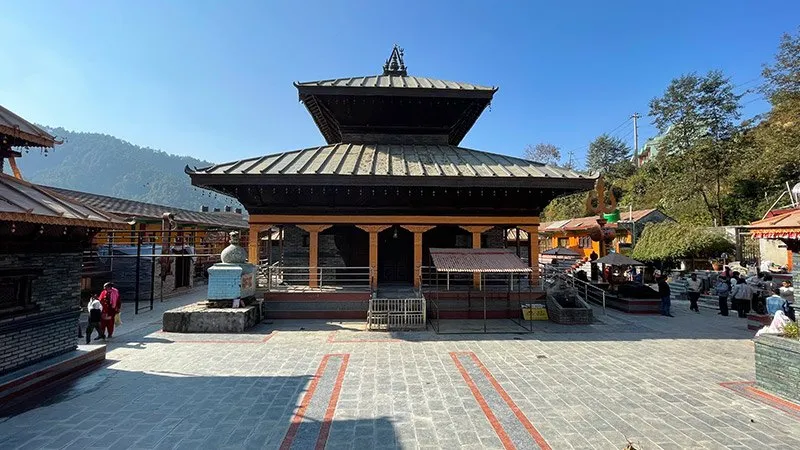
The Doleshwar Mahadev Temple is a stunning example of traditional Newari pagoda-style architecture, showcasing the rich woodcarving heritage of the Kathmandu Valley. The structure features a multi-tiered roof clad in copper-plated sheets that catch the morning sun against the backdrop of the surrounding southern hills. The wooden struts, pillars, and beams are intricately carved with images of deities, mythological motifs, and celestial guardians, creating a warm, historic, and culturally rich atmosphere.
At the center of the temple complex lies the inner sanctum (garbhagriha), which houses the primary deity. Unlike the highly polished, egg-shaped Narmada River stones (typically formed of cryptocrystalline quartz with iron oxide deposits representing the classic lingam stone) , the core object of worship at Doleshwar is a large, natural, plain rock outcropping amidst the green forest. Known locally as the "Doleshwar Shila," this raw, uncarved stone formation represents the natural manifestation of the deity's energy. It emerged, according to belief, at the transition between the Dwapar Yug and the greening of the Kali Yug.
The temple courtyard contains several significant sacred artifacts :
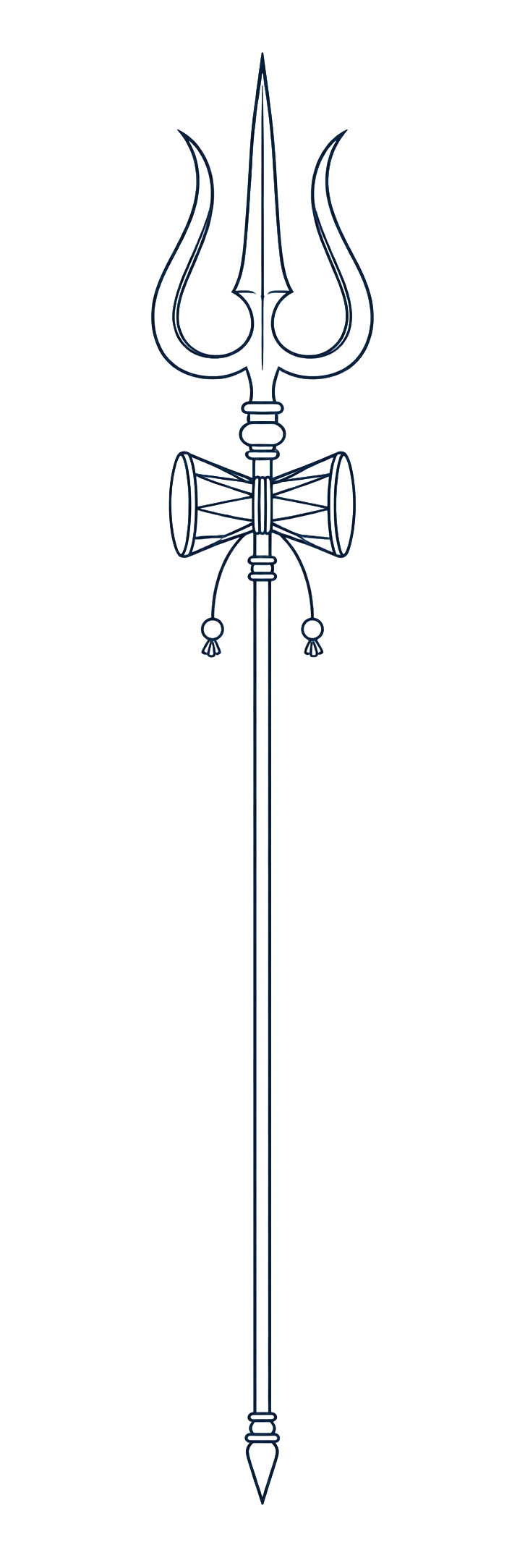
- The Colossal Copper Trishula: Standing a full story tall, this monumental trident is crafted from copper and brass. It is adorned with a large Damaru (the dual-headed drum of Shiva), representing cosmic vibration, balance, and the cycle of creation and destruction.
- The Bronze Nandi Statue: Facing the main entrance of the pagoda is a beautifully cast, large statue of the bull Nandi, the sacred mount of Lord Shiva, positioned in eternal adoration of the deity.
- Water Taps and Ancillary Shrines: The perimeter of the courtyard is flanked by stone water taps and smaller shrines dedicated to companion deities, which collectively form the sacred layout modeled on classical Hindu temple designs.
Ritual Schedules, Sacerdotal Liturgy, and Digital Devotion
A defining feature of Doleshwar Mahadev’s operational management is its strict policy regarding physical contact with the main deity. On regular days, the general public is restricted from entering the inner sanctum; devotees are only permitted to offer their prayers and view the deity from the western gate. This structural barrier serves as a conservation measure, protecting the physical integrity of the ancient stone from the wear of daily tactile worship.
However, all four temple doors are opened to allow public access to enter and directly touch the sacred Shila (stone) on only three specific, highly auspicious days of the year :
- Maha Shivaratri: The preeminent festival dedicated to Lord Shiva, celebrated with night-long vigils, continuous chanting, and intense devotional offerings.
- Akshaya Tritiya: A highly auspicious day marking the onset of spring and prosperity, which also serves to commemorate the spiritual integration of Doleshwar and Kedarnath.
- Bhadra 6: The official anniversary of the day in 2009 when the temple was formally declared and recognized as the head of Kedarnath.
The daily liturgy begins at 5:00 AM with the opening of the temple doors, followed by morning prayers and the first aarti around 6:30 AM. The temple remains open for devotees until approximately 7:00 PM to 8:00 PM on regular days, with specialized pujas conducted on Mondays and throughout the holy month of Shrawan. The daily liturgy, guided by the South Indian priestly class, reflects the ancient Agamic traditions, which typically involve rituals such as Abhishek, Shodashopachara, and Rajopachara (sixteen-fold royal worship). These protocols contrast sharply with the local Newari practices of the Kathmandu Valley, maintaining the trans-subcontinental lineage.
To accommodate a global diaspora of devotees who cannot physically make the arduous journey to the Himalayan foothills, the temple administration has embraced digital devotion. In cooperation with online portals such as the Shree Om Mandir services, the temple offers remote, digital Sankalp ceremonies. Devotees can book these rituals online, with prices ranging from approximately INR 5,762.04 to INR 11,383.79 (or equivalent in Nepalese Rupees). During these digital pujas, the officiating priest explicitly chants the devotee's name and gotra (lineage) in front of the sacred Shila, and a high-definition video recording of the customized ritual is subsequently shared with the pilgrim via registered email. This integration of digital technology with ancient liturgy represents a significant shift, ensuring that the temple remains globally connected while preserving its physical sanctity.
Seasonal Festivities, Financial Administration, and Systemic Resilience
The peak of devotional activity occurs during the holy month of Shrawan (typically July to August), which corresponds with the monsoon season. During this time, the temple hosts the 38-day Shrawan Fair, attracting massive crowds. Devotees, particularly on the four Mondays of the month, queue for hours to offer milk, water, and sacred Bilva leaves to the Shiva Lingam.
The scale of the Shrawan Fair reflects its immense local economic and social significance. During the 2024 Shrawan Fair, which concluded on August 23 (Bhadra 6), more than 400,000 devotees visited the shrine, with single Mondays drawing over 50,000 pilgrims. This massive turnout generated NPR 8.547 million in donations, with NPR 4.52 million collected through official receipts and NPR 4.027 million from direct offerings. These funds are managed by the Kedarnath's Head Doleshwar Mahadev Conservation and Development Committee to support temple maintenance, community facilities, and social harmony through seva (selfless service).
The administrative transparency of the temple is maintained by a structured committee, including Chairman Dharmaraj Basnet, General Secretary Harisharan Basnet, and Secretary Kabiraj Thapa, who oversee the allocation of funds for infrastructural expansion. For instance, during the 2024 fair, the committee spent NPR 1.236 million on pandal construction, security, and food distribution.
Civic involvement is also deeply integrated into the temple's operations. Under the leadership of local figures like Ward Chairman Pushparaj Basnet, community initiatives such as blood donation camps (which saw over 500 donors in 2024) are organized during major fairs. The regional importance of the site is further emphasized by political recognition, with Bhaktapur Chief District Officer Roshni Kumari Shrestha and Suryabinayak Mayor Basudev Thapa declaring a public holiday on the temple's foundation day (Bhadra 6) to celebrate its religious and touristic prominence.
The profound theological bond between the two temples was put to a practical test in 2013. Following the catastrophic Uttarakhand floods that severely damaged the Kedarnath temple and temporarily halted regular prayers there, the head priest of Kedarnath requested that the daily rituals instead be carried out at the Doleshwar Temple. Consequently, Doleshwar acted as the spiritual and liturgical surrogate for its Indian counterpart. This demonstrated that the theological "head and body" relationship functions as an active ritual backup network, ensuring the uninterrupted continuity of worship during natural disasters.
Regional Logistics and the Sacred Geo-Tourism Circuit
For modern pilgrims and travelers, the Doleshwar Mahadev Temple is a key component of a broader pilgrimage route. Theological consensus maintains that a pilgrimage to Kedarnath is incomplete without visiting both Doleshwar Mahadev and the Pashupatinath Temple in Kathmandu. Visiting these three sites is believed to cleanse a lifetime of sins and grant the ultimate blessings of Lord Shiva.
The temple is situated within Suryabinayak, a municipality rich in biodiversity and outdoor activities. It boasts lush grasslands and forests that host 99 recorded species of birds. The area has become a hub for hiking trails that blend physical recreation with spiritual exploration.
|
Destination / Hike |
Distance / Access from Doleshwar |
Altitude & Environmental Profile |
Sacerdotal and Historic Highlights |
|
Maligaun Viewpoint |
803.43m (direct)/ 30 min walk |
1,834 meters elevation; known as "Single Tree Hill" with a single Lakuri tree; panoramic sunset views. |
Concrete ladder trail; popular for dry picnics, camping, stargazing, and offroading. |
|
Pilot Baba Ashram |
1.36 km (direct)/2.11 km hike |
Hilltop retreat surrounded by dense forests of rhododendron, utis, and sal trees. |
Somnath Temple dedicated to Lord Shiva; white temple structure used as a meditation sanctuary. |
|
Ranikot Hike |
1.79 km (direct)/ 2.44 km hike |
1,788 m to 2,782 meters elevation; smooth off-the-beaten trails. |
Ancient fort built by King Prithvi Narayan Shah; tiger-shaped stone at the Baghbhairava Temple. |
|
Suryabinayak Temple |
2.3 km (direct) |
Forested hill station just 2 km from Bhaktapur Durbar Square. |
Historical shrine dedicated to Lord Ganesh, the obstacle remover. |
|
Kailashnath Mahadev |
5 km (Direct) |
High hill station on the border of Bhaktapur and Sindhuli Palanchowk districts. |
Tallest statue of Lord Shiva in Asia, standing 44m (108ft) tall in a peaceful environment. |
|
Ashapuri Mahadev |
4 km (Direct) |
Deep river valley at the southeastern edge of Suryabinayak. |
Sacred wish-fulfilling temple; forms part of the "sacred corridor" of Shaivism. |
Devotees often combine a visit to Doleshwar with hikes to Maligaun or Ranikot, or travel to the towering statue of Kailashnath Mahadev in Sanga. This integration of sacred spaces and natural landscapes forms a "sacred corridor". It offers a quieter, more reflective alternative to the heavily touristed areas of Kathmandu, preserving the temple's status as a peaceful sanctuary for meditation, prayer, and cultural immersion.
Additionally, visitors are encouraged to combine their trip with exploring the ancient heritage of Bhaktapur Durbar Square, which offers surrogate shrines for the four major Indian pilgrimage sites (Char Dham) and the famous Golden Gate crafted in 1753. This extensive network allows pilgrims to experience both Newari craftsmanship and the broader trans-subcontinental traditions.
Strategic Synthesis and Future Outlook
The recognition of the Doleshwar Mahadev Temple as the head of Lord Kedarnath represents a milestone in the preservation of Himalayan heritage. This connection has elevated a local village shrine to global prominence, demonstrating the enduring power of sacred geography. The ongoing development of the site, led by the Conservation and Development Committee and supported by the local municipality, ensures that its unique heritage is preserved for future generations.
By balancing the influx of physical pilgrims with digital offerings and community engagement, the temple has created a sustainable model for spiritual tourism. This model not only supports the local economy but also fosters cross-border cultural diplomacy, highlighting a shared heritage that transcends modern boundaries. As the temple continues to develop its infrastructure and preserve its natural surroundings, it stands as a testament to the resilience of ancient traditions and the continuous evolution of sacred landscapes across the high Himalayas.
Keep Reading
View All Articles-
Legend & Pilgrimage of the Amarnath Cave
Tucked away at the far end of the Lidder valley in the Greater Himalayas, the Amarnath Cave
-
No Fear Is Visible to Faith at Yamunotri
Despite the long, exhausting journey, the fear of being struck by wooden sticks protruding from palakis (palanquins)
-
Shrikhand Mahadev Kailash Yatra
हिमाचल प्रदेश के कुल्लू जिले की गगनचुंबी हिमालयी श्रृंखलाओं में स्थित श्रीखंड महादेव कैलाश यात्रा न केवल भारत के सबसे कठिन पर्वतारोहण मार्गों में से एक है, बल्कि यह सनातन धर्म की गहरी आध्यात्मिक चेतना का जीवंत प्रतीक भी है ।