




Smart Itinerary
Katarmal Sun Temple : Almora (Uttarakhand)
The Katarmal Sun Temple is situated in the Kumaon division of the Almora district in Uttarakhand, India.
 By Spiritual Yatra
12 min read
By Spiritual Yatra
12 min read
Heritage and Tourism of the Katarmal Sun Temple
Geographic Coordinates and Environmental Context
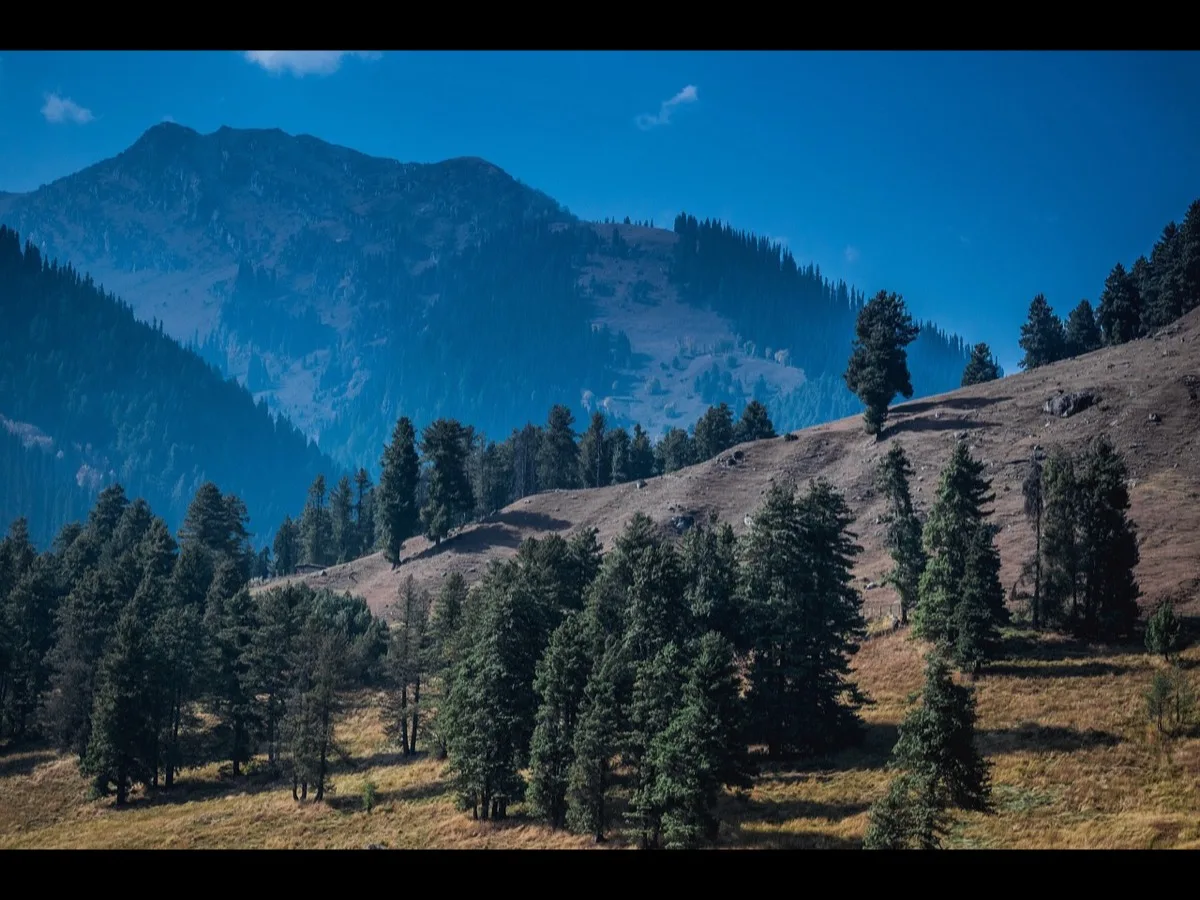
The Katarmal Sun Temple is situated in the Kumaon division of the Almora district in Uttarakhand, India. Positioned at the geographic coordinates of 29.632473°N latitude and 79.614682°E longitude, the temple complex stands on a high mountain ridge at an elevation of 2,116 meters (6,942 feet) above sea level. This altitude places the monument in a temperate Himalayan environmental zone, surrounded by terraced agricultural fields and native pine and cedar forests.
The geographic prominence of the site is further marked by the presence of the G.B. Pant National Institute of Himalayan Environment and Development. Established by the Government of India in 1988, this nodal agency operates near Katarmal village, conducting vital scientific research on sustainable development and environmental conservation within the central Himalayan corridor. The temple's placement on the south-facing slopes of the Katarmal hill was chosen to maximize solar exposure throughout the day, a fundamental requirement for the execution of solar rituals and astronomical observations.

| Geographic and Institutional Parameter | Detail and Specifications |
| Geographic Coordinates |
29.632473°N, 79.614682°E |
| Altitude above Sea Level |
2,116 meters (6,942 feet) |
| District and State |
Almora, Uttarakhand, India |
| Regional Terrain |
Hilltop ridge overlooking the Kumaon Valley |
| Local Ecological Profile |
Pine and cedar forest cover, agricultural terracing |
| Nodal Scientific Agency |
G.B. Pant Institute of Himalayan Environment (Est. 1988) |
Historical Evolution and Tribal Genealogies
The history of the Kumaon region is characterized by a succession of ancient tribal settlements and medieval dynasties that transformed the mountain valleys into active centers of religious architecture. Early accounts recorded in classical texts like the Vishnu Purana and the Mahabharata mention primordial human settlements in Kumaon, attributing the earliest tribal administration to the Sakas, the Nagas, the Kiratas, the Khasas, and the Hunas. The Khasas were highly influential, establishing a widely scattered presence that earned the region the historical name of Khasadesha or Khasamandala. Following the decline of these early tribes, the Kuninda (or Kulinda) kingdom consolidated power in the southern and western tracts of the Almora region.
The architectural landscape of Katarmal was shaped by the rise of the Katyuri dynasty, which originated as a branch of the Kunindas. Founded by Vashudev Katyuri, the dynasty governed the central Himalayan hills from the 7th to the 11th centuries CE, bringing administrative stability after the collapse of the Kuninda kingdom. The Katyuri kings established their political capital at Kartikeyapura (modern-day Baijnath in the Bageshwar district), situated in the center of the Katyur valley.
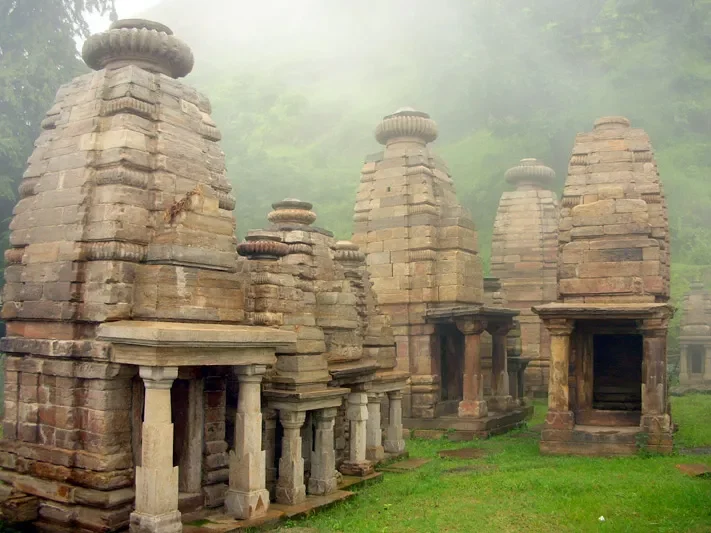
The commissioning of the Sun Temple is attributed to King Katarmalla (also known as Katarmal Dev), who ruled during the 9th century CE. Royal genealogical records show some variation regarding his exact position in the dynasty; the family tree of the royal house of Askot lists Katarmalla as the 33rd monarch, while the royal lineage of Doti records him as the 22nd king. Both historical sources agree that he was the son of King Basantideva.
The Katyuri kings claimed to be direct descendants of the Suryavanshi (solar dynasty) lineage. By building a monumental temple dedicated to the Sun God, Surya, King Katarmalla sought to declare his divine right to rule and project the administrative power of the Katyuris across Kumaon.
| Historical Era or Dynasty | Chronological Period | Architectural & Socio-Political Role in Kumaon |
| Early Tribal Settlements | Ancient Period |
Initial consolidation by Sakas, Nagas, Kiratas, Khasas, and Hunas. |
| Kuninda Kingdom | Post-Epic Period |
Early administrative control over the southern Almora hills. |
| Katyuri Dynasty |
7th to 11th Century CE |
Unified Kumaon; shifted capital to Baijnath; initiated major stone temple construction. |
| King Katarmalla's Reign |
9th Century CE |
Commissioned the Katarmal Sun Temple; established solar lineage legitimacy. |
| Chand Dynasty |
10th to late 18th Century CE |
Shifted regional capital from Champavat to Almora in 1645; constructed urban temples. |
The Myth of Kalnemi and the Banyan Wood Deity
The spiritual identity of the Katarmal Sun Temple is deeply connected to local Kumaoni legends and botanical traditions. According to local lore, the central Himalayan foothills were once terrorized by a powerful demon named Kalnemi. Unable to withstand the demon's torment, the local population gathered on the hills of Katarmal to invoke the protection of Lord Surya.
In response to their prayers, Lord Surya descended to the earth, choosing to sit upon a massive banyan tree (Bad or Vat) to shield the villagers and defeat the demon. Following this divine victory, the spot was consecrated, and the deity has since been worshiped here as Burhadita, Vraddhaditya (the "Old Sun God"), or Baraditya (derived from the banyan wood connection).
This mythological event is tied directly to the structural composition of the primary idol. Unlike other major sun temples in India where deities are carved from stone or cast in metal, the central image of Surya in the Katarmal temple was traditionally carved from the sacred wood of the banyan (Bad) tree. This wooden figure is kept carefully covered inside the sanctum sanctorum to protect it from environmental wear.
An equally important botanical connection exists regarding the naming of the town of Almora. The daily rituals of the Katarmal Sun Temple required large quantities of a wild mountain plant called kilmora or bhilmora (a species of sorrel, Berberis kilmora). This short shrub contains natural acidic extracts that were highly effective for cleaning and polishing the heavy copper, brass, and bronze vessels used in the temple's daily worship.
Local tradition states that the earliest residents of the Almora ridge, the Tewaris, were required to harvest and bring this plant to the hilltop temple every day. The gatherers who carried the plant came to be known as Kilmori or Bhilmori, which eventually transitioned into Almori, giving the geographical settlement its permanent name of Almora.
Architectural Analysis and Structural Engineering
The Katarmal Sun Temple stands as an exceptional example of early medieval Kumaoni stone engineering, showcasing how classical Indian architectural styles were adapted to the challenges of mountainous terrain.
Structural Layout and the Nagara Style
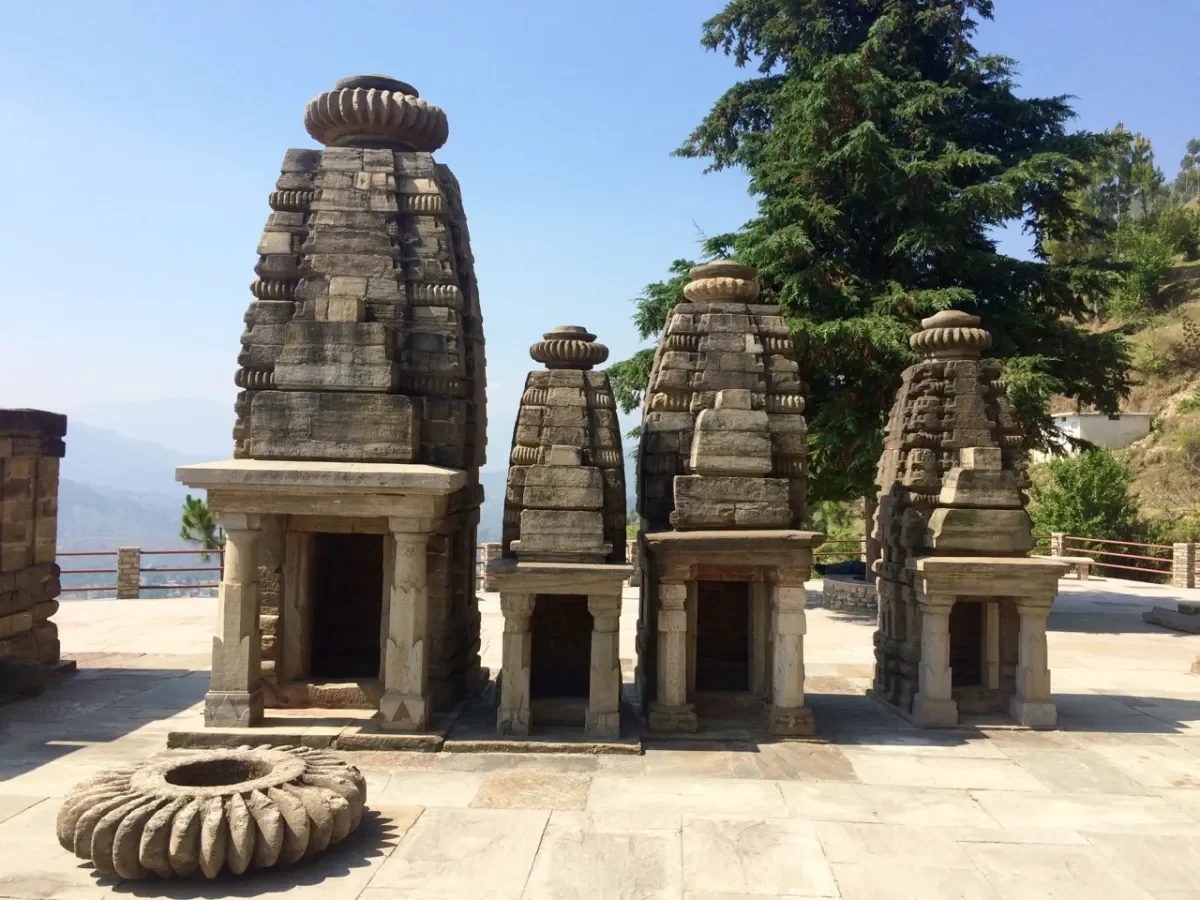
The temple complex is designed in the traditional North Indian Nagara architectural style, adapted for a high-altitude setting. The central monument is a Triratha structure, featuring a square garbhagriha (sanctum sanctorum) joined to a narrow antrala (vestibule) and two later-added mandapas (assembly halls). The main sanctum is crowned by a high, curvilinear shikhara (spire).
The exterior of the shikhara is left smooth and uncarved, emphasizing its clean, rising lines against the sky. Surrounding this central shrine is a cluster of 44 to 45 smaller, highly detailed stone sub-temples. These subsidiary shrines, though constructed at different times under different rulers, form a cohesive, protective ring around the main sun temple.
Construction Materials and Organic Mortar
Unlike other regional builders who relied on bricks, the Katyuri masons used heavy, grey stone blocks quarried directly from the river valleys below. These massive stones were transported up the steep hillsides and locked in place using iron clamps (clumps) to provide maximum structural resistance.
To hold these heavy stones together without modern cement, the builders created a flexible, organic mortar using a traditional mix of lime, jaggery (unrefined cane sugar), and urad dal (lentil paste). This elastic mortar has allowed the high stone tower to absorb seismic energy, enabling the monument to survive major earthquakes in a seismically active zone for over a thousand years.
Astronomical Alignment and Solar Mechanics
The entire complex is built along a precise east-facing orientation. The doorway of the main sanctum is positioned so that during the spring and autumn equinoxes, as well as the winter months from November to February, the first rays of the rising sun pass through a direct architectural opening to shine straight onto the deity inside. This design shows that the 9th-century builders possessed a sophisticated understanding of solar geometry and astronomical cycles.
| Architectural Element | Structural Feature & Material Specifications |
| Architectural Style |
Regional adaptation of the North Indian Nagara style. |
| Main Sanctum Structure |
Triratha design with a square garbhagriha, antrala, and dual mandapas. |
| Shikhara (Spire) |
Curvilinear stone tower with smooth, uncarved external surfaces. |
| Primary Masonry Material |
Heavy, locally quarried grey stone blocks. |
| Holding & Joint Mechanism |
Heavy iron clamps (clumps) for structural support. |
| Binding Adhesive Recipe |
Organic mortar made of lime, jaggery, and urad dal (lentil paste). |
| Subsidiary Cluster |
44 to 45 small shrines surrounding the main temple. |
| Astronomical Alignment |
East-facing orientation; direct solar path to the inner deity. |
The Sacred Wooden Artifacts and Museum Relocation
The recent history of the Katarmal Sun Temple is shaped by the challenges of protecting heritage sites in remote locations. Located on a quiet mountain ridge, the temple was vulnerable to art thieves who targeted its historic idols and wood carvings.
Following the theft of a valuable 10th-century metal deity from the inner sanctum, the Archaeological Survey of India (ASI) made the decision to relocate the temple's carved wooden doors and pillars to the National Museum in New Delhi for permanent preservation. These wooden elements, dating to the late medieval period (1200–1400 CE), are outstanding examples of Kumaon’s traditional wood carving heritage.
The main double-leaf door, carved from durable shisham wood, stands over seven feet high and features detailed panels showing major Hindu deities like Shiva-Parvati, Lakshmi-Narayana, Narasimha, Brahma, and Bhairava. The doors also feature carved protective yakshas and a rare five-line inscription in late medieval Devanagari script on the back of the right door leaf.
The accompanying wooden pilasters are decorated with deep floral patterns, climbing vines, and capital heads showing folded-hand snake-men emerging from the corners. These carvings are now housed in the decorative arts gallery of the National Museum in Delhi, preserving them from environmental wear but leaving the hilltop temple without its finest decorative features.
Transport Infrastructure and Strategic Route Mapping
Planning a trip to the Katarmal Sun Temple requires careful consideration of the mountain terrain and the available travel options. There are no direct flights or train lines to Almora, so travelers must use a combination of rail, bus, and road transport to reach the base of the hill.
Long-Distance Rail and Road Options
Kathgodam serves as the primary railway gateway to the Kumaon region, located about 90 kilometers from the temple complex. It is well connected to major cities like Delhi, Lucknow, and Kolkata. For travelers starting their journey in Haridwar, daily trains provide a direct connection to Kathgodam.
| Train Name and Number | Frequency of Service | Departure Time (Haridwar) | Arrival Time (Kathgodam) | Total Journey Duration |
| DDN KGM Express (14120) |
Daily |
00:57 / 00:59 |
07:20 |
6 hours 21 minutes |
| Janshatabdi Express (12091) |
Sun, Tue, Wed, Fri, Sat |
17:32 |
23:40 |
6 hours 8 minutes |
| CDG RMR Express (15064) |
Weekly (Monday) |
19:16 / 19:20 (via Laksar Jn) |
23:35 (to Ramnagar) |
4 hours 19 minutes |
For travelers who prefer road transport, regular long-distance buses run between Haridwar and Almora. Private operators like the Lat Sahab Bus Service run daily AC sleepers, departing from Haridwar at 05:05 AM and taking about 6 hours and 25 minutes to complete the journey.
| Travel Segment / Route | Distance (km) | Approximate Drive Time | Recommended Mode of Transport |
| Pantnagar Airport to Almora |
~115–130 km |
3.5 to 4.5 hours |
Private pre-paid taxi or rented vehicle. |
| Kathgodam to Almora |
~82–90 km |
2.5 to 3.5 hours |
Shared jeeps, state-run buses, or private cabs. |
| Haridwar to Almora (Direct) |
~259 km |
5 to 7 hours |
Overnight train to Kathgodam, or direct AC sleeper bus. |
| Almora Town to Kosi Village |
~17–19 km |
45 minutes |
Local taxi, public bus, or shared jeep. |
| Ranikhet to Katarmal (via Kosi) |
~31–33 km |
1 to 1.5 hours |
Local state buses or rented private cabs. |
| Nainital to Katarmal (via Bhowali) |
~82 km |
3 to 4 hours |
Private cab along the scenic Bhowali-Almora highway. |
The Final Trek
The final stretch of the journey from Kosi Village to the temple requires a short walk. Depending on where the vehicle drops visitors, the trek is between 1.5 and 3 kilometers long.
The path is made of paved stone and is generally easy to walk, making it accessible for families, though the uphill climb can be moderately tiring. The walk takes about 30 to 40 minutes and offers beautiful views of the Kumaon valley, the Koshi River, and the surrounding hills.
The Regional Heritage Circuit and Cultural Excursions
A visit to the Katarmal Sun Temple is best combined with other major historical and spiritual sites in the Almora district, creating a rich cultural journey through the Kumaon hills.
- Kasar Devi Temple - Located 23 kilometers from Katarmal, the Kasar Devi Temple is an ancient Durga sanctuary built around a natural rock cave. It sits on a high hill within the Van Allen Radiation Belt, a unique magnetic zone that is believed to assist with deep meditation. The site has a long history of spiritual searchers; Swami Vivekananda meditated here during his visits in 1890 and 1897. The hill also features a quiet 6th-century Shiv Mandir founded by a South Indian Rudra, the peaceful Sharda Ashram run by the Ramakrishna Mission, and several historic homes where figures like Rabindranath Tagore stayed.
- Chitai Golu Devta Temple - Situated 8 kilometers from Almora on the road to Jageshwar, this temple is dedicated to Golu Devta, revered as the "God of Justice". The temple is famous for the thousands of brass bells hung by devotees as offerings. Visitors will also see thousands of handwritten letters and petitions tied to the bells, where people write out their legal and personal problems seeking divine help.
- Lakhudiyar Caves - For those interested in ancient history, the Lakhudiyar Caves on the banks of the Suyal River feature prehistoric rock paintings. These red, black, and white drawings show early human figures, animals, and group dances, providing a glimpse into the lives of the region's earliest inhabitants.
- Syahi Devi Temple - Located on a high peak near Nayalap, this is the highest temple in the valley. The hike to Syahi Devi winds through quiet forests and offers exceptional panoramic views of the entire Kumaon region and the snowy peaks of the Himalayas.
Conservation Framework and Tourism Policy Recommendations
The Katarmal Sun Temple is a protected monument of national importance under the Ancient Monuments and Archaeological Sites and Remains Act of 1958, managed by the Archaeological Survey of India (ASI). To balance the preservation of this 9th-century site with the growing number of visitors, several key tourism and conservation strategies are recommended:
- Site Infrastructure and Amenities: The ASI should establish basic, eco-friendly visitor facilities near the road head at Kosi Village, including clean restrooms, a drinking water station, and a small visitor center. This keeps commercial activity away from the quiet temple complex, preserving its peaceful atmosphere.
- Educational Signage: Installing clear, informative signs along the paved stone path and within the courtyard would help explain the temple's unique history. Detailed diagrams explaining the astronomical alignment, the history of the Katyuri kings, and the story of the wooden carvings would enrich the experience for travelers.
- Digital Preservation and Research: Given that the original wooden doors and pillars are housed in Delhi, the ASI could use 3D laser scanning and digital printing to create high-quality replicas. These could be displayed in a small on-site museum, allowing visitors to appreciate the original woodwork in its historical context.
- Community-Led Tourism: Supporting local homestays in Kosi and Katarmal villages would allow local families to benefit directly from tourism. Training local youth as cultural guides would improve the visitor experience while providing sustainable employment, helping to protect both the natural environment and Kumaon’s rich cultural heritage.
Keep Reading
View All Articles-
Complete Guide to Muktinath (Muktikshetra): The Ultimate Pilgrimage in Nepal
Muktinath, known traditionally as Muktikshetra (the site for salvation), stands as one of the most spiritually profound, historically rich, and visually breathtaking pilgrimage destinations in the world.
-
Kailash-Manasarovar: The Nepal Route
Axis Mundi: Spine of the Universe, The Ultimate Guide to Kailash Manasarovar Yatra via Nepal: Itinerary, Safety, Sacred Geography, and Preparation
-
Guide for the Gangotri to Gaumukh Alpine Route (2026 Season)
The high-altitude corridor connecting the holy town of Gangotri to the glacial snout at Gaumukh