




Himalayan & Mountain Shrines
The Guardians of Kedarnath: Secrets of the Vyala
edarnath architecture secrets, Yali temple carving, interlocking stone temple, Bhim Shila miracle, Panch Kedar history.
 By Raj K. Vashyan
10 min read
By Raj K. Vashyan
10 min read

The Vyala and Guardian Architecture of the Kedarnath Temple
In the study of sacred Indian architecture, a temple is recognized not merely as a physical structure of stone and mortar, but as a living divine body designed to unite the individual human soul with the cosmic order. To establish a clear transition from the chaotic, secular world to the tranquil sanctuary of the divine, ancient builders developed a sophisticated language of protective iconography. Central to this visual vocabulary is the Vyala (commonly referred to as the Yali in southern India), a composite mythological beast that embodies natural forces, supreme strength, and physical and spiritual vigilance. While highly stylized, towering Vyala pillars are most famous in late medieval and early modern temples across southern and central India, the underlying philosophy of the Vyala as a cosmic protector and a subduer of nature's elements is deeply etched into the sacred architecture of the Kedarnath Temple in the Garhwal Himalayas.
By analyzing the unique geographic, mythological, and structural elements of Kedarnath, one can observe how the concept of the Vyala operates at multiple levels. It is manifested not only in physical stone carvings such as the mysterious human-headed Vyal or Kirtimukha carved on the temple's triangular stone fascia but also in the very engineering of the temple, which "tames" the brutal forces of the Himalayan climate through an ingenious interlocking structure.
The Concept of the Vyala in Indian Sacred Architecture

The Vyala is a legendary hybrid beast deeply rooted in Hindu art, literature, and architectural treatises. Rather than representing a real creature, the Vyala is a deliberate fusion of different animal parts, showing that the divine can transcend the physical limits of the natural world. Typically depicted with the muscular body of a lion, the head of another beast (such as an elephant, horse, tiger, or dog), and sometimes serpentine or bird-like features, the Vyala represents the ultimate manifestation of energy, power, and protection.
In the context of the Shilpa Shastras (ancient Indian manuals of architecture and design), the placement of the Vyala is highly calculated. Positioned at temple entrances, gateways (gopurams), staircases, and pillar bases, these roaring, rearing creatures mark the boundary of the sacred threshold. Their terrifying, grotesque forms are designed to inspire a sense of awe and fear, helping to dissolve the ego and arrogance of the entering pilgrim.
Furthermore, the act of carving the dynamic, unpredictable energy of the Vyala into the static, rigid stones of a temple symbolizes the human and divine ability to control, balance, and tame the wild, elemental forces of nature. This metaphysical concept becomes a physical reality in the high-altitude environment of Kedarnath, where survival demands an architecture capable of resisting the most extreme geological and climatic challenges.
Geographic Alignment and Mythological Foundations of Kedarnath
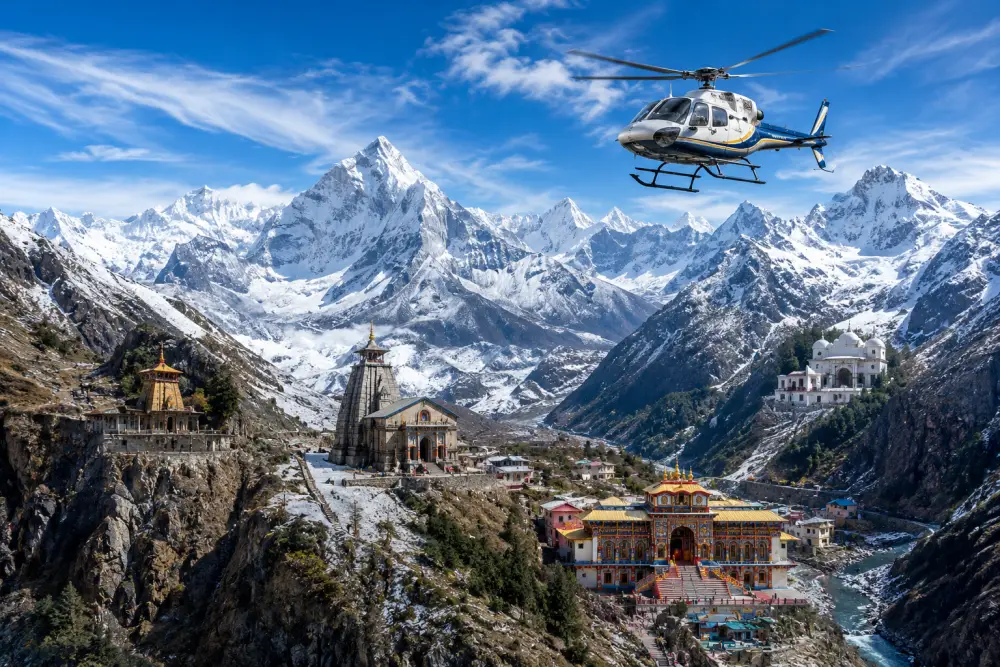
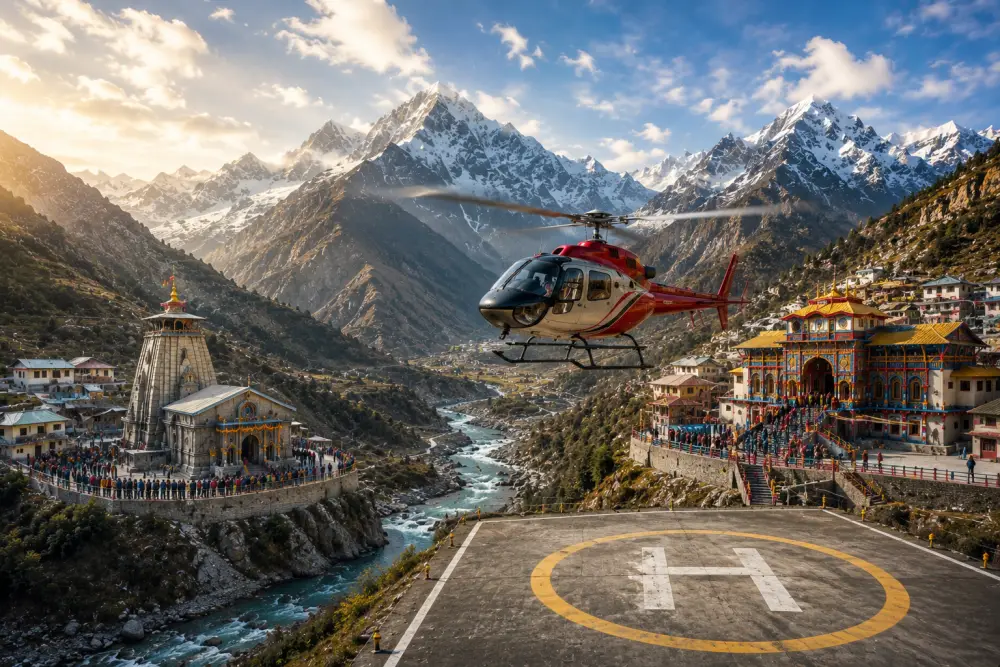
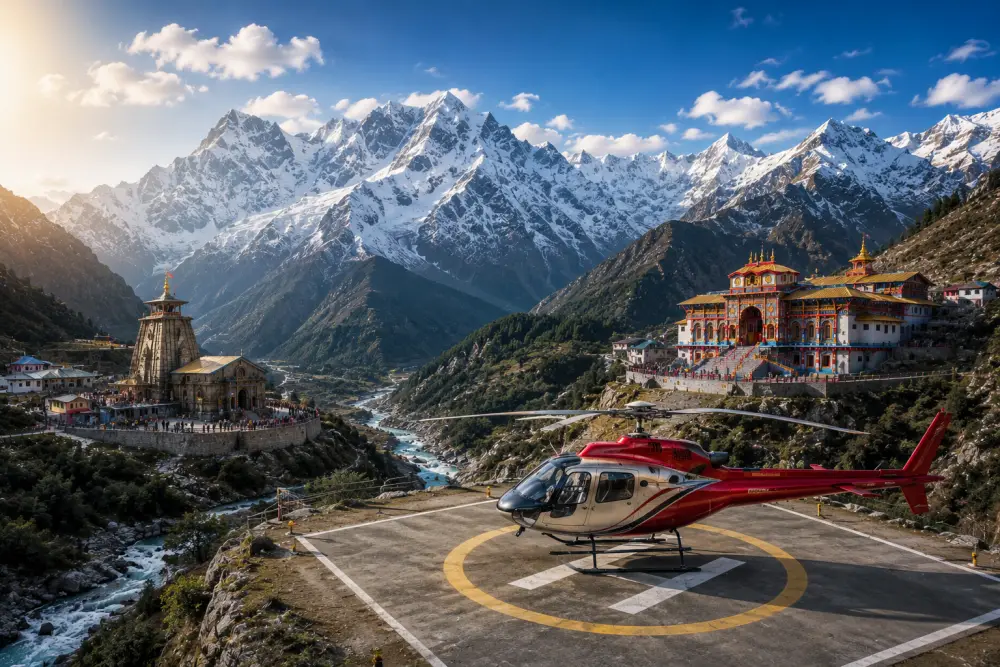
To understand the protective and defensive design of Kedarnath, one must examine its geographical setting and the rich mythological history that sanctifies the landscape. The temple is situated in the Rudraprayag district of Uttarakhand, India, standing at an elevation of approximately 3,583 meters (11,755 feet) above sea level. It is positioned on a glaciated plateau near the head of the Mandakini River, which originates from the nearby Chorabari Glacier, and is framed by the massive peaks of the Kedar Massif, including Kedarnath Main (6,940 meters) and Kedarnath Dome (6,831 meters).
The etymology of the site is deeply connected to its physical environment. The name "Kedarnath" is derived from the Sanskrit words kedara, meaning "field" or "marshy ground," and natha, meaning "lord". Thus, the name translates to "Lord of the Marshy Ground," reflecting the high-altitude meadows and wetlands formed by seasonal snowmelt and river water in the valley. According to the ancient text Kashi Kedara Mahatmya, the site is also called "Kedara" because it is a sacred space where the "crop of liberation" (moksha) grows, offering pilgrims a path to break free from the cycle of birth and death.
The mythological origins of the temple are primary to its sanctity. According to Hindu tradition, after the great Kurukshetra War of the Mahabharata, the Pandava brothers sought Lord Shiva to atone for the sins of killing their relatives (gotra-hatya). Shiva, unwilling to forgive them easily, took the form of a bull (Nandi) and hid in the high meadows of Guptakashi. When the Pandavas tracked him down, the bull began to burrow into the earth to escape. Bhima, the second of the five brothers, recognized the deity and grabbed the bull by its tail and hind legs.
This pursuit caused the bull's body to be divided into five distinct parts, which manifested across different locations in the Garhwal region, collectively known as the Panch Kedar. Devotees worship different aspects of Shiva's form at each of these sacred sites, as detailed below:
|
Panch Kedar Temple |
Manifestation of Shiva's Form |
Spiritual Significance |
|
Kedarnath |
The Hump (Svayambhu conical rock) |
The primary seat where Shiva relented and granted forgiveness. |
|
Tungnath |
The Arms |
Symbolizes the divine embrace and strength of the deity. |
|
Rudranath |
The Face |
The serene yet powerful facial aspect of Shiva. |
|
Madhyamaheshwar |
The Navel and Stomach |
Represents the cosmic center and life force. |
|
Kalpeshwar |
The Hair (Matted Locks) |
Represents Shiva's ascetic power and connection to water. |
At Kedarnath, the natural, uncarved triangular rock formation in the garbhagriha (inner sanctum) is worshipped as the Sadashiva (ever-auspicious) form of Shiva. While folk legends credit the Pandavas with building the initial temple, historical tradition attributes the restoration of the stone structure to the great 8th-century philosopher-reformer Adi Shankaracharya. Shankaracharya restored the temple to unite diverse sectarian traditions under a pan-Indian Shaiva pilgrimage network. He is believed to have attained mahasamadhi (final union with the Divine) in the highlands behind the temple, where his samadhi mandir stands as a major monument.
The Engineered Vyala: Staving Off Himalayan Catastrophes
In many architectural traditions, the Vyala represents the control and channeling of raw natural energy. At Kedarnath, this concept is expressed through structural engineering. The temple itself functions as a physical shield, designed to withstand intense earthquakes, heavy snow, and glacial pressure.
The temple is constructed using Ashlar masonry, a highly sophisticated building technique in which massive, uniformly cut grey granite and gneiss stone slabs are stacked on top of one another. Crucially, the entire structure is built without any cement, mortar, or binding paste. Instead, the heavy stone slabs are carved to interlock with one another and are secured using high-strength iron clamps.
This interlocking design provides the temple with structural flexibility. When geological shifts, earthquakes, or glacial movements shake the valley, the stone walls are not rigid; they absorb and dissipate the kinetic energy by shifting slightly without losing structural integrity. This design allowed the temple to survive being completely buried under glacial ice for nearly 400 years during the Little Ice Age (roughly 1300–1900 CE), as evidenced by striations and mineral banding left by ice movement on the outer walls.
Furthermore, the temple is oriented along a strict north-south axis. This alignment ensures that the narrow, heavily reinforced rear profile of the building actively deflects freezing winds and downslope avalanche forces away from the main sanctuary. The walls are incredibly thick, measuring up to 12 feet at the foundation. This extreme thickness provides essential thermal insulation, keeping the inner sanctum warm during the freezing winters, while evenly distributing the immense weight of the solid stone roof down to the bedrock.
This architectural resilience was demonstrated during the June 2013 flash floods. When a glacial lake outburst sent debris and floodwaters cascading down the valley, a massive mountain boulder, now revered as Bhim Shila, washed down and wedged itself behind the temple. The boulder acted as a natural divider, splitting the force of the floodwaters and diverting the heavy debris to the sides of the temple.
The tapered, pyramidal design of the temple's roof further helped to shed the water and snow, allowing the building to survive the disaster practically intact. The combination of the protective boulder and the interlocking stone design shows how natural forces and human craftsmanship can work together to preserve sacred spaces.
The Vyal Fascia and Guardian Iconography of the Shrine
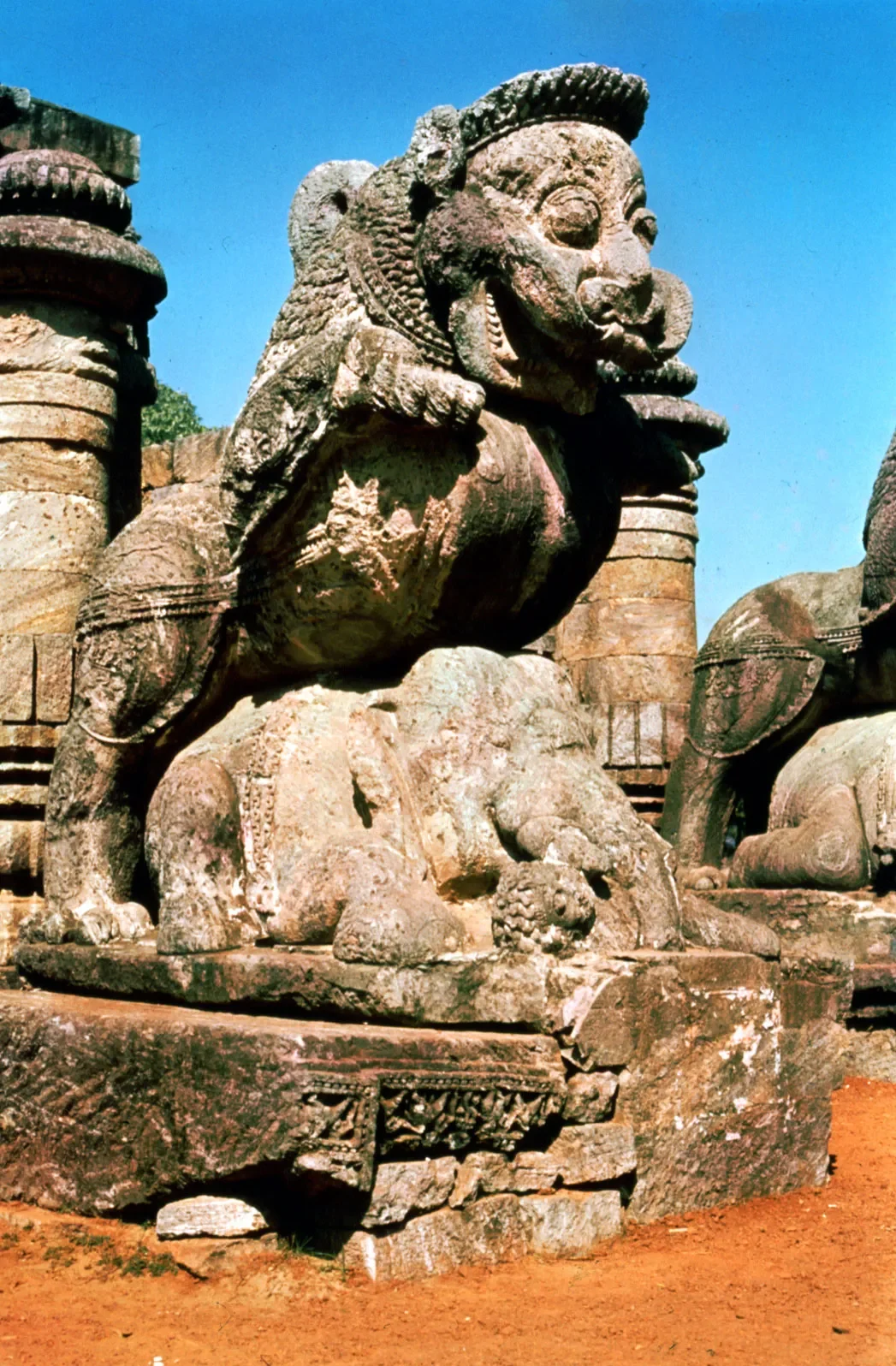
While the overall structure of Kedarnath serves as a physical shield, the temple’s stone carvings feature specific guardian motifs that align with the protective role of the Vyala.
On the exterior of the temple, the most prominent and mysterious carving is an unusual human-like head carved into the triangular stone fascia (pediment) on the front facade. In North Indian temple architecture, this prominent triangular placement is traditionally reserved for the Kirtimukha (the "Face of Glory") or a stylized Vyala head. These roaring, open-mouthed monster faces are designed to swallow evil and ward off malevolent forces.
At Kedarnath, this carving depicts a distinct, solemn face, whose exact identity remains unknown to researchers and historians. It serves as a visual guardian of the temple's threshold, greeting pilgrims as they prepare to enter. Interestingly, a highly unusual head structure of a man is also carved directly onto the triangular stone lingam inside the inner sanctum. This internal carving is mirrored in the nearby Triyuginarayan Temple, the legendary site of Shiva and Parvati's celestial marriage, suggesting a shared regional iconographic tradition.
The guardian network of the temple is further supported by several other key figures:
- Nandi Maharaj: Outside the entrance of the assembly hall (mandapa), a large, exquisitely carved stone statue of the Nandi Bull stands as a guard. Facing the entrance of the inner sanctum, Nandi represents strength, constant vigilance, and devotion.
- Assembly Hall Figures: Inside the first hall, the stone pillars and walls are carved with statues of the five Pandava brothers, Lord Krishna, and Draupadi. Among these figures is Virabhadra, the fierce, multi-armed guardian manifestation of Lord Shiva, who serves to protect the inner sanctuary.
- Bhukund Bhairavnath: The ultimate guardian of the Kedarnath valley is Bhukund Bhairavnath, whose open-air shrine is situated on a high ridge overlooking the main temple complex. Bhairava is a fierce manifestation of Shiva. According to local tradition, Bhairavnath is the kul-devta (guardian deity) of the region, who is believed to protect the temple during the harsh winter months.
During the winter season (from November to April), the high-altitude valley is completely evacuated due to heavy snowfall. The priests carry the sacred deity idol down to the Omkareshwar Temple at Ukhimath, which serves as the winter seat of Kedarnath. During this time, the temple is left empty, and Bhukund Bhairavnath is believed to guard the sacred precinct from negative forces.
Typological Classification of Vyala Variations
To understand how the Vyala is represented in Indian temple architecture, it is helpful to look at the different types of this mythical creature. The Shilpa Shastras describe several variations of the Vyala, each combining different animal features to represent specific spiritual and physical qualities :
|
Vyala / Yali Variety |
Anatomical Composition |
Symbolic and Spiritual Attributes |
|
Simha Vyala |
Head of a lion, body of a lion |
Courage, bravery, and regality; the primary protector of the sacred gate. |
|
Gaja Vyala |
Head of an elephant, body of a lion |
Immense physical power, wisdom, and divine intelligence. |
|
Ashva Vyala |
Head of a horse, body of a lion |
Speed, vitality, grace, and swift spiritual progression. |
|
Nara Vyala |
Smiling human face, body of a lion |
The protection of dharma (cosmic order), knowledge, and victory over ignorance. |
|
Svana / Shvana Vyala |
Head of a dog, body of a lion |
Loyalty, constant vigilance, and protective ferocity. |
|
Sardula |
Head of a tiger, body of a lion |
Supreme worldly power, beauty, and the taming of human pride. |
|
Mrga Vyala |
Head/horns of a deer, body of a lion |
Graceful agility, speed, and spiritual wisdom. |
|
Mesha Vyala |
Head of a sheep, body of a lion |
Purity, sacrifice, strength, and the unifying power of the divine. |
|
Suka / Shuka Vyala |
Head of a parrot, body of a crocodile |
Great skill in social and spiritual wisdom; represents seeking refuge in a teacher. |
These varied representations show how diverse qualities—such as the strength of the elephant, the speed of the horse, and the vigilance of the dog—are integrated in temple design. The Vyala teaches that no matter how strong, smart, or powerful one might be, these qualities find their true purpose when they are aligned in the service of the divine.
The Kedarnath Temple stands as a monument of ancient Indian engineering and spiritual devotion in the Garhwal Himalayas. It is a structure where art, mythology, and engineering work together to create a sacred space.
By analyzing the concept of the Vyala the guardian beast that tames the chaotic forces of nature—one can appreciate the design of Kedarnath on a deeper level. This protective symbolism is visible in the physical stone carvings, such as the mysterious face on the triangular fascia, the interior guards, and the statue of Nandi. It is also reflected in the temple's structural engineering, which uses interlocking stones and a north-south alignment to withstand the elements.
From its mythological origins with the Pandavas to its modern role as a center of pilgrimage, the Kedarnath Temple continues to serve as an enduring symbol of resilience, standing strong amid the high Himalayan peaks.
Keep Reading
View All Articles-
Legend & Pilgrimage of the Amarnath Cave
Tucked away at the far end of the Lidder valley in the Greater Himalayas, the Amarnath Cave
-
No Fear Is Visible to Faith at Yamunotri
Despite the long, exhausting journey, the fear of being struck by wooden sticks protruding from palakis (palanquins)
-
Shrikhand Mahadev Kailash Yatra
हिमाचल प्रदेश के कुल्लू जिले की गगनचुंबी हिमालयी श्रृंखलाओं में स्थित श्रीखंड महादेव कैलाश यात्रा न केवल भारत के सबसे कठिन पर्वतारोहण मार्गों में से एक है, बल्कि यह सनातन धर्म की गहरी आध्यात्मिक चेतना का जीवंत प्रतीक भी है ।