



Festival & Utsav
Millet Festivals in Uttarakhand: A Cultural Heritage Guide
The agrarian landscape of the Indian Himalayan Region is undergoing a profound cultural and structural transformation driven by the revival of its ancient, native grains.
 By Spiritual Yatra
13 min read
By Spiritual Yatra
13 min read

The introduction of high-yielding wheat and rice varieties, combined with government procurement incentives, subsidized inputs, and public distribution system (PDS) allocations, dramatically altered the Indian dietary pattern. This shift created a form of "food racism" that stigmatized millets as "poor man's food" or animal feed, causing them to disappear from urban tables. Historically designated as "forgotten" or "orphan" crops, millets like Mandua (finger millet) and Jhangora (barnyard millet) were largely displaced during the Green Revolution of the 1960s.
Today, this narrative is being rewritten. Spurred by growing health awareness and the United Nations' declaration of 2023 as the International Year of Millets, the state of Uttarakhand has taken a leading role in restoring these superfoods to modern plates and agricultural fields. By connecting state-sponsored promotional festivals with ancient spiritual traditions, Uttarakhand has successfully transformed these resilient crops into symbols of regional pride, economic empowerment, and ecological restoration.
State-Sponsored Millet Festivals: Policy, Economy, and Community Empowerment
Millet festivals in Uttarakhand are not merely tourist events; they are highly strategic agricultural and economic platforms designed to revitalize the mountain economy. These gatherings bring together farmers, agricultural scientists, policy makers, and culinary startups to build a robust value chain for Himalayan grains.
The Shree Anna Mahotsav 2023, held at the Survey Stadium in Hathibarkala, Dehradun, served as a major step forward for the state's millet campaign. Inaugurated by Chief Minister Pushkar Singh Dhami and attended by Union Agriculture Minister Narendra Singh Tomar, the four-day festival was designed to build public awareness and increase market demand. To back these promotional efforts, the state government launched the State Millet Mission with a budget allocation of ₹73 crore. This funding supports farmers by establishing a Minimum Support Price (MSP) for millet crops, facilitating direct online payments, and integrating native grains like Mandua, Jhangora, and Chaulai (amaranth) into PDS rations and school mid-day meal programs.
Building on this progress, the Millets Festival 2025 commenced on August 21, 2025, at the Govind Ballabh Pant University of Agriculture and Technology in Pantnagar. Inaugurated by Governor Lt Gen Gurmit Singh and Vice-Chancellor Dr. Manmohan Singh Chauhan, this three-day event highlighted the role of traditional grains in fighting lifestyle diseases like diabetes and obesity. The festival showcased practical partnerships, such as Pantnagar University's work with the Indian Army to include millets in soldiers' diets and the establishment of the General Bipin Rawat Mountain Research Directorate to promote high-altitude farming. Progressive local farmers, including Sunita Sah and Beena Devi, were publically recognized, and veterinary first-aid kits designed by the College of Veterinary Sciences were distributed to help protect the livestock that support mountain farming systems.
To sustain this momentum, the Uttarakhand government has drafted a comprehensive Millet Policy. This policy aims to expand millet cultivation across all 68 development blocks of the state, targeting an increase in the area dedicated to Mandua beyond its current 68,806 hectares. The policy doubles the financial incentives for women's self-help groups (SHGs) involved in grain collection, provides seed subsidies directly to farmers, and funds local processing units to reduce post-harvest losses in remote mountain areas.
Value-addition initiatives, such as the Local Grain Millet Cookie Project, demonstrate the commercial viability of these policies. By processing raw Mandua and Jhangora into nutritious cookies sweetened with local honey, mountain cooperatives have built a premium health brand. These eco-labeled snacks are marketed as high-energy bites along high-altitude trekking and pilgrimage routes, including Kedarnath, Tungnath, and the Valley of Flowers, turning regional culinary heritage into sustainable livelihoods for rural communities.
|
Promoted Initiative / Policy |
Primary Location & Timeline |
Key Leadership & Stakeholders |
Core Strategic Mechanisms & Outcomes |
|
Shree Anna Mahotsav 2023 |
Hathibarkala, Dehradun (May 2023) |
Chief Minister Pushkar Singh Dhami & Union Minister Narendra Singh Tomar |
Launched the State Millet Mission (₹73 crore budget); implemented MSP, online payments, and PDS/mid-day meal integration. |
|
Millets Festival 2025 |
Pantnagar, Udham Singh Nagar (August 2025) |
Governor Lt Gen Gurmit Singh & VC Dr. Manmohan Singh Chauhan |
Promoted millets for dietary health; collaborated with the Indian Army; established General Bipin Rawat Mountain Research Directorate. |
|
Draft Millet Policy |
Statewide implementation across 68 blocks |
State Cabinet & local Women Self-Help Groups (SHGs) |
Aims to expand Mandua cultivation; doubles collection incentives for women's SHGs; establishes local processing clusters. |
|
Local Grain Millet Cookie Project |
Chamoli, Rudraprayag, Almora, & Pithoragarh |
National Rural Livelihood Mission (NRLM) & local SHGs |
Processes raw millets into plain Mandua and Jhangora-honey cookies; targets premium health markets and trekking routes. |
Socio-Political Roots: The Statehood Agitation and GI Recognition
The cultural history of millets in Uttarakhand is deeply connected to regional identity and social movements. During the early 1990s protests for a separate state of Uttarakhand, which was eventually carved out of Uttar Pradesh in November 2000, millets became powerful symbols of self-reliance. Agitators at the Uttarakhand Mahasabha in Delhi raised the slogan:
"Baadi mandua khayenge, Uttarakhand banayenge" (Translation: "We will eat finger millet dough, we will build Uttarakhand")
This slogan reclaimed Baadi—a simple dish made by mixing finger millet flour (Mandua) with boiling water—transforming a grain historically associated with marginality into a proud symbol of "Pahadi" (mountain) identity. The movement arose from deep-seated socio-political dynamics, as high-altitude communities sought to establish an independent regional identity rooted in their own rural spaces and agrarian traditions.
This connection was legally recognized in December 2023, when Uttarakhand received a record 18 Geographical Indication (GI) certificates in a single day. Both Uttarakhand Mandua (finger millet) and Uttarakhand Jhangora (barnyard millet) were awarded GI tags, protecting their origin and recognizing the unique environmental quality of crops grown in pure mountain air, soil, and rain-fed systems.
To promote this heritage, the Mussoorie Dehradun Development Authority (MDDA) commissioned extensive public murals across Dehradun. These murals depict idealized scenes of rural mountain life, showing women harvesting golden fields and highlighting traditional dishes like Jhangore ki Kheer. While these murals paint a picturesque image for tourism, they also reflect a complex social reality. Historically, millets were grown on small, rain-fed plots under difficult conditions, primarily through the labor of rural women. Today's celebrations and GI tags help ensure that this ancestral knowledge is preserved and that the hard work of these mountain communities is recognized and fairly compensated in modern markets.
The Sacred Role of Millets in Himalayan Rituals and the Harela Festival
In the Indian Himalayan Region, agriculture and spiritual life are closely connected. Grains are not viewed merely as food, but as gifts from the divine that must be respected and ritualistically returned to the gods through sacred offerings.
Millets are essential to Saptanaja (the sacred mixture of seven grains), which includes Mandua (finger millet), Jhangora (barnyard millet), Kauni (foxtail millet), and Jowar (sorghum). This sacred blend is used across three primary areas of Himalayan ritual life:
- Tantric Practices: Used in specific rituals to appease planetary energies and protect the home.
- Pitrakriya (Ancestral Rites): Offered to honor, pacify, and show gratitude to departed ancestors.
- Seasonal Transition Festivals: Offered to deities as thanksgiving during seasonal changes to seek blessings and spiritual protection for the next crop cycle.
Agrarian Harmony and the Harela Festival
The Harela Festival is Kumaon's most important agricultural and religious celebration. Meaning the "Day of Green," Harela is celebrated three times a year—during the Chaitra (spring), Ashwin (autumn), and Shravan (monsoon) months. The monsoon Harela, celebrated on the first day of Shravan (usually July 16), holds the greatest social and spiritual significance, marking the onset of the rains and commemorating the sacred wedding of Lord Shiva and Goddess Parvati (known locally as Har-Kali).
Ten days before the festival, the head of the household prepares a flat wooden vessel or basket called a chauk. Sown inside is a blend of five or seven seeds, typically including wheat, barley, maize, mustard, oilseeds, and local millets like Jhangora or Kauni. Historically, mountain families never bought commercial seeds; instead, they preserved and shared their own seeds, returning double the quantity borrowed after a successful harvest—a system that preserved crop diversity for generations.
The sown vessel is kept in a dark room and watered twice daily. Growing in the dark, the seeds sprout into long, delicate, pale-yellow shoots. These sprouts serve as a traditional weather forecasting tool: the taller and healthier the Harela shoots grow, the more abundant the upcoming main crop is expected to be.
On the tenth day, families craft clay idols of Shiva and Parvati, called Dikars or Dikare, for worship. After performing prayers, the green shoots are harvested. Family elders place the shoots behind the ears and on the heads of younger members while chanting Kumaoni blessings for long life, strength, wisdom, and prosperity :
"Jee raye, jagi raye, Dharti jas aagav, Aakash jas chakav hai jaye, Surya jas taran, Syave jasi buddhi ho, Doob jas faliye..." (Translation: "May you live long and remain vigilant. Have the patience of the earth, the vastness of the sky, the brightness of the sun, the wisdom of the jackal, and grow as resiliently as the grass.")
|
Ritual Phase |
Timing & Duration |
Primary Activities & Materials |
Symbolic & Spiritual Significance |
|
Preparation & Sowing |
10 days before Kark Sankranti (Early July) |
Sowing of 5 or 7 seed types (millets, barley, wheat, pulses) in a chauk. |
Invokes the fertility of the soil; preserves traditional community seed-sharing networks. |
|
Nurturing & Germination |
9-day gestation period in darkness |
Controlled watering and minimal light exposure to encourage rapid sprouting. |
Serves as an indigenous weather forecasting tool; sprout length predicts the upcoming harvest. |
|
Consecration & Puja |
9th day evening |
Ceremonial digging, tying sprouts with a sacred thread (Kalawa), and crafting clay Dikars of Shiva & Parvati. |
Commemorates the divine marriage of Shiva and Parvati; celebrates the union of cosmic forces. |
|
Harvesting & Blessing |
10th day morning (16th July) |
Placing harvested yellow-green shoots behind ears and chanting traditional Kumaoni blessing verses. |
Transfers divine energy and blessings of strength, wisdom, and prosperity to the younger generation. |
Temple Prasadam, Pilgrimage Sustenance, and Sacred Fasting Foods
The spiritual status of millets is clearly shown by their role in temple offerings (bhog or naivedyam) across major Himalayan shrines. Prepared according to strict Sattvic guidelines—purely vegetarian, without onion or garlic—these offerings are presented in gold, silver, brass, or clay vessels to maintain absolute purity.
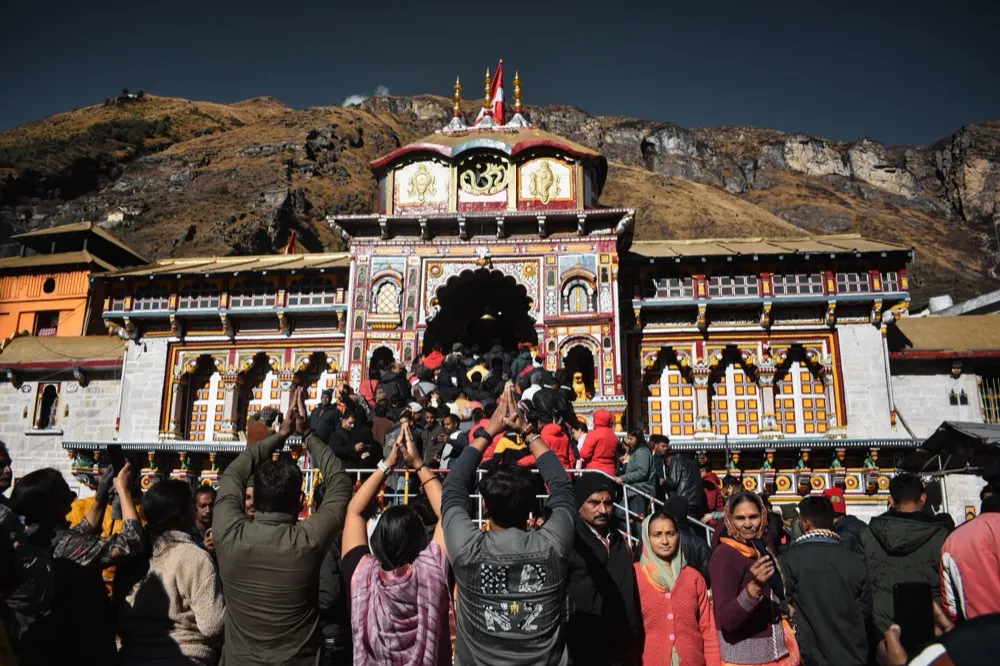
At the high-altitude Badrinath Temple, dedicated to Lord Vishnu as Badri Narayan, Ramdana (Amaranth) is a central component of the Panch Badri Prasadam. Historically, the remote village of Mana, located near the temple, relied entirely on traditional wool weaving. Through government livelihood projects and Self-Help Groups, the women of Mana transitioned to preparing, packaging, and marketing these sacred Ramdana Laddus. This initiative generates critical daily income of up to ₹300 per worker, supporting local families while providing pilgrims with a nutritious, spiritually blessed offering.
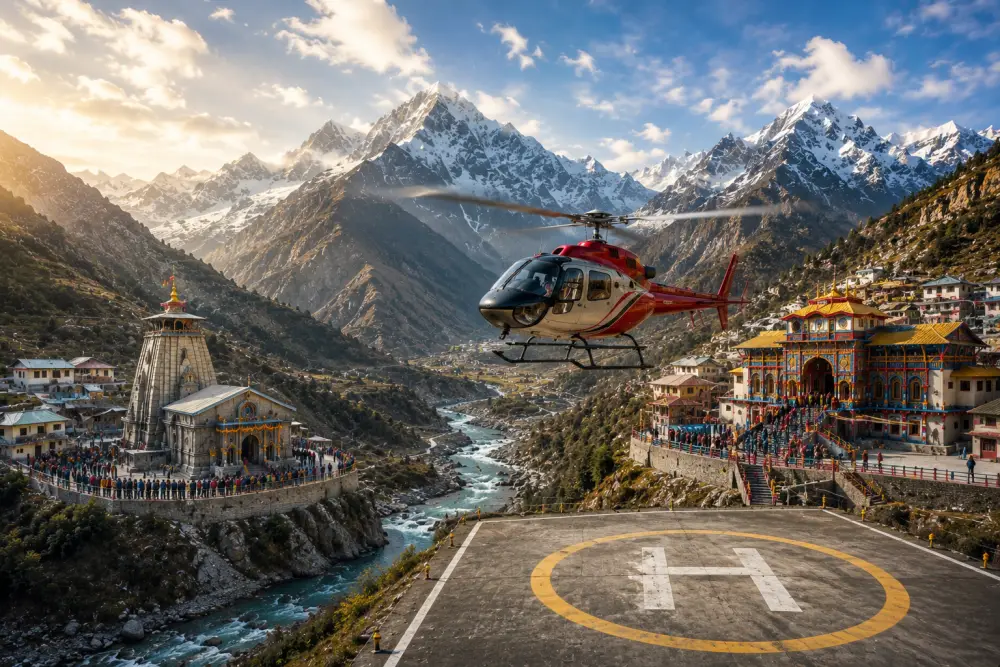
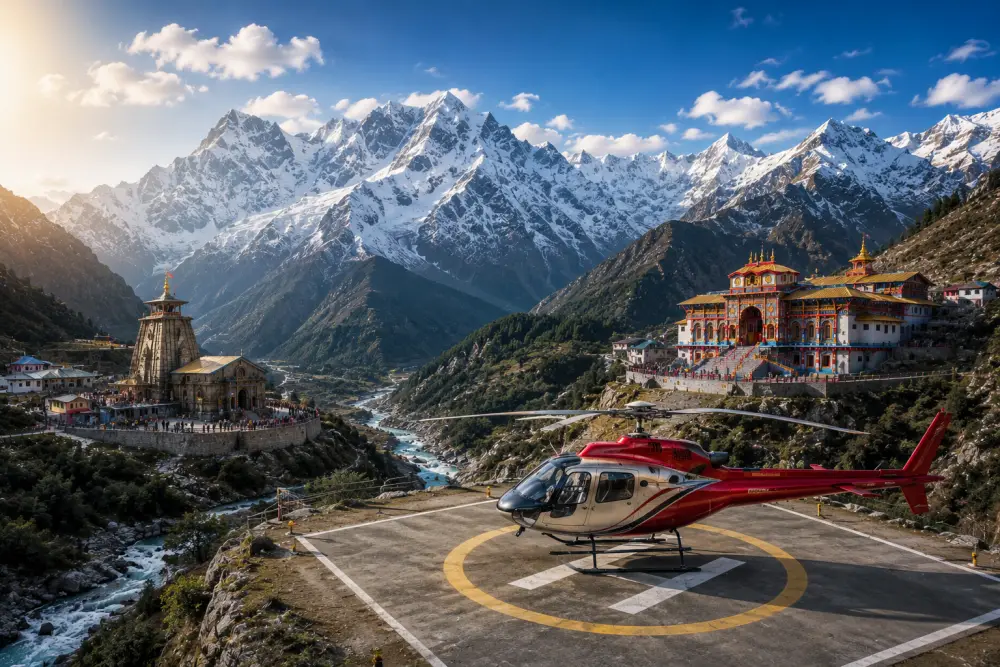
Along the steep pilgrimage routes of the Char Dham Yatra, millets serve as vital physical and spiritual sustenance. The demanding trek to Kedarnath Temple requires nourishing, easily digestible food that keeps the body warm in cold high-altitude conditions. Mandua ki Roti (finger millet flatbread) and Jhangora ki Kheer (barnyard millet pudding) are widely served at dhabas along the route from Sonprayag to Kedarnath. Jhangora ki Kheer, cooked with full-fat milk, jaggery, saffron, and cardamom, is often offered as temple prasad due to its naturally Sattvic and restorative properties.
│
▼
(Soaked for 1-2 Hours) ──► Helps in easy digestion & soft texture
│
▼
(Slow-Boiled in Full-Fat Milk) ──► Creates a rich, creamy base
│
▼
(Sweetened with Jaggery/Sugar) ──► Seasoned with Saffron, Cardamom, and Ghee-fried Nuts
│
▼
──► Distributed as a sacred blessing to devotees
During religious fasting periods (vrat) like Navratri, Ekadashi, and Mahashivratri, when conventional wheat and rice are avoided, Jhangora (often called sama rice) is highly valued. Because it is a wild seed rather than a cultivated cereal grain, it complies with fasting rules while providing clean, slow-release energy for pilgrims and fasting devotees.
Culinary Traditions of the Hills: Simple, Nutritious, and Warming
The culinary traditions of Uttarakhand's mountain kitchens are shaped by geography, altitude, and practical wisdom. Because wheat and lowland rice do not grow easily on steep, cold slopes, mountain communities have historically relied on sturdier, nutrient-dense crops to feed their families during long winters.
Mandua Roti and Mandua Paratha are daily winter staples. Because finger millet flour lacks gluten, the dough cannot be rolled out with a rolling pin. Instead, local cooks hand-pat the sturdier, denser dough directly on the griddle. This rustic flatbread is traditionally paired with fresh white butter or a tangy Bhang ki Chutney (made from roasted hemp seeds, mint, lemon, and green chilies), creating a nutritionally complete meal that keeps the body warm.
Other classic dishes highlight the simplicity and nutritional balance of Pahadi cuisine:
- Kafuli: A slow-cooked green curry made from spinach and fenugreek leaves prepared in an iron vessel (kadhai). Thickened with rice or millet flour, it is traditionally served with Mandua Roti.
- Bhatt ki Churdkani: A slow-cooked curry made from local black soybeans. It is prepared in an iron vessel, which reacts with the beans to darken the gravy and enrich its iron content, making it a warming winter favorite.
- Chainsoo: A high-protein Garhwali dish made from roasted black gram flour (urad dal) slow-cooked with aromatic mountain spices.
- Phaanu: A comforting dish made from various soaked lentils, slow-simmered in an earthen pot and traditionally served with Baadi (finger millet dough balls).
- Choon Mandi: A warming winter soup made by roasting finger millet flour (choon) and cooking it slowly in boiling buttermilk. It is seasoned with Pisa Loond—a traditional ground salt prepared on a stone slab (sil-batta) with garlic, green chilies, cumin, and salt. A lighter version using Jhangora grains instead of millet flour is known as Paliyo.
- Sundarkala: Hand-rolled noodles made from a blend of finger millet and wheat flour. During community celebrations on the night after Diwali, children gather ingredients to cook these noodles over an outdoor fire, seasoning them with garlic salt and Faran (a local wild Himalayan herb).
- Singori & Arsa: Popular festive sweets. Singori consists of sweet reduced milk (khoya) wrapped in wild Malu leaves, which give the sweet a delicate, smoky fragrance. Arsa is a dense, traditional sweet made from rice flour, jaggery, and ghee, prepared for weddings and family celebrations.
The revival of millets in Uttarakhand successfully bridges the gap between agricultural policy, community economics, and cultural heritage. By connecting modern agricultural initiatives to the state's deep spiritual roots—such as temple offerings and the Harela festival—Uttarakhand has built a sustainable model that protects both the environment and local livelihoods.
These initiatives have created clear benefits: women's cooperatives have gained financial independence by preparing sacred temple offerings, farmers are encouraged to preserve native seeds, and Geographical Indication tags have positioned these traditional grains as premium health foods in modern markets. Celebrating millets as both nutritious superfoods and sacred ancestral heritage helps ensure that these resilient crops will continue to nourish and support mountain communities for generations to come.
Keep Reading
View All Articles-
Playing Holi with Butter at Dayara Bugyal Holi in the monsoon
Playing Holi with Butter at Dayara Bugyal Holi in the monsoon, and with only butter and curd milk as the colours! Well, there is no need for us to be surprised.
-
Diwali Significance, History & 5-Day Festival Guide
Explore the spiritual meaning, myths, and history of Diwali. Discover the significance of the 5-day celebration of the festival of lights
-
Dussehra Festival in India : Celebrations in Almora, Kullu, and Mysore
Dussehra, also known as Vijayadashami, is one of India’s most celebrated festivals, symbolizing the victory of good over evil. This article explains the meaning of Dussehra, its connection with Navratri, Ramayana, and the defeat of Mahishasura, along with traditional customs followed across Indian states.